Car Touchscreens Were Supposed to Make Driving Easier. Now They’re Making Us Look Away for Half a Mile
by AutoExpert | 10 July, 2026
There was a time when changing the temperature in a car took half a second. You reached down, turned a knob, and somehow civilization survived.
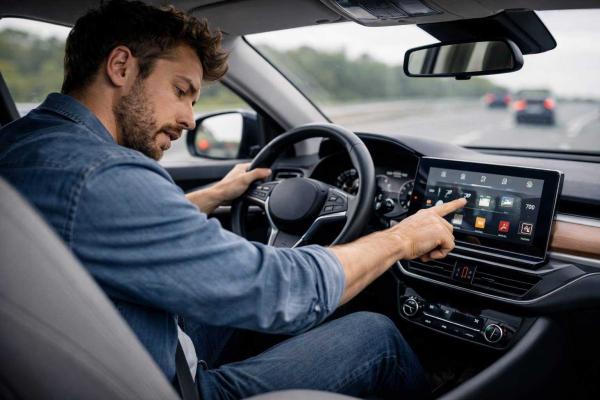
Now, in some cars, the same job feels like opening a bank app while driving. Tap the screen. Miss the little icon. Tap again. Open the climate menu. Find the temperature control. Look back at the road. Look down again because you accidentally opened seat massage instead. By the time the cabin is two degrees warmer, the car has traveled far enough that you start wondering who exactly thought this was progress.
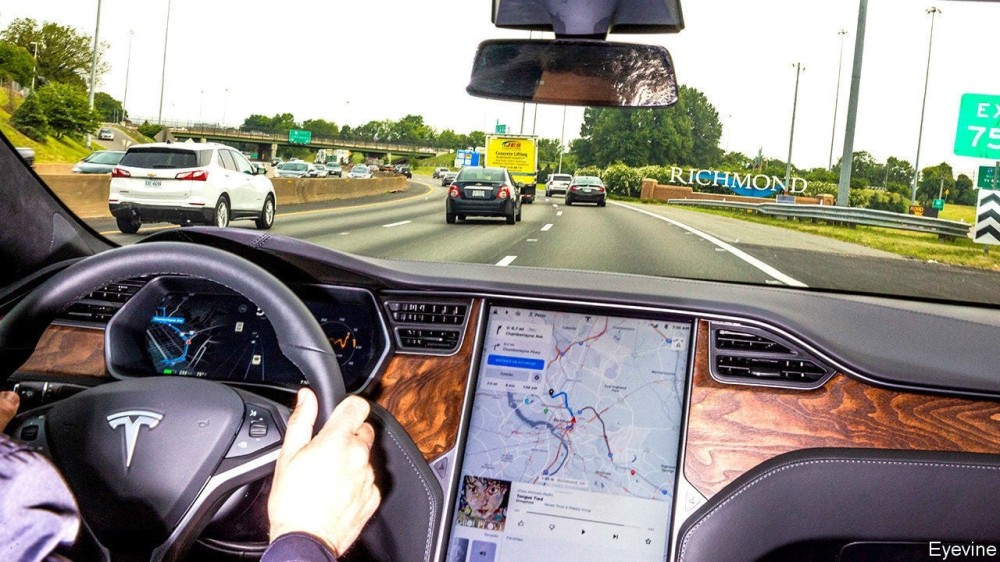
That is the problem with modern car touchscreens. They look clean. They make dashboards seem futuristic. They save automakers from designing a hundred physical buttons. But they also ask drivers to do something very stupid at highway speed: take their attention off the road to operate basic functions that used to be handled by feel.
And now there is fresh proof that the problem is not getting better.
Swedish magazine Vi Bilägare ran a test that should make every automaker a little uncomfortable. The idea was simple. Drive in a straight line at 68 mph and time how long it takes to perform ordinary tasks inside the car. Nothing exotic. Raise the cabin temperature. Change the radio station. Reset the trip meter. The kind of things drivers do all the time without thinking too much about it.
Except now they have to think about it, because too much of it is buried in a screen.
The results were ugly. On average, drivers traveled 2,667 feet while completing the tasks. That is roughly half a mile. Half a mile of interacting with screens and controls for things that should never be that involved. And compared with the same test from 2022, the average distance has actually grown. In other words, despite sharper screens, larger displays, and supposedly better interfaces, drivers are being asked to spend even more time fiddling with the car instead of watching the road.
That is not a small detail.
That is a design failure wearing a glossy user interface.
The most embarrassing comparison is the old Volvo V70 from 2005. No giant touchscreen. No tablet stuck to the dash. No dramatic digital command center. Just physical buttons and controls placed where a driver could learn them and use them by feel. In the same type of test, the driver finished everything in 328 feet. Not 2,667. Three hundred twenty-eight.
That difference is absurd.
It is also the whole argument in one number.
The issue is not that screens exist. Nobody is seriously arguing that modern cars should go back to dashboards that look like a 1980s stereo store. Cars do too much now. Navigation, cameras, phone integration, drive modes, settings, apps, safety systems, EV controls, all of that has to live somewhere. A screen makes sense for a lot of it.
The problem is when automakers start treating the touchscreen like a junk drawer for every single function.
Climate controls? Screen. Seat heaters? Screen. Mirror settings? Screen. Suspension modes? Screen. Defroster? Sometimes screen. Vent direction? In a few especially irritating cases, also screen. At some point, this stops being modern and starts being ridiculous.
Some controls need to be physical because drivers use them while the car is moving. Volume. Temperature. Fan speed. Defrost. Wipers. Hazards. Basic gear selection. Windows. Turn signals. These are not lifestyle features. They are driving features. They need to be obvious, reachable, and usable without a little treasure hunt through menus.
That is why the return of the volume knob felt like a tiny win for humanity.
It sounds silly, but it matters. A knob can be used by feel. A switch can be found without staring at it. A button gives feedback. A touchscreen forces your eyes to confirm what your finger is doing. That is the difference. And at 68 mph, that difference turns into hundreds or thousands of feet.
Automakers know this, even if some of them pretend not to.
Volkswagen has already admitted it went too far with touch controls and is bringing back more physical buttons for core functions. That is not nostalgia. That is correction. The company learned the hard way that customers do not love fighting a car just to turn down the fan.
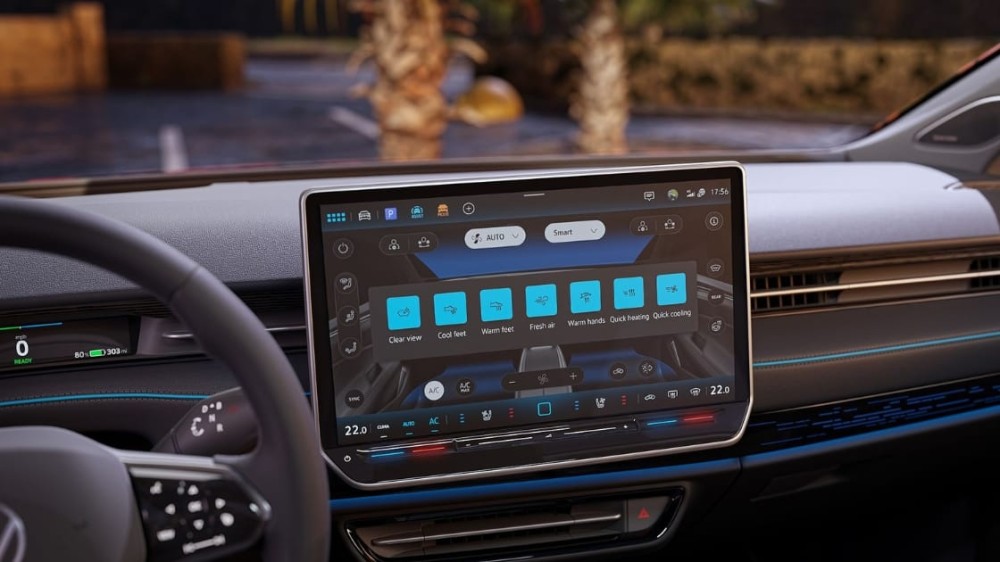
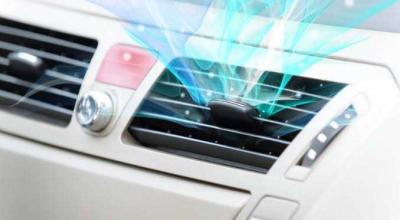
Other brands still seem committed to making everything digital whether it improves the experience or not. Software-defined air vents may be the most exhausting example. Adjusting airflow direction on a screen is the kind of idea that probably sounded elegant in a presentation and then became deeply annoying the moment a human tried to use it while driving.
That is the thing about cars. They are not phones.
A phone can demand your full visual attention because you are usually holding it while standing still. A car cannot. A car is moving through the world with weight, speed, blind spots, weather, pedestrians, cyclists, traffic lights, and everyone else’s bad decisions. The interface has to respect that. When it does not, the design may look sleek, but the driving experience gets worse.
There may be a better future here. Voice control could help, if automakers finally make it reliable enough that drivers trust it. A good voice system lets you change temperature, call up navigation, or switch audio without looking away at all. That is the direction this probably needs to go.
Regulation may push it too. China is already moving toward requiring physical controls for certain core functions, and when a market that large starts setting rules, the rest of the industry pays attention. If automakers want to sell globally, they may have to stop pretending every function belongs behind glass.
The real lesson is not complicated.
Touchscreens are fine for the right things. They are terrible for the wrong things. And the wrong things are usually the ones drivers need quickly, repeatedly, and without looking away from the road.
The distracted driving problem is not only about phones anymore.
Sometimes the distraction came built into the dashboard, sold as innovation, and lit up beautifully in the showroom.