New BMW i3 Feels Like A Concept You Can Actually Buy
by AutoExpert | 19 March, 2026
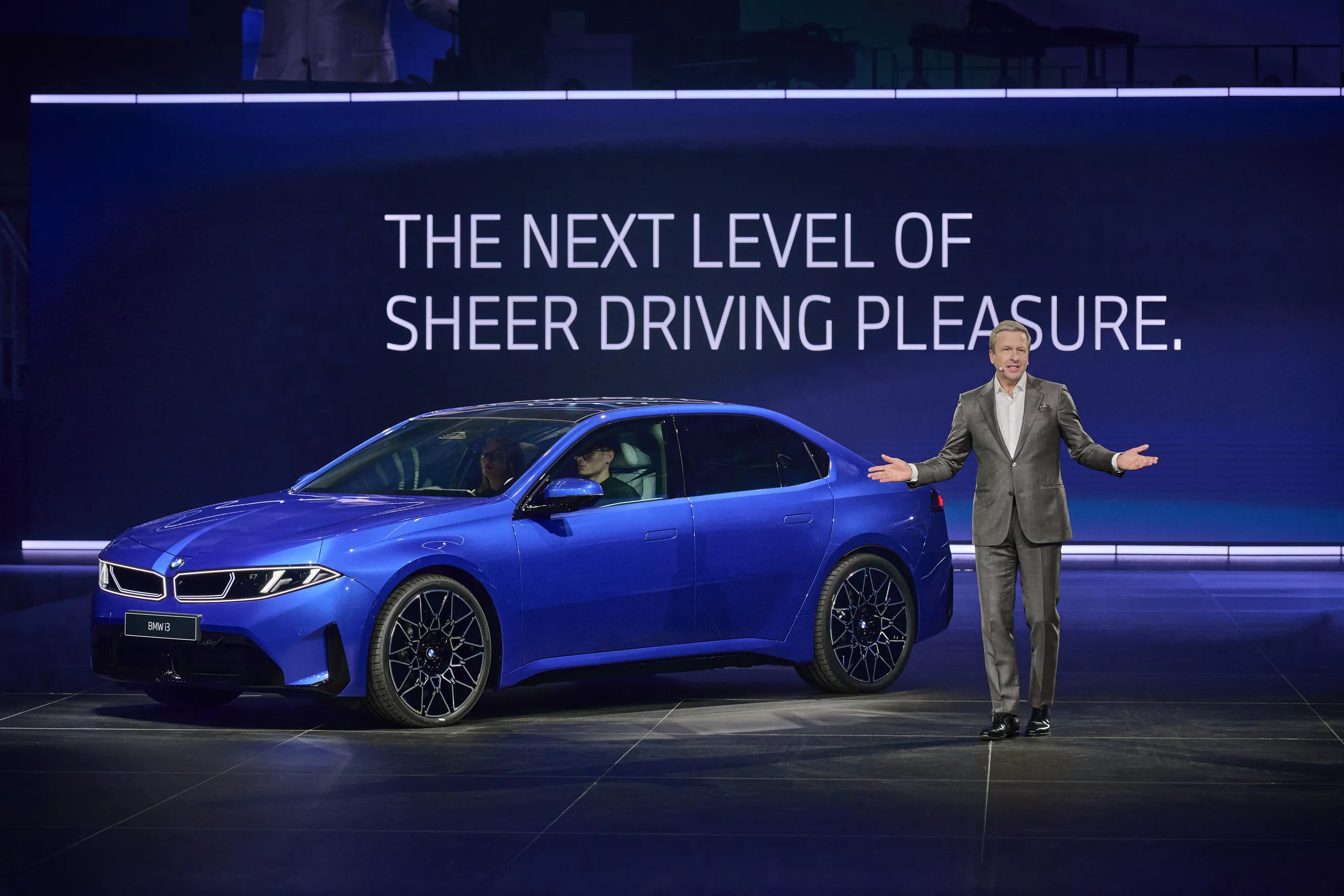
The 3-Series has always been the safe bet in BMW’s lineup. Familiar, balanced, and easy to recommend. That’s exactly why this next step feels like such a big deal. The new BMW i3 (Neue Klasse) is a pretty big shift for BMW. It’s the first time the 3-Series goes fully electric for global markets, and it’s not just a conversion job. From the platform to the way it drives, everything is new.
If you’re still into petrol, BMW hasn’t forgotten you. The G50 3-Series is coming soon, and it’ll look almost identical to this. But underneath, it sticks with an updated version of the current CLAR platform. For now, though, this NA0-code i3 is the one setting the tone.
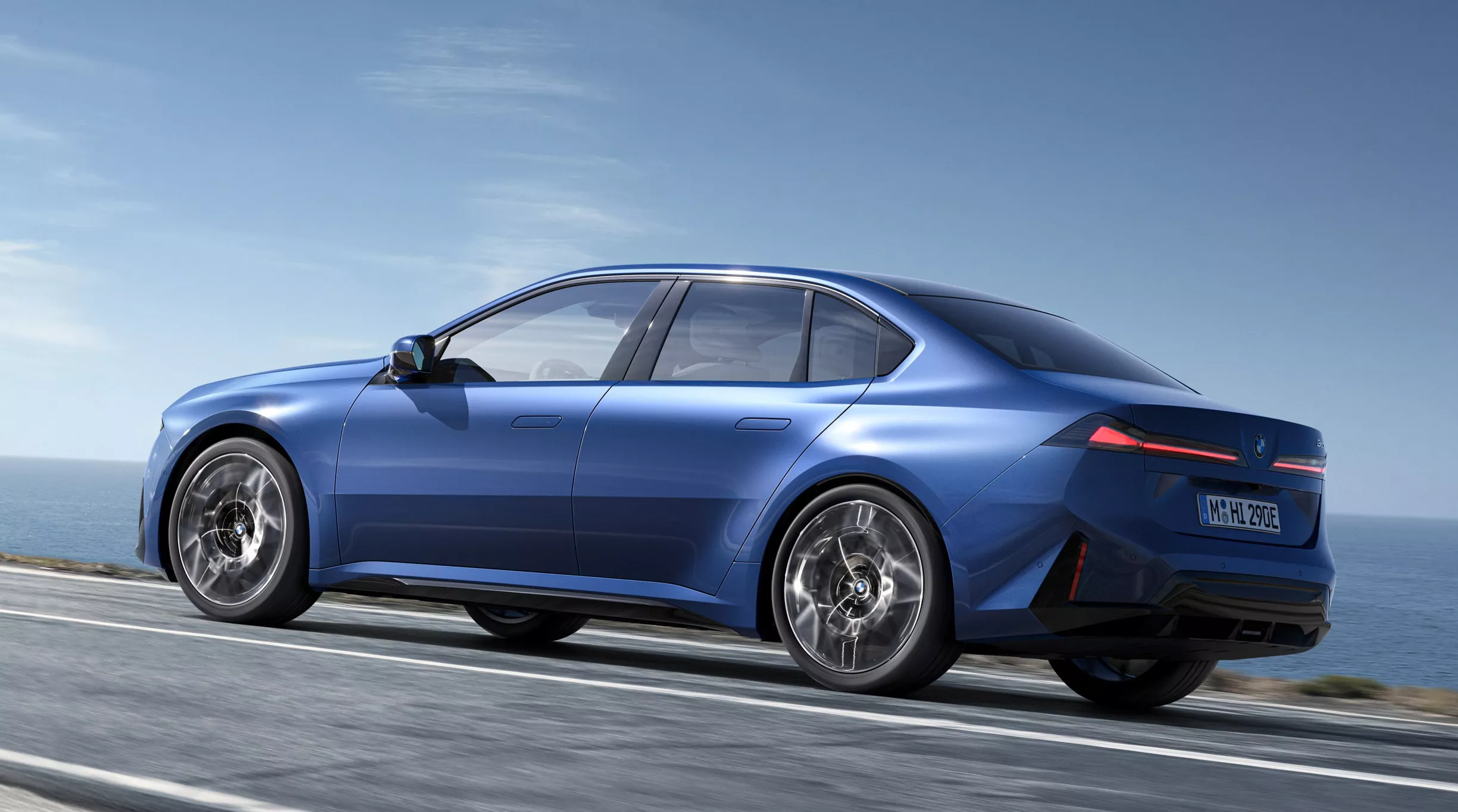
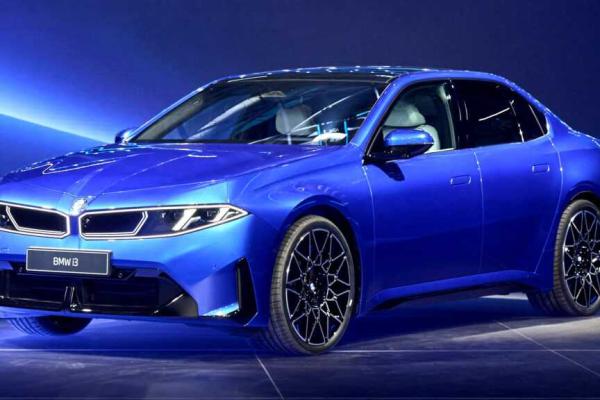
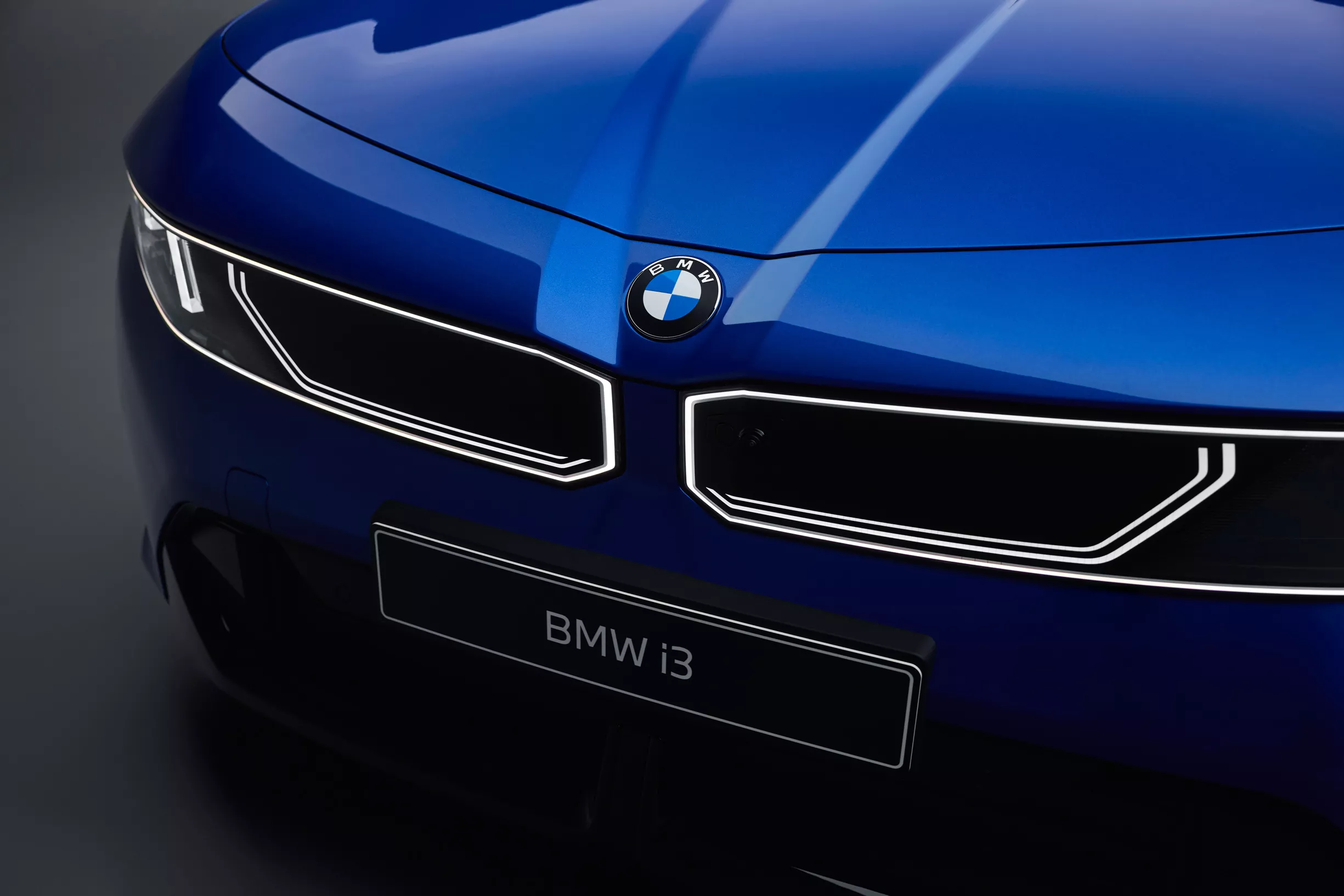
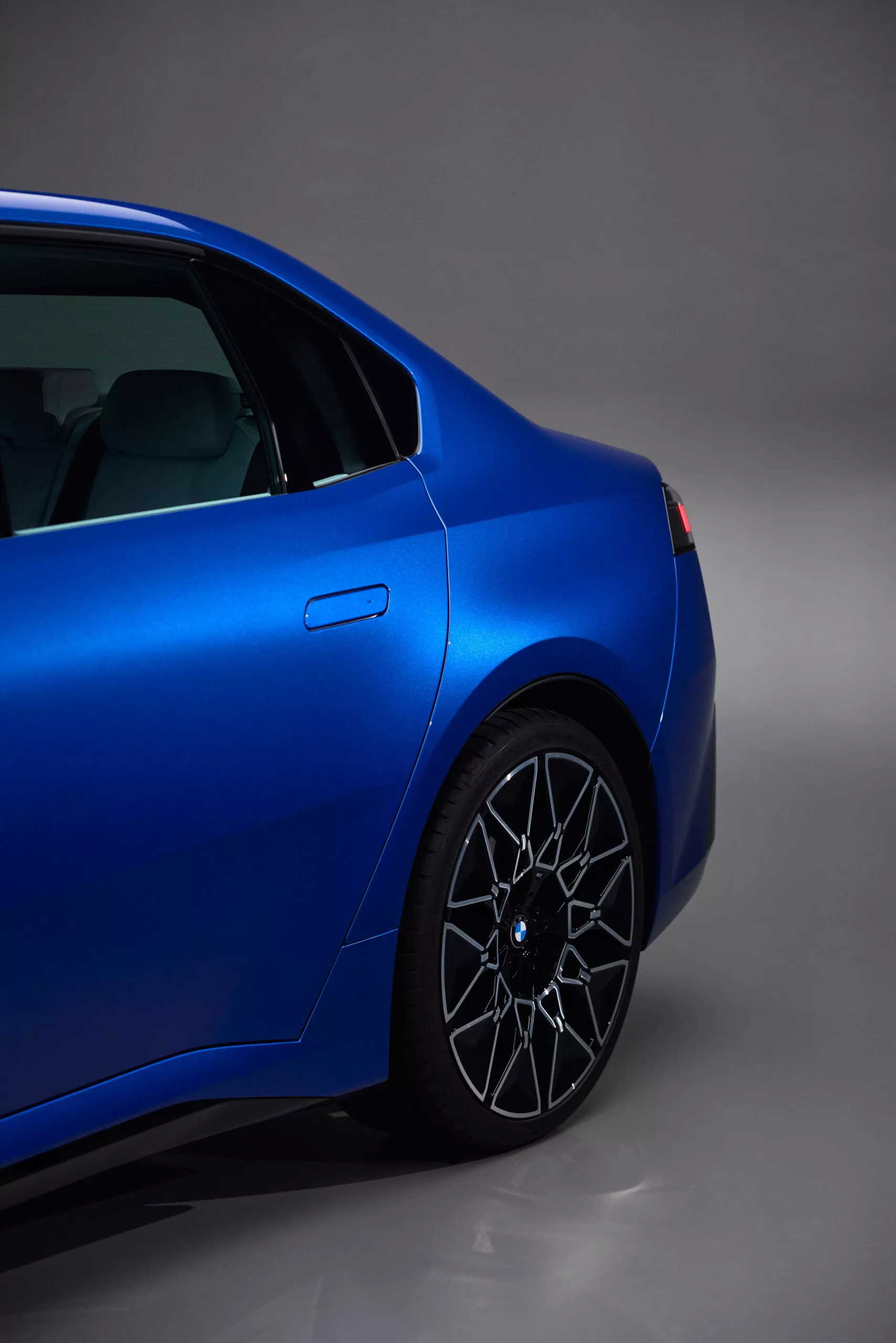
Visually, it’s a mix of old and new. There’s a bit of E36 in the stance, maybe some E46 in the curves, but the details are way more modern. Up front, you get BMW’s new “visor” face, where the grille and headlights blend into one unit, something we already saw on the BMW iX3 (Neue Klasse). Along the sides, it’s cleaner than before. Flush door handles, smooth surfaces, and properly muscular fenders, even on the mid-level xDrive 50.
The proportions still say classic BMW, but there are small clues that this is something different. The gap between the front wheel and the door is tighter since there’s no engine sitting there anymore.
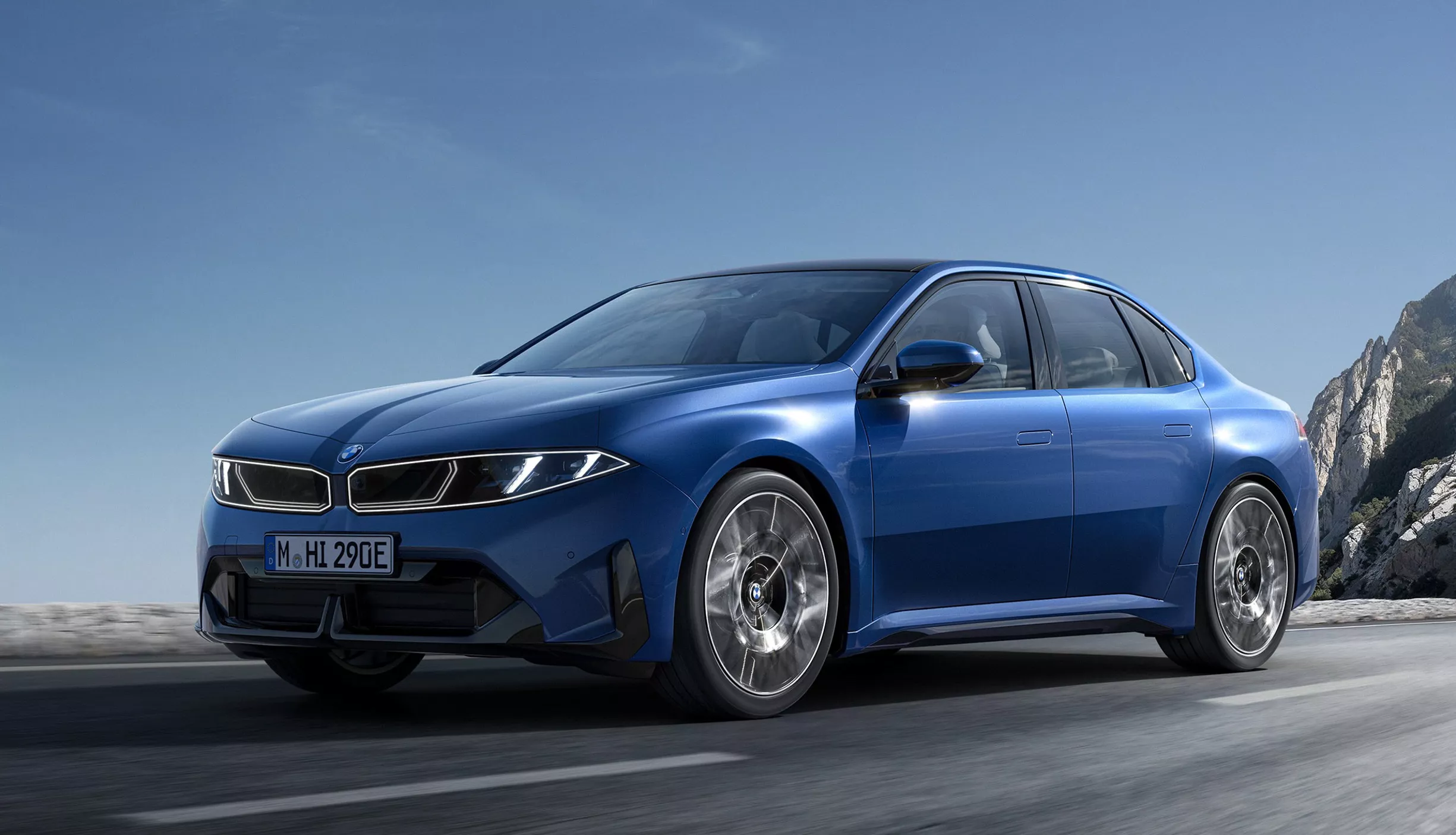
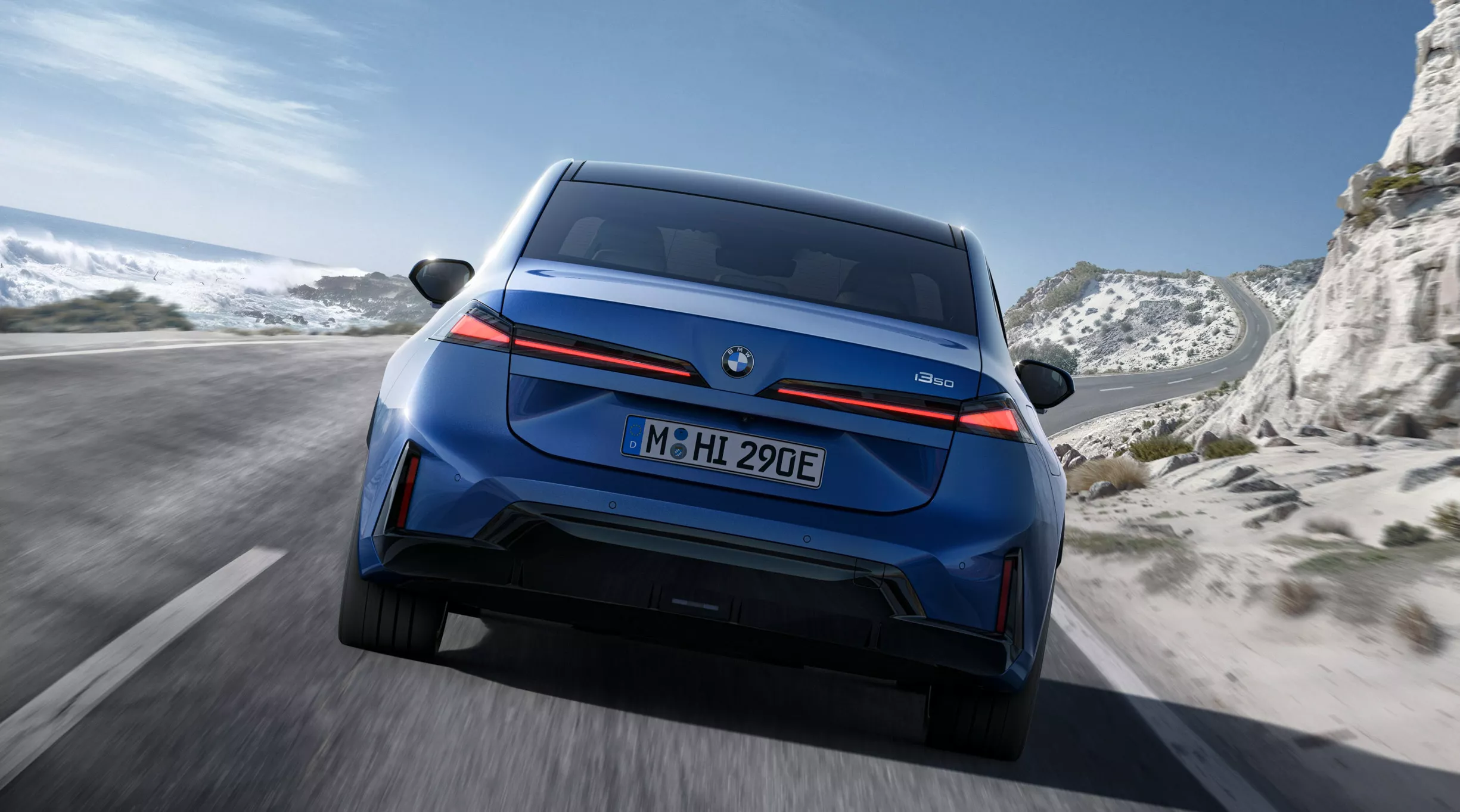
It’s also grown in every direction. The new i3 measures 187.4 inches (4,760 mm) long, 73.4 inches (1,864 mm) wide, and 58.3 inches (1,481 mm) tall. That makes it 1.8 inches longer, 1.5 inches wider, and 1.4 inches taller than the current 330i xDrive. The wheelbase stretches to 114.1 inches (2,898 mm), up by 1.9 inches, which should help with interior space. Front and rear tracks are wider too, by 32 mm and 26 mm, respectively, giving it a more planted stance.
Around the back, the design keeps things wide and low. The taillights run horizontally into the rear shoulders and across the trunk, emphasizing width. And that bright M. Le Castellet Blue paint will probably be everywhere once these hit the road.
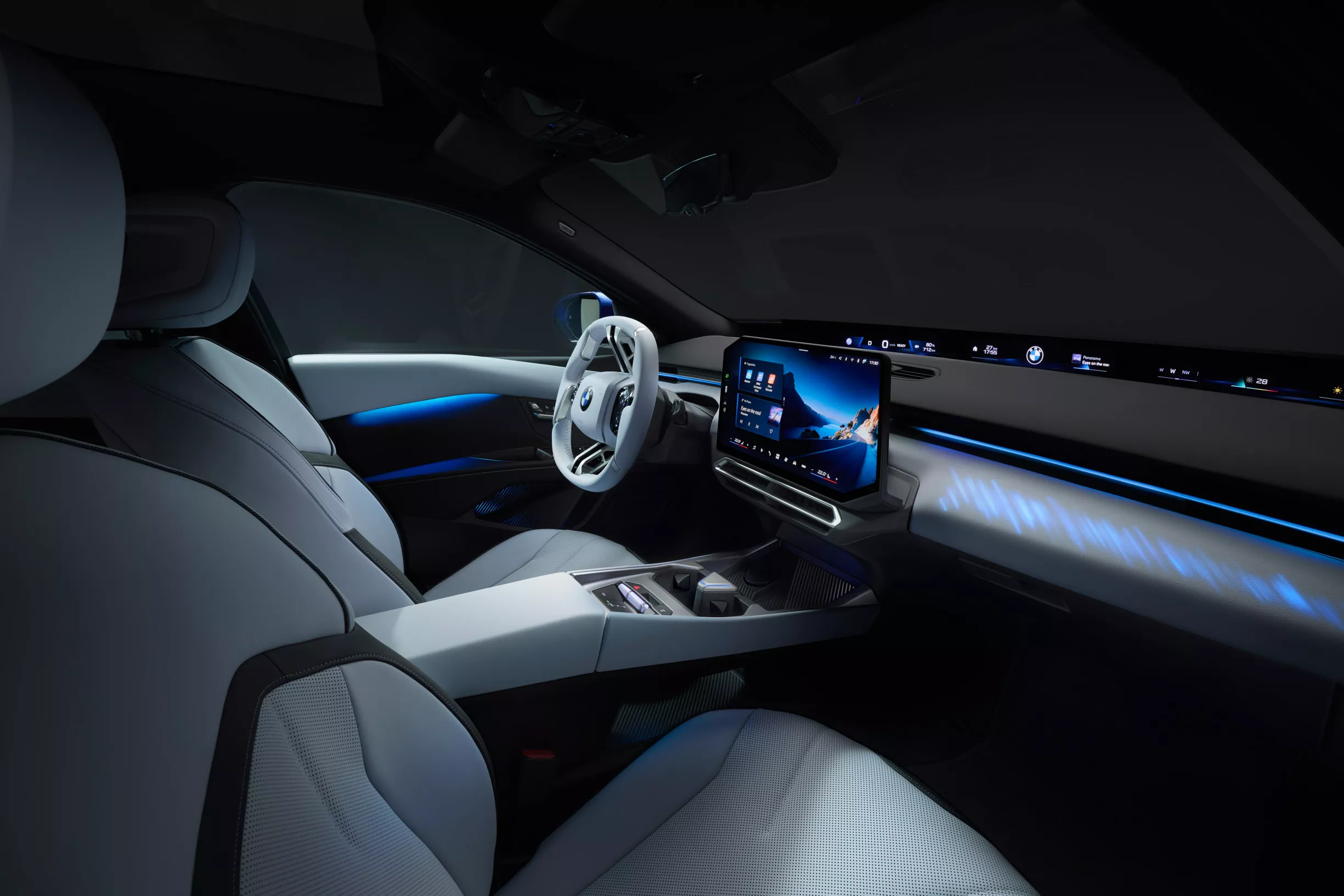
Inside, BMW clearly went all-in. The cabin feels more like a concept car than a typical sedan. There’s a wraparound dashboard that flows into the doors, lots of glass, and a standard panoramic roof that makes it feel open instead of boxed in.
The big talking point is the new Panoramic iDrive. You get a wide display running along the base of the windshield, a 17.9-inch central touchscreen, and an optional 3D head-up display. It sounds like overkill, but BMW says it’s designed to keep your eyes up rather than looking down at screens. You can move widgets around like a phone, and voice control now uses Amazon Alexa+ for more natural responses.
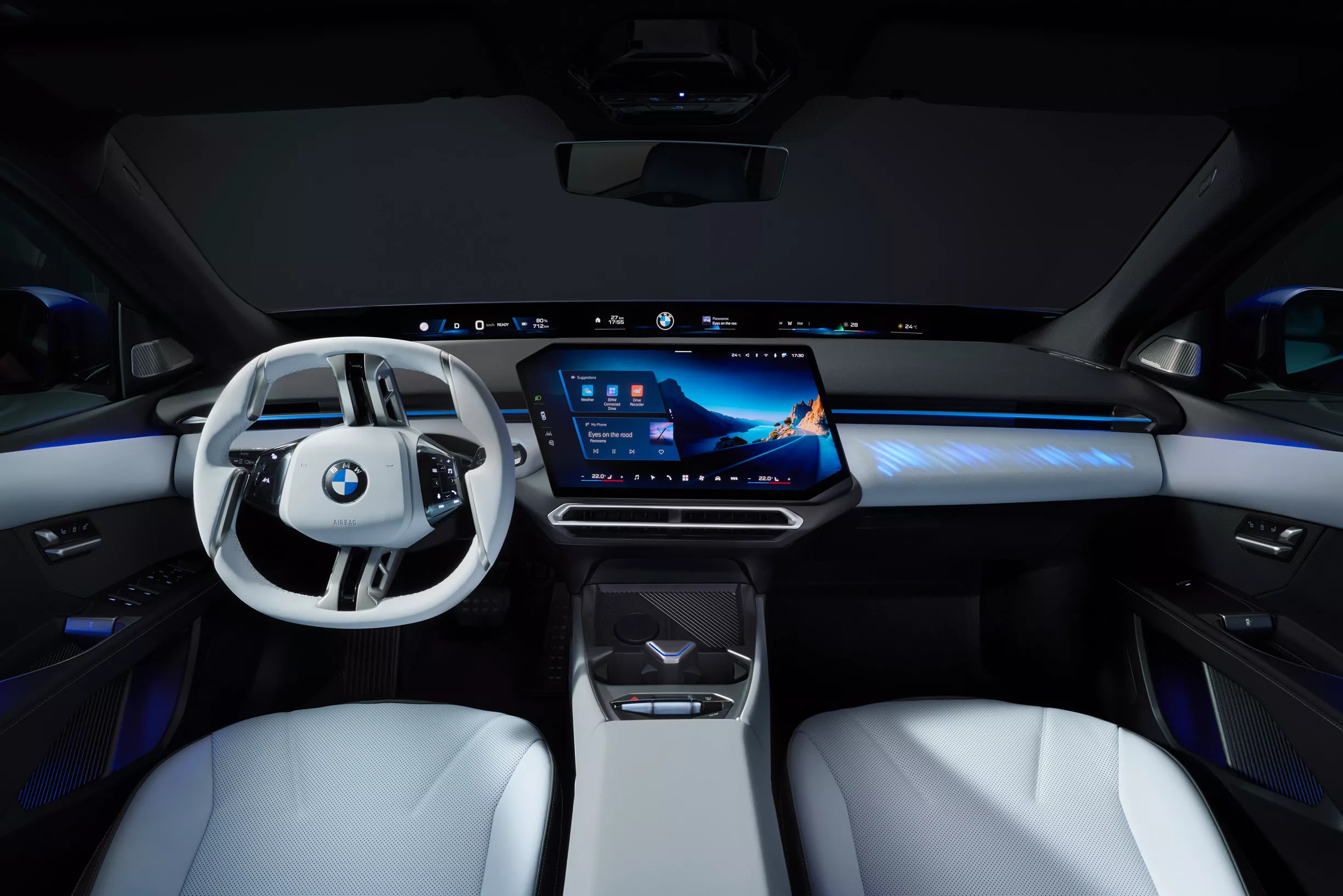
There’s also a new four-spoke steering wheel with illuminated controls that only show when needed. It’s a bit controversial, but at least BMW kept some physical buttons for things like hazards and the parking brake. We’d still want a few more real switches for everyday stuff.
Seats sound decent even in base form, with optional M Sport and multifunction seats adding more support. Materials range from leather-like finishes to proper leather, and BMW is pushing sustainability here, too. Some trims use recycled fabrics, and parts of the car, including wheels and structural components, use recycled aluminum and plastics.
Under the skin is where things get serious. The i3 50 xDrive uses a dual-motor setup producing 463 hp and 476 lb-ft of torque. The rear motor is the main driver, using an electrically excited synchronous design, while the front motor is asynchronous and kicks in when needed for traction and efficiency.
BMW also introduced a new control system called “Heart of Joy.” It manages acceleration, braking, steering inputs, and energy recovery, and it reacts up to 10 times faster than previous systems. In theory, that should make the car feel more natural and predictable, not just quick.
Chassis-wise, it gets a new five-link rear axle, stroke-dependent dampers, and anti-roll bars with preloaded bearings. Adaptive suspension is optional if you want more adjustability.
Battery tech is another big step forward. The i3 uses BMW’s sixth-gen eDrive system with an 800-volt architecture and cylindrical cells in a cell-to-pack layout. That improves energy density and packaging. Range is estimated at up to 440 miles EPA or 559 miles WLTP, though those are still preliminary.
Charging is seriously fast. DC charging peaks at 400 kW, which can add about 249 miles of range in just 10 minutes under ideal conditions. It also supports bidirectional charging, so it can power external devices or even feed energy back into a home or the grid.
Small details are clever too. The charging flap can open automatically when you approach a charger, and BMW’s navigation plans routes based on charging stops, availability, and even nearby amenities. There’s also a small frunk, though it’s mostly useful for cables.
Production starts in Munich in August, with first deliveries expected in fall for the 2027 model year. More versions are already planned, including single-motor models, stronger M Performance variants, a Touring wagon, and eventually a fully electric M3.
This feels like one of those cars that could go either way with people. It’s a big shift, especially for something as familiar as a 3-Series. Whether you like it or not, it’s a proper reset.