Your Seat Belt Moves Freely Until You Tug It. Here Is What Happens Inside
by AutoExpert | 27 July, 2026
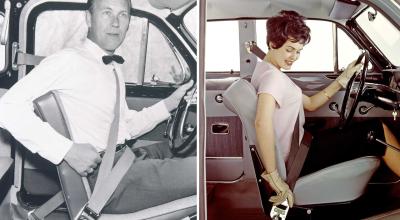
Pull a seat belt slowly and it follows without complaint. Lean forward to adjust the radio and it gives you room. Tug it sharply, and the belt becomes rigid before moving another inch. Nothing electronic needs to happen. There is no warning light and no decision from the car’s main computer. A compact mechanical device inside the pillar has already decided that the movement looks suspicious.
That balance is what makes a modern three-point belt comfortable enough to wear while still being ready for an emergency. In many passenger seats, the same retractor may have another personality hidden inside it. Pull the belt all the way out, let a little feed back in and it can begin clicking like a ratchet. Now it will tighten, but it will not extend again. The two behaviors exist for different reasons.
The everyday mode waits for trouble
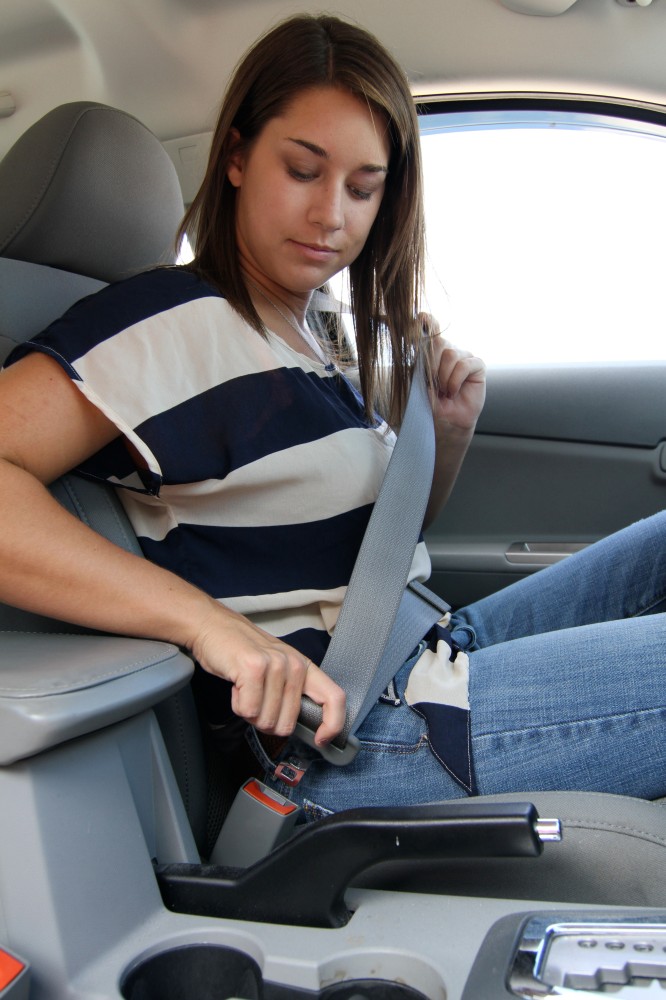
During normal driving, the belt operates through an emergency locking retractor, commonly abbreviated to ELR. It allows the webbing to extend and retract as the occupant moves.
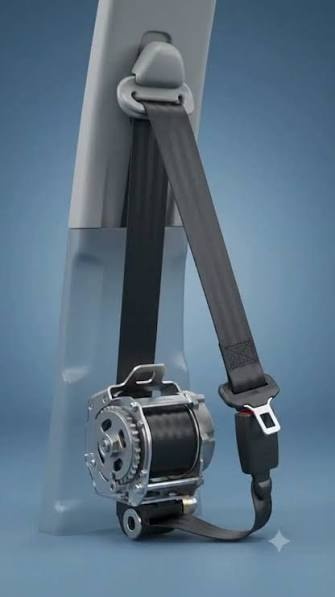
Inside the mechanism, a sensor watches either the speed of the belt, the movement of the vehicle or both. A sudden pull can activate a centrifugal locking device. Hard braking, a collision or a sharp change in the car’s angle can trigger a vehicle-sensitive mechanism.
The retractor locks and prevents more webbing from leaving the reel. The occupant can move slightly before that moment, but the belt is no longer free to continue paying out.
This explains why a belt may lock while the car is parked on a steep incline or when it is pulled from an unusual angle. The mechanism can interpret the position as vehicle movement.
Letting a little webbing retract often releases it. If not, allow the belt to return fully, straighten any twists and try again slowly. Moving the car onto level ground may help when the retractor is reacting to the vehicle’s angle.
The locking retractor should not be confused with a pretensioner. During a sufficiently severe crash, a pretensioner tightens the belt rapidly to remove slack. It is a separate safety device and generally requires replacement after deployment.
The clicking mode is usually for a child seat
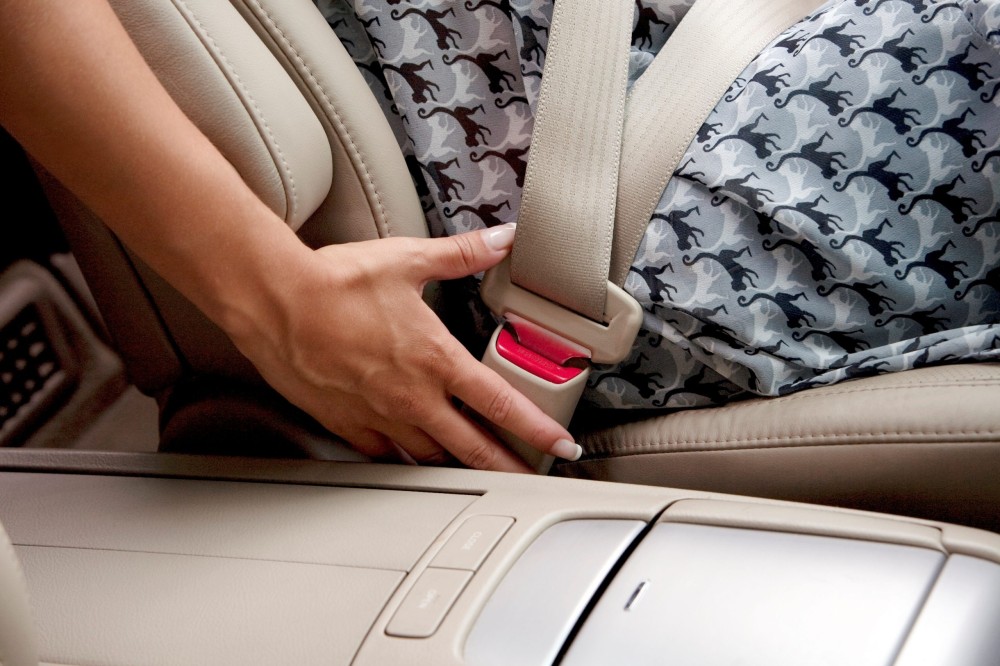
Many passenger-seat belts can switch from emergency locking to automatic locking. This is often activated by pulling the shoulder belt all the way out.
As the belt retracts, a clicking or ratcheting sound appears. The belt can continue moving inward, becoming tighter, but it cannot be pulled outward again. This helps hold a child restraint securely instead of allowing the belt to extend whenever the seat moves.
NHTSA describes this dual-mode arrangement as a retractor that normally operates in ELR mode but converts to automatic locking after the belt is fully extended.
To reset it, unbuckle the belt and allow all the webbing to return into the retractor. Once fully rewound, it should return to its normal emergency-locking behavior.
Not every seating position or vehicle uses the same design. The driver’s belt often lacks the automatic child-restraint mode, and some vehicles rely on different locking hardware. Always follow the instructions for both the car and the child seat.
NHTSA also warns that children can become entangled in belts that switch into automatic locking mode. Unused belts within reach of a child should be secured according to the vehicle manufacturer’s guidance.
When locking is no longer normal
A belt that briefly locks after a sharp pull is behaving correctly. One that remains jammed during ordinary use may have twisted webbing, debris in the retractor, an incorrect mounting angle or internal damage.
Fraying, cuts, melted areas and badly stretched webbing require attention. So does a latch that releases unexpectedly or a belt that will not lock during a firm test pull.
Do not spray lubricant into the buckle or retractor. Oil can attract grit, affect internal components and contaminate the webbing. Taking the mechanism apart is not a sensible home repair either. Seat belts are carefully regulated safety devices, not stubborn window blinds.
If the car has been involved in a collision, the belts and pretensioners should be inspected even when the webbing looks fine. Damage and pretensioner activation are not always obvious from the cabin.
A properly working belt is supposed to feel almost forgettable most of the time. It offers enough freedom to reach the glovebox, then takes that freedom away in a fraction of a second when the movement suddenly looks like trouble.