Your Car Promised 80 Miles of Fuel. Ten Miles Later, Half of Them Had Vanished
by AutoExpert | 27 July, 2026
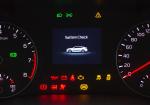
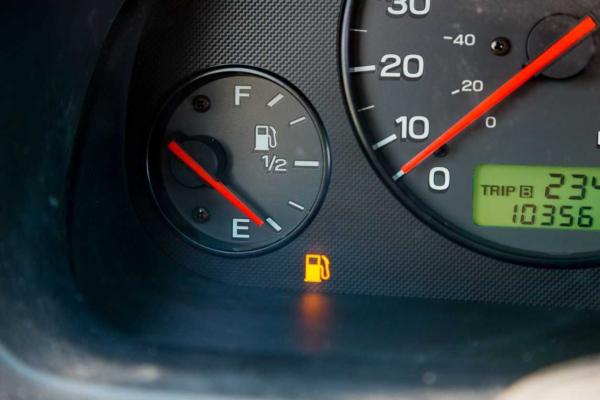
The fuel light comes on. The dashboard says 80 miles to empty. The next gas station is 35 miles away, so there should be no problem. Ten miles later, the display reads 54.
Nothing has leaked out. Nobody has quietly siphoned the tank at a red light. The car has simply changed its mind. Distance to empty looks like a measurement, but it is really a prediction. The number is not sitting inside the fuel tank waiting to be read. It is calculated using the fuel believed to be available and an estimate of how efficiently the car will use it.
That distinction explains nearly all of its strange behavior.
Your car is constantly rewriting the forecast
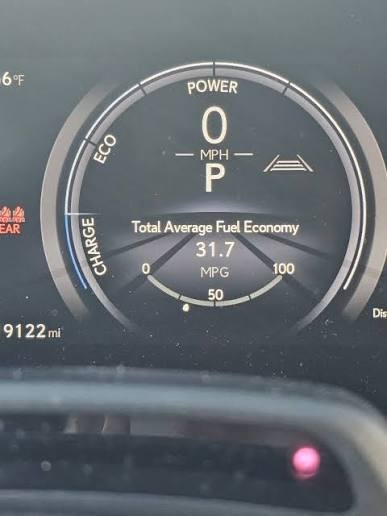
A fuel gauge has one main job: estimate how much gasoline remains in the tank. The distance-to-empty system then combines that information with recent fuel economy to predict how far the car might travel.
The difficult part is deciding what “recent fuel economy” means.
A gentle hour on the highway may convince the computer that the car can cover plenty of ground on very little fuel. Leave the highway, join slow traffic and spend the next 20 minutes accelerating between traffic lights, and that optimistic forecast begins to fall apart.
The same thing happens when a trailer is attached, a roof box is fitted or the road starts climbing. Strong headwinds matter. So do cold weather, extended idling and an air-conditioning system working hard on a hot afternoon.
The car is not subtracting one displayed mile for every real mile traveled. It is watching fuel consumption and adjusting the remaining range to suit what is happening now.
That is why the number can sometimes fall by two or three miles while the car travels only one. It is also why it may barely move during an easy stretch of road.
Occasionally, it even rises. Settle into a smooth highway cruise after an inefficient morning in town and the computer may decide the remaining fuel will carry the car farther than it previously expected. No fuel has appeared in the tank. The forecast has simply improved.
Why the first estimate after filling up can look wrong
Range displays are often at their most optimistic immediately after refueling. If the car arrived at the station after a relaxed highway journey, the computer may use that excellent recent economy to calculate the new range.
A few short urban trips can quickly bring the figure back down to earth.
The display may also take time to recognize a small amount of added fuel. Tank shape, the position of the fuel-level sender and even the angle at which the car is parked can affect the reading. Fuel sloshes around, tanks are rarely neat rectangular boxes, and manufacturers deliberately smooth the gauge’s movement so the needle does not perform gymnastics at every corner.
This smoothing also explains why some gauges remain on Full for a surprisingly long time, then appear to move more quickly through the lower half.
None of this means a wildly inaccurate display should be ignored. A gauge that changes dramatically while the car is parked on level ground, fails to respond after a substantial refill or gives obviously impossible readings may have a faulty sender, wiring problem or software issue.
Ordinary movement is expected. Nonsense is not.
Zero miles does not mean the same thing in every car
Drivers love testing how far a vehicle will travel after the range reaches zero. It makes for entertaining internet videos and miserable afternoons on the side of a highway.
Manufacturers often leave some fuel in reserve when the display reaches zero, partly to reduce the chances of drivers becoming stranded. The size of that reserve is not standardized, however, and it can vary by model, driving conditions and the accuracy of the fuel-level reading.
One car might continue for several miles. Another may stop much sooner than its driver expected.
Regularly running a tank extremely low is not a clever way to learn its secrets. The engine can stall in an unsafe location, and restarting may not be as simple as adding a small can of fuel. Diesel vehicles can be particularly troublesome if air enters the fuel system.
The number on the dashboard is useful, but it is not a guarantee. Think of it as a weather forecast for the fuel tank. The closer the display gets to zero, the less appealing it becomes to test whether the forecast was right.
A service station found comfortably early is always cheaper than a tow truck found one mile too late.