
Only One Reverse Light Works, but the Red Lamp Beside It Is Not Broken
by AutoExpert | 29 July, 2026
Select Reverse, walk behind the car and one white lamp comes on. The other stays dark. The rear light clusters look symmetrical. Both contain clear and red sections. Surely one bulb has failed.
Possibly. But on many cars, especially models designed for European markets, the supposed missing reverse light never existed. One side houses the white reversing lamp. The matching position on the other side may contain a bright red rear fog lamp.
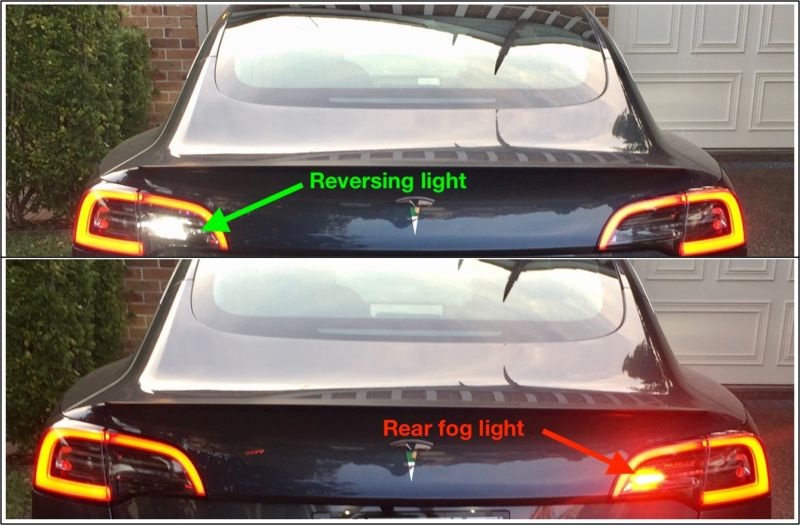
The car is not waiting for a bulb. It is using the two spaces for different jobs.
One reversing lamp can be perfectly legal
Drivers tend to expect lights in pairs because most of the important ones are arranged that way. There are two headlights, two main taillights and two rear turn signals. Two reverse lights therefore feel like the natural conclusion.
Lighting regulations do not always require them.
Rules used in the United States and many countries following UN vehicle standards can permit one or two reversing lamps, provided the installation meets the applicable visibility and performance requirements.
That gives manufacturers room to use a single lamp, particularly on compact cars where every section of the rear light cluster is competing for space.
Cost can play a part, but it is not always as simple as saving one bulb. Manufacturers also need somewhere to place a rear fog lamp on vehicles sold in markets where that equipment is required or expected.
Putting a white reversing lamp on one side and a red rear fog lamp on the other creates a visually balanced design while accommodating both functions.
Balanced when switched off, at least. Once the lights come on, symmetry politely leaves the room.
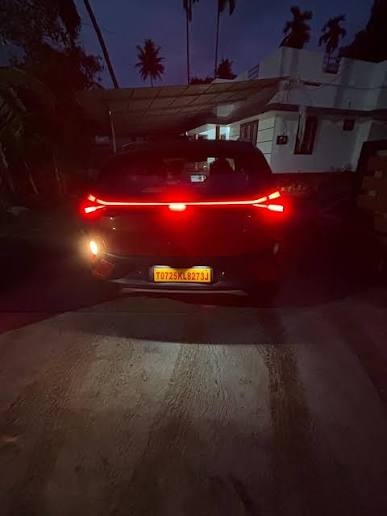
What the red lamp actually does
A rear fog lamp is much brighter than an ordinary taillight. Its purpose is to make the car easier to see from behind in dense fog, heavy spray or similarly poor visibility.
It is not an extra brake light, although drivers unfamiliar with the feature sometimes mistake it for one. When only a single rear fog lamp is fitted, regulations and market design often influence which side receives it.
The lamp should be used sparingly. In clear weather, its intensity can dazzle following drivers and make brake lights harder to distinguish. Turning it on at the first hint of rain is not helpful.
Its dashboard symbol usually resembles a lamp with horizontal lines passing through a wavy vertical line. The rear fog symbol normally points in the opposite direction from the front fog-light symbol.
Some cars sold in North America retain rear fog lamps because the manufacturer uses a broadly shared lighting design across several markets. Others receive different internal lamp assemblies, wiring or software depending on where they are sold.
This explains why two nearly identical cars can behave differently when Reverse is selected.
How to tell intentional design from a failed light
The owner’s manual is the easiest place to start. It should identify the number and location of reversing lamps and show whether the vehicle has a rear fog light.
A visual comparison can help, but clear plastic on both sides does not prove both sections are reverse lights. Manufacturers reuse exterior lens shapes even when the functions hidden behind them differ.
If the car is designed with two reversing lamps and only one illuminates, the cause may be a failed bulb, damaged socket, wiring problem or fault inside an LED assembly. On newer vehicles, the light may be part of a sealed unit rather than a separate bulb that can be replaced in two minutes.
Testing should be done carefully. Apply the parking brake, keep the brake pedal pressed and make sure nobody stands directly behind a vehicle that could move. The safest option is to have another person observe the lights while the driver remains in control.
A wall or garage door can also reveal the glow from both sides without requiring anyone to stand in the car’s path.
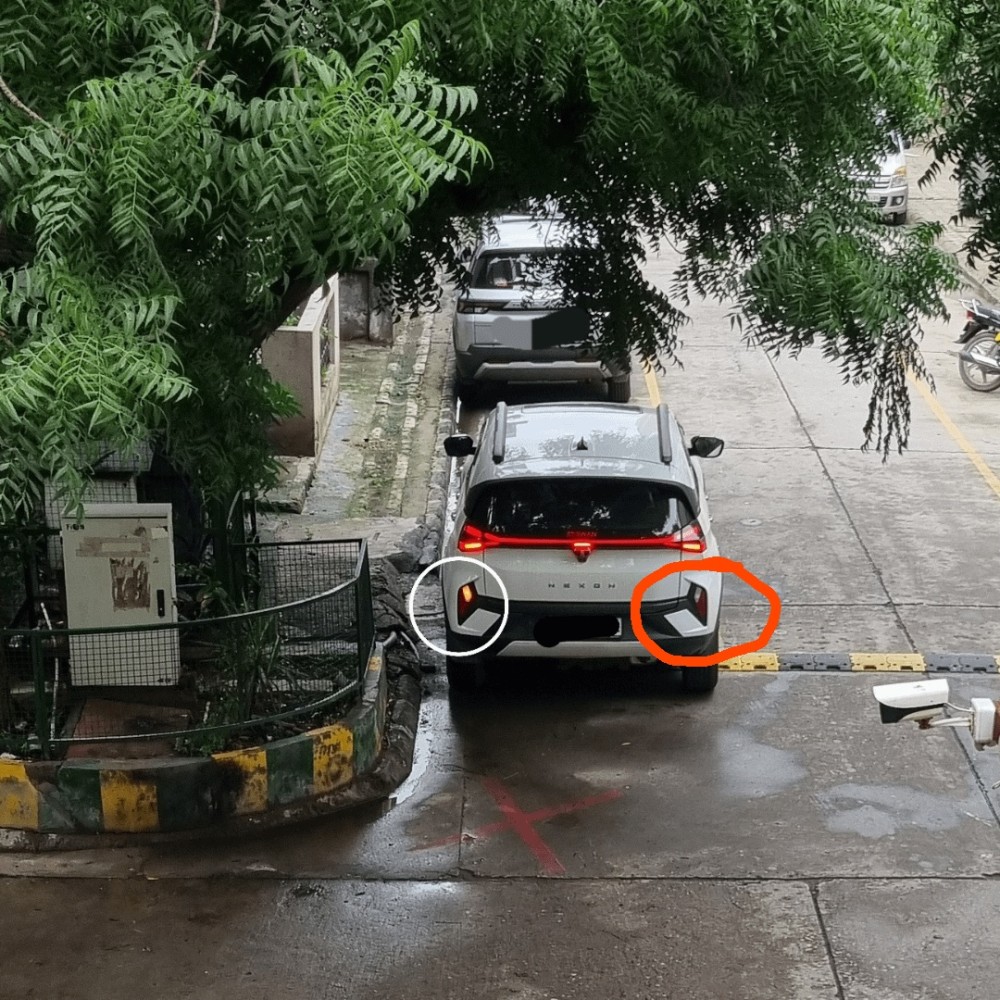
The small asymmetry has a practical purpose
The reversing lamp illuminates the area behind the vehicle and warns others that the car is preparing to move backward. The rear fog lamp helps following traffic find the vehicle when ordinary taillights are swallowed by poor visibility.
They are different tasks, so the lights do not need to match.
Once the arrangement is understood, the single white lamp stops looking like careless maintenance. It becomes a small example of how automotive design is shaped by regulation, packaging and the need to build one car for several very different markets.
Of course, if the manual shows two reverse lights and only one is glowing, the car has not become charmingly European overnight. That bulb probably is broken.