
A Fight Over European Chicken Created the Subaru BRAT’s Strangest Feature
by AutoExpert | 8 September, 2026
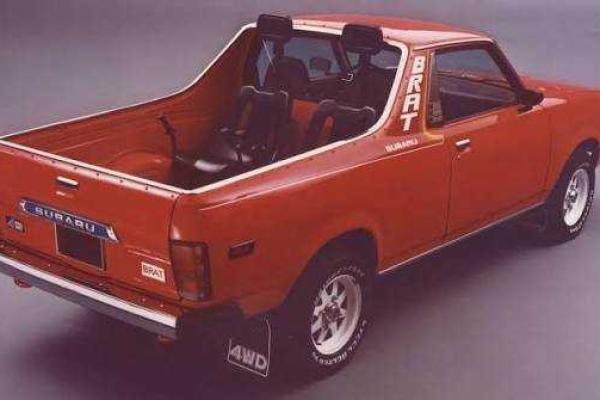
The Subaru BRAT had a cargo bed, a tailgate and the general proportions of a very small pickup truck. American versions also arrived with two plastic seats bolted into the bed, facing backward and exposed to whatever the weather, road or vehicle behind had to offer.
Subaru even provided seatbelts and grab handles. The handles were probably appreciated.
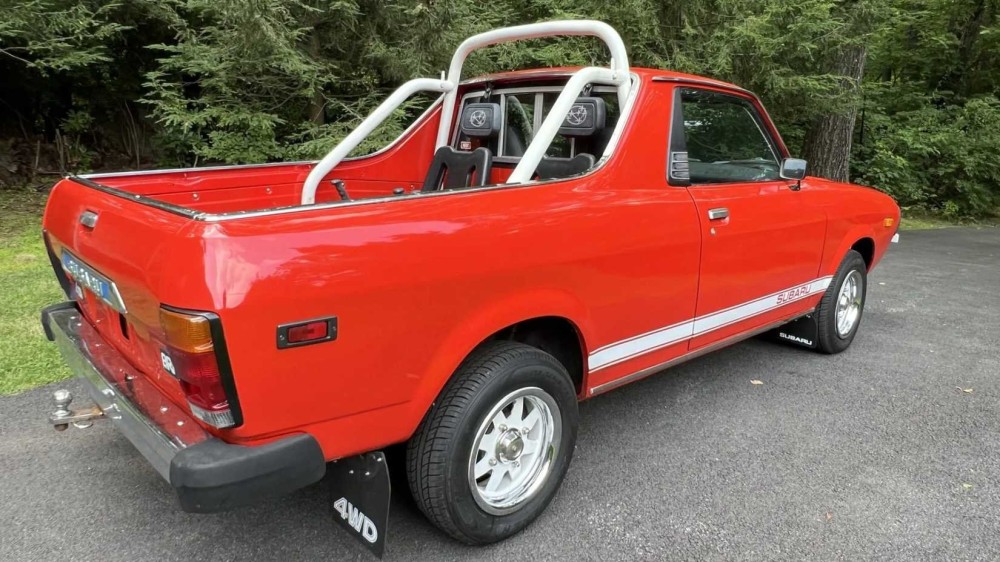
Looking at the arrangement today, it would be reasonable to assume that the company had discovered an untapped market for passengers who enjoyed wind, rain and a close relationship with the contents of the cargo area. The real explanation began years earlier with American chickens.
During the early 1960s, inexpensive frozen poultry from the United States was flowing into European markets. Farmers in France and West Germany objected, and European governments responded with tariffs and restrictions.
President Lyndon B. Johnson answered in 1963 by imposing American tariffs on several imported products. Brandy, potato starch and dextrin made the list. So did light trucks, which received a formidable 25% duty.
The poultry argument eventually faded. Most of the retaliatory tariffs disappeared. The levy on imported light trucks survived and became known as the Chicken Tax.
More than a decade later, that agricultural quarrel was waiting for the Subaru BRAT at the American border.
Subaru wanted a pickup without the pickup tax
Subaru was still establishing itself in the United States when it developed the BRAT in the late 1970s. Its name stood for Bi-drive Recreational All-terrain Transporter, a title that sounds as though several marketing departments were locked in a room until they produced a usable acronym.
Underneath, the BRAT was closely related to Subaru’s Leone passenger car. It had a boxer engine, selectable four-wheel drive and a compact body that suited buyers who wanted utility without the size or fuel consumption of a traditional American pickup.
Customs classification created the problem. Import it as a light truck and the 25% tariff would make the price far less attractive. Passenger cars faced a much lower rate.
Subaru’s solution required no new engine, altered suspension or expensive American factory. It installed two rear-facing seats in the cargo bed.
The North American BRAT received molded plastic chairs, carpeting, seatbelts and sturdy grab handles. With space for passengers behind the cabin, Subaru could present the vehicle as a passenger car rather than a two-seat commercial truck.
It worked. According to WIRED’s history of the BRAT, the passenger-car classification reduced the applicable import duty from 25% to 2.5%.
The seats transformed a tax workaround into the vehicle’s defining feature. A conventional rear bench would have required stretching the cabin and redesigning much of the body. Two plastic chairs in the bed were dramatically cheaper and considerably more memorable.
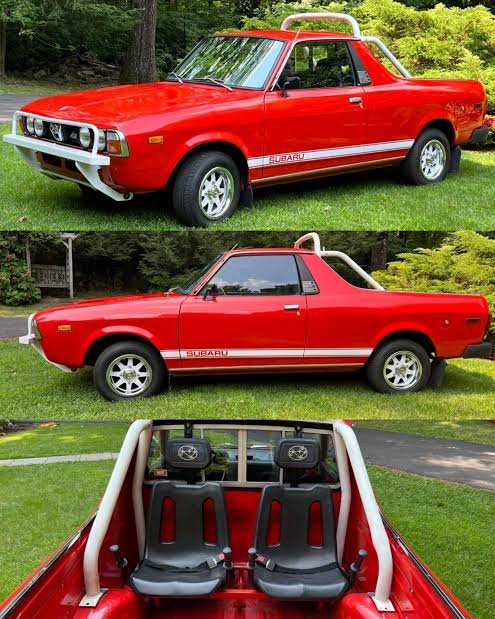
The worst seats may have been the best marketing
Sitting in the back of a BRAT must have felt like riding in the front row of a very small roller coaster with no track visible ahead.
Passengers faced the cars behind them. Their legs rested in the cargo bed, and each person held a fixed handle mounted beside the seat. Weather protection consisted of whatever clothing they had remembered to bring.
Safety expectations have moved on since then. Carrying passengers in an open cargo area is prohibited or restricted in many places, and surviving BRAT owners rarely treat the jump seats as practical family transportation.
During the vehicle’s original American life, however, those seats gave the BRAT a rebellious charm. Here was an already unusual Japanese utility vehicle with four-wheel drive, car-like dimensions and a pair of outdoor chairs supplied by the factory.
The arrangement also helped distinguish it from the Chevrolet El Camino, Ford Ranchero and compact imported pickups. The BRAT looked ready for a beach, a mountain trail or a weekend involving equipment that would make an ordinary sedan smell strange for months.
Even Ronald Reagan owned one. His red 1978 BRAT was used at Rancho del Cielo, the California property that became known as the Western White House during his presidency. The restored vehicle remains associated with the ranch, although Reagan was reportedly careful about being photographed in a Japanese vehicle while cultivating a thoroughly American public image.
Performance was modest. Early BRATs used a 1.6-liter flat-four producing around 67 horsepower, depending on specification. Later versions gained a larger engine, improved equipment and eventually an optional turbocharger. None threatened contemporary sports cars.
Speed was beside the point. The BRAT had character before the word became a polite excuse for every peculiar old-car behavior.
A tax can shape more than a price
Subaru was hardly the last manufacturer to become creative around the Chicken Tax.
Foreign automakers built truck factories in the United States, withdrew certain models from the market or altered imported vehicles to qualify for another customs category. Ford later imported Transit Connect vans from Turkey with rear seats and windows, then converted some into cargo vans after they arrived in America. That strategy eventually led to a lengthy customs dispute.
The tariff also influenced the kinds of pickups American buyers could purchase. Compact foreign trucks became more expensive to import, encouraging manufacturers to build them domestically or focus on larger, more profitable models.
For the BRAT, the consequences were unusually visible. Most tariff decisions disappear into accounting departments, legal filings and revised price lists. Subaru’s interpretation left two plastic seats staring directly at following traffic.
American BRATs eventually lost their jump seats, and the model disappeared from the U.S. market after the 1987 model year. Subaru continued selling versions of the vehicle elsewhere under names including Brumby, MV and Shifter.
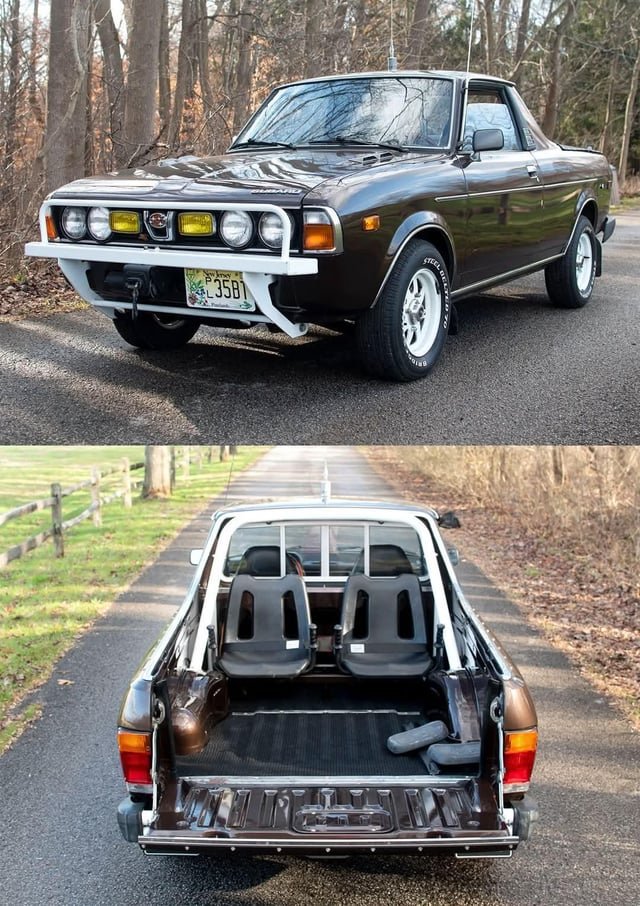
Decades later, collectors still hunt for original rear seats, belts and grab handles. Parts created largely to satisfy a customs definition have become valuable pieces of automotive history.
The BRAT might have found an American audience without them. It probably would not be remembered with quite the same affection.
A trade dispute over frozen poultry gave Subaru a pricing problem. The solution turned an obscure tariff into one of the funniest seating arrangements ever approved for production.