One Rule Forced American Car Designers to Reuse the Same Headlights for Over 40 Years
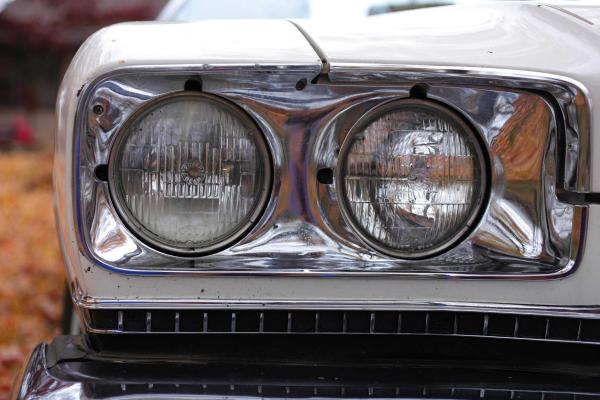
by AutoExpert | 9 September, 2026
Park a 1940s Jeep beside a Chevrolet sedan, an early Volkswagen Beetle and a British roadster, then look closely at their headlights. The surrounding bodies could hardly be more different. The glass circles staring back are remarkably familiar.
For decades, almost every new car sold in the United States had to use headlights selected from the same small menu of standardized sealed-beam units.
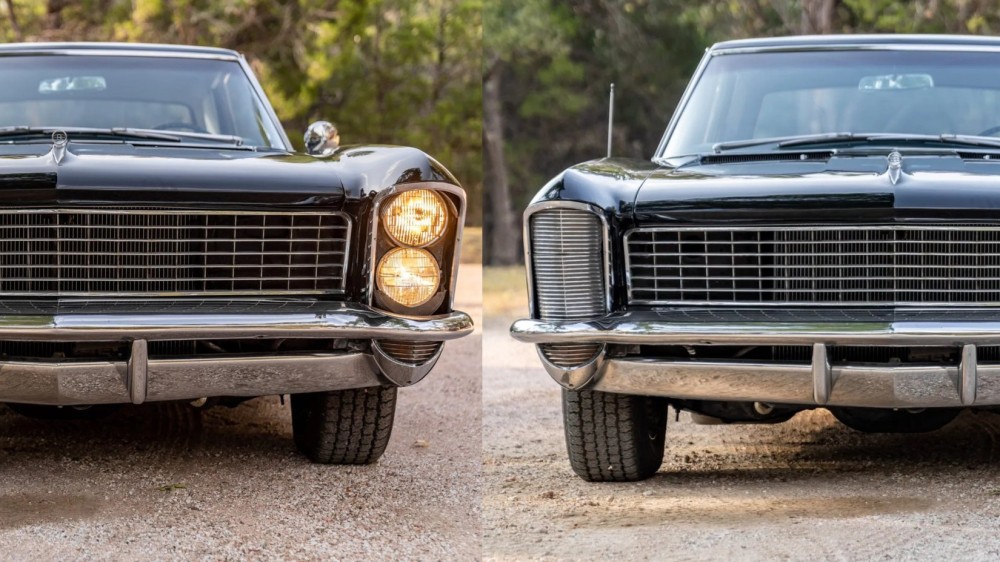
Designers could surround them with chrome, hide them behind doors or arrange them vertically like expensive household appliances. They could not sketch an entirely new headlamp shape and ask an engineer to fit a bulb inside it.
The restriction gave American roads an unusually uniform face. It also produced one of the longest-running compromises between dependable safety equipment and automotive design freedom.
Before sealed beams, headlights aged badly
Early electric headlamps were assembled from separate components. A bulb sat in front of a polished reflector behind a glass lens. Moisture, road dirt and air could enter the housing, tarnishing the reflective surface and reducing the amount of light reaching the road.
Replacement parts varied between manufacturers and models. A bulb that fitted one car might be useless in another, and the condition of an aging reflector could matter as much as the bulb itself.
The sealed-beam headlamp addressed those problems by combining the filament, reflector and glass lens into one airtight unit. When the filament failed, the entire lamp was replaced.
The unit remained clean inside, its optical components stayed correctly positioned and replacements could be produced in enormous numbers. Any service station could stock a lamp that fitted a broad range of cars.
In 1940, American authorities standardized a seven-inch round sealed beam with one lamp on each side of the vehicle. The University of Michigan’s detailed history of automotive headlamps traces how the system emerged and later became embedded in national lighting requirements.
Each lamp contained both high- and low-beam filaments. The arrangement was inexpensive, durable and easy to aim. For postwar America, with millions of vehicles travelling greater distances, universal replacement parts were a compelling advantage.
Styling had to work around the circle.
Designers found freedom in the surrounding sheet metal
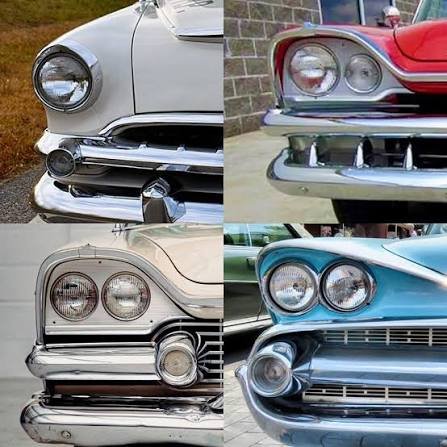
The original two-headlamp format remained the only permitted arrangement for 17 years. In 1957, authorities allowed a four-lamp system using smaller 5.75-inch round units. One lamp on each side provided high and low beams, while the second supplied additional high-beam illumination.
American manufacturers embraced the new format with enthusiasm. Four headlights looked modern and expensive, and designers arranged them horizontally, vertically or diagonally.
The lamps themselves remained standardized. Creativity moved into the grille, bezels, fenders and covers around them.
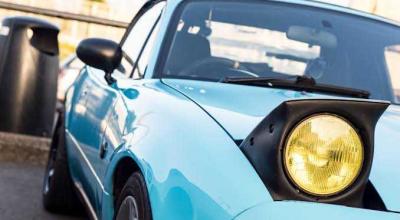
Hidden headlights became one of the most theatrical solutions. Cars including the Buick Riviera, Dodge Charger and Chevrolet Camaro concealed their round lamps behind doors or rotating grille sections when the lights were switched off.
The mechanism allowed designers to present a clean front end while parked. Once night arrived, the familiar sealed beams emerged from hiding.
Regulations limited that freedom as well. Headlight covers had to move completely out of the beam during use. Fixed aerodynamic glass covers, common on several European sports cars, created problems under American rules.
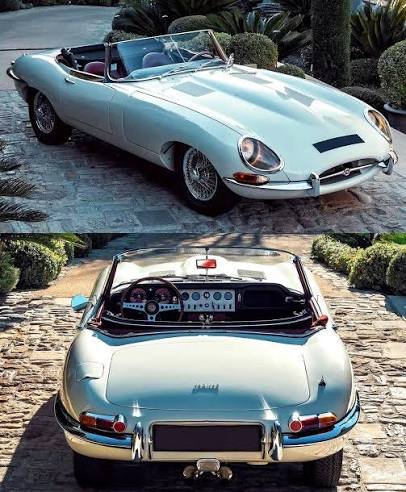
The Jaguar E-Type provides a famous example. Early versions had headlamps enclosed beneath elegant glass covers that continued the curve of the fenders. Later U.S.-market cars received exposed lamps, altering one of the most celebrated shapes in automotive design.
European manufacturers frequently created special front ends for American exports because their home-market replaceable-bulb lamps did not comply. Mercedes-Benz models that wore large sculpted rectangular units in Europe arrived in the United States with pairs of round sealed beams surrounded by trim intended to fill the remaining space.
The cars often looked as though they were wearing borrowed glasses.
Rectangles arrived, although the box remained tightly controlled
By the early 1970s, round headlights were becoming difficult to reconcile with lower hoods and increasingly angular bodywork.
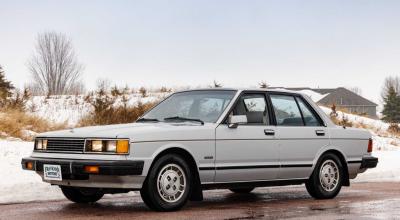
Rectangular sealed beams were permitted for the 1975 model year. Once again, manufacturers received specific standardized sizes rather than complete freedom to create their own shapes.
The change swept through American design. By the end of the decade, rectangular headlights had become so fashionable that round lamps suddenly made relatively recent cars look much older.
A Chevrolet Malibu, Ford Thunderbird or Cadillac could use the same basic lamp units while appearing completely different through placement and surrounding trim. Stacked rectangles produced a formal face. Wide horizontal arrangements emphasized width. Pop-up systems allowed sports cars to keep their wedge-shaped noses.
The sealed construction still delivered practical benefits. Glass lenses resisted the yellowing and surface haze that later affected many plastic headlamp assemblies. Replacement units remained widely available and comparatively inexpensive.
Failure also meant throwing away the reflector and lens along with the filament. Headlamp technology outside the United States was advancing toward halogen bulbs, more sophisticated optics and housings shaped for individual vehicles.
American regulations moved more cautiously.
The 1984 Lincoln Mark VII changed the face of the American car
Pressure to permit aerodynamic composite headlamps grew during the fuel-economy-conscious late 1970s and early 1980s. A vertical glass rectangle created more drag than a lamp integrated smoothly into the body.
Ford petitioned federal regulators for permission to use replaceable-bulb headlamps with model-specific lenses and reflectors. The rules changed in 1983, opening the door to composite designs.
The 1984 Lincoln Mark VII became an early and highly visible beneficiary. Its headlamps followed the contours of the body instead of forcing the body to follow the lamps.
Other manufacturers moved quickly. Within a few years, smooth composite headlights had spread across the market. Designers could make them narrow, wide, angled or wrapped around the corners. Only the bulb needed replacement when it burned out.
The change transformed vehicle identity. Headlights became as distinctive as grilles, allowing a car to be recognized at night by its lighting signature. Modern LEDs have taken that idea much farther, producing elaborate shapes, animated sequences and daytime-running-light patterns designed to function as illuminated brand logos.
Federal Motor Vehicle Safety Standard 108 still regulates headlamp performance, installation and aiming. Its scope has expanded as lighting technology has changed, and current rules bear little resemblance to the old list of permitted glass circles and rectangles. A Federal Register review of the standard describes how sealed beams were gradually joined by rectangular, replaceable-bulb and integral-beam systems.
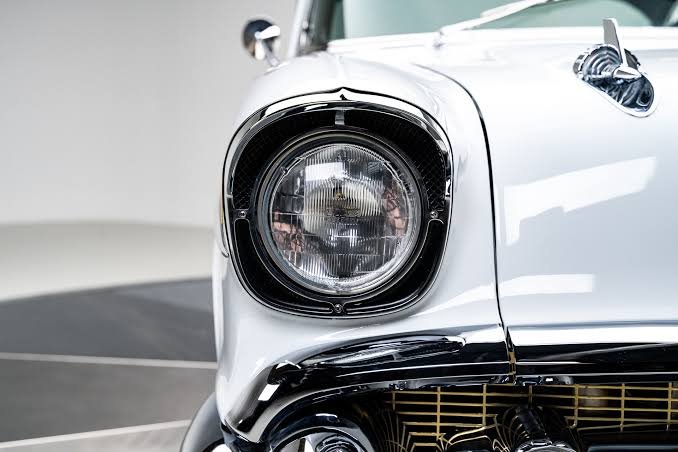
Sealed beams never vanished completely. Classic-car owners, commercial vehicles and motorcycles continue to use them, and modern LED replacements are manufactured in the same standardized dimensions.
A design created to solve dirty reflectors and chaotic replacement parts ended up defining the faces of American cars for more than four decades.
The next time two unrelated classics appear to share the same eyes, there is a good chance they literally do.