Cadillac Borrowed One Detail From a Fighter Plane, and Detroit Turned It Into an Obsession
by AutoExpert | 16 September, 2026
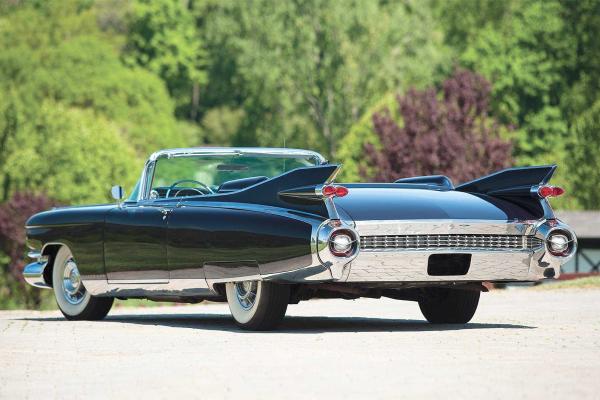
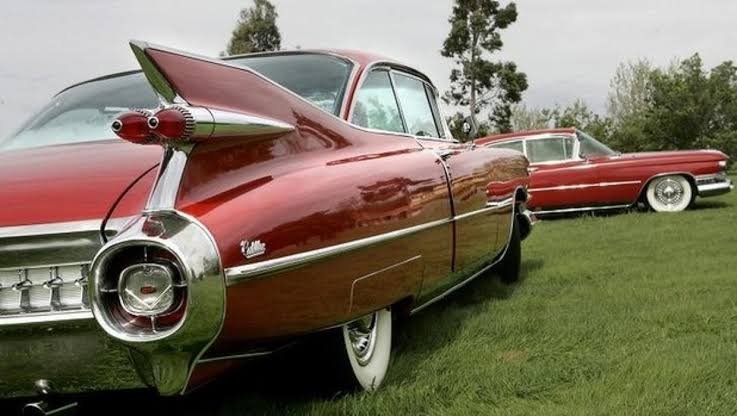
Nothing about the rear of a 1959 Cadillac suggests moderation. Its fins rise above the trunk like extravagant pieces of roadside architecture, edged in chrome and carrying two red taillights shaped like rocket exhausts. Park one beside a sensible modern sedan and the newer car seems almost apologetic.
Those fins were the spectacular climax of a design trend that had started much more quietly 11 years earlier. The inspiration came from a military aircraft, although the original idea nearly disappeared before reaching a showroom.
Cadillac’s designers met the P-38
In 1941, General Motors styling chief Harley Earl took a group of designers to Selfridge Field in Michigan. The aircraft they had gone to inspect was the Lockheed P-38 Lightning, one of the most distinctive fighters of World War II.
Most airplanes carried their tail surfaces at the end of a single fuselage. The P-38 used two long booms, each ending in a vertical fin, with the cockpit suspended between them. Its silhouette looked startlingly futuristic at the time.
Among the visiting designers was Franklin Quick Hershey, usually known as Frank Hershey. The aircraft remained in his mind as Cadillac began developing its first fully redesigned postwar models.
Hershey and designer Ned Nickles experimented with rear fenders influenced by the P-38’s twin booms and vertical stabilizers. Their early sketches and models used small fins that continued the body line toward the rear of the car. The shapes also helped frame the taillights and gave the Cadillac a longer, lower appearance.
Cadillac management was not immediately enchanted.
Luxury-car customers were considered conservative, and several executives thought the fins looked gimmicky. According to accounts of the development process, Hershey resisted instructions to remove them. The feature survived, although the production version was restrained compared with what would follow.
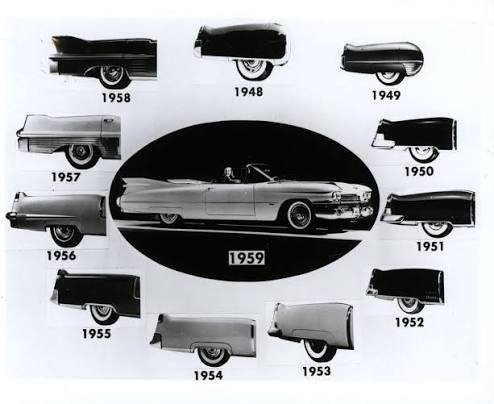
The 1948 Cadillac arrived with small raised forms above its rear fenders. By later standards, they barely qualified as fins. Buyers noticed them anyway.
Cadillac had found a styling signature.
Detroit discovered the jet age
The timing could hardly have been better.
The United States emerged from World War II fascinated by aviation, technology and speed. Jet aircraft were advancing rapidly. Rockets moved from science fiction toward reality, while the emerging space race gave designers an entirely new collection of shapes and language.
Cars acquired wraparound windshields, turbine-inspired hubcaps, aircraft-style dashboards, chrome exhaust ornaments and grilles that appeared ready to inhale the highway. Advertising promised flight, thrust and effortless power even when the machinery underneath remained fairly conventional.
Tailfins belonged perfectly in that world.
Cadillac gradually made its fins taller through the early 1950s. Other manufacturers soon joined the contest. Chrysler designer Virgil Exner used fins as part of his dramatic “Forward Look,” which helped transform Plymouths, Dodges, DeSotos and Chryslers from upright family cars into long, low machines that appeared to be moving while parked.
Smaller companies participated too. Packard, Studebaker and others found room for some interpretation of the idea. Even manufacturers that avoided tall vertical fins experimented with sharply sculpted rear quarters, wings and horizontal blades.
The feature also performed a useful branding job. A fin could make a car recognizable from half a block away. In a period when manufacturers changed exterior styling almost every model year, yesterday’s car needed to look old quickly enough to make tomorrow’s car desirable.
Annual styling changes became part of the sales machinery. A slightly higher fin, a new taillight or another strip of chrome gave dealerships something visible to advertise, even when the engine and chassis had changed very little.
The escalation became difficult to stop. Once one company raised its fins, a rival’s restrained design could suddenly look dated.
The 1959 Cadillac ended the argument
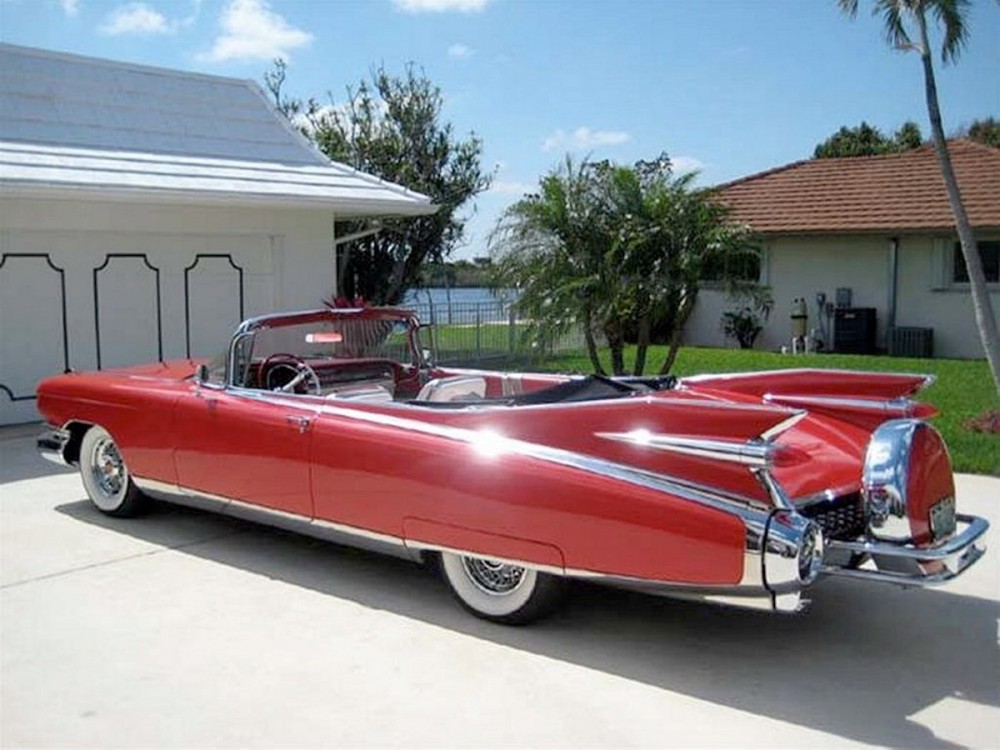
Cadillac pushed the fashion to its famous extreme for 1959.
The fins were enormous, sharply pointed and visually separated by a broad, low trunk. Each one carried a pair of bullet-shaped taillights. Beneath them sat additional lamps, chrome grilles and enough decorative metal to give a modern collision-repair estimator an anxious afternoon.
The design was excessive even by contemporary standards. It also captured its moment perfectly.
America was preparing to enter the space age, consumer confidence remained strong and the automobile had become one of the clearest public expressions of prosperity. A large Cadillac already announced that its owner was doing well. A large Cadillac with towering fins made sure nobody missed the announcement.
Yet fashion was already moving elsewhere. Harley Earl retired from General Motors in 1958, and his successor, Bill Mitchell, favored cleaner shapes with less ornamentation. The most extravagant fins began shrinking almost as soon as they reached their peak.
Cadillac retained them in reduced form during the 1960s because they had become tied closely to the brand’s identity. Other manufacturers abandoned them more quickly. Straight body sides, formal rooflines and later the smoother aerodynamic designs of the 1980s left little room for a vertical decoration inspired by a propeller-driven fighter.
Their influence never vanished completely. Designers still use carefully shaped taillights, rear pillars and body creases to create recognizable signatures. Cadillac itself has repeatedly returned to tall vertical lighting, a modern echo of the fins that once identified its cars at night.
The original question, why did cars have tailfins, therefore has several answers. They began with an airplane, flourished because postwar America adored technology and grew because Detroit understood the commercial value of spectacle.
The P-38 gave Cadillac the idea. Competition supplied the altitude.