Automatic Shifters Once Put Reverse Beside Low. PRND Helped End the Confusion
by AutoExpert | 9 September, 2026
A driver can move between unfamiliar modern cars and still understand the transmission selector within seconds. Park sits at one end, followed by Reverse, Neutral and Drive. Lower ranges, manual modes and sport settings appear farther along or on a separate gate.
The lever may have disappeared. Some cars use buttons, rotary knobs, stubby electronic switches or controls that return to the center after every movement. The letters remain comfortingly familiar.
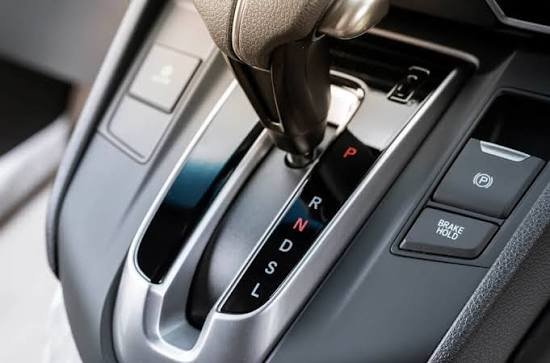
PRND feels like the natural order of an automatic transmission. Early automatics proved that several other arrangements were entirely possible, including one that placed Reverse beside Low.
The modern sequence emerged because drivers needed something predictable. When a mistaken movement can send a car in the opposite direction, consistency becomes more than tidy dashboard design.
The first automatics came without a shared language
General Motors introduced the Hydra-Matic for the 1940 model year, creating the first widely produced fully automatic transmission. It removed much of the work associated with a manual gearbox, although its controls would look peculiar to a modern driver.
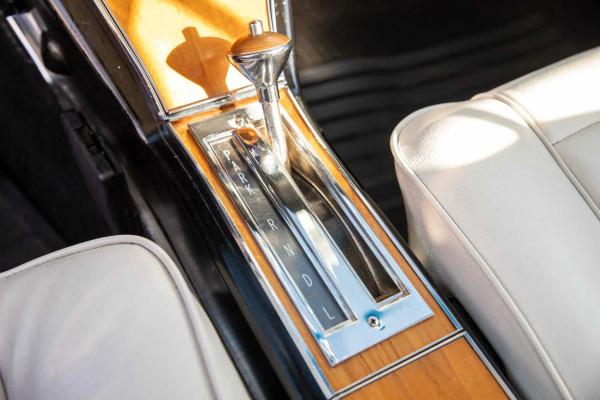
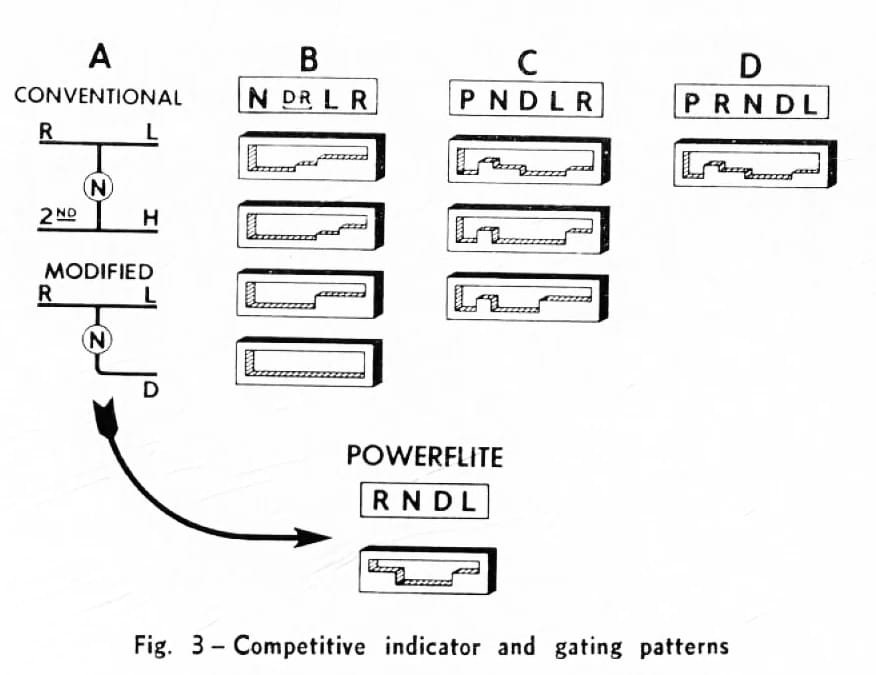
Early Hydra-Matics commonly used a sequence beginning with Neutral, followed by Drive, Low and Reverse. Some versions included another forward range between Drive and Low. Reverse sat at the far end of the quadrant, directly beside the lowest forward setting.
Park was absent from the earliest pattern. The driver selected Neutral, switched off the engine and relied on the parking brake to keep the vehicle still.
The arrangement made mechanical sense to its designers. Reverse could share part of the hydraulic control system with the low range, and positioning the two beside each other simplified the transmission’s internal operation.
Human hands introduced a less elegant variable.
A driver selecting Low could move the lever one position too far and reach Reverse. Someone accustomed to another manufacturer’s pattern could make the same mistake through muscle memory. The lever usually had detents and other safeguards, but the basic layout left little room between a low forward range and an abrupt change of direction.
Other automakers developed their own answers. Ford adopted a version of the familiar Park-Reverse-Neutral-Drive-Low arrangement during the 1950s. Chrysler became famous for push-button automatics, placing a row of gear controls on the dashboard. Packard, Edsel and several other manufacturers experimented with buttons or electrically operated selectors.
The result was a showroom filled with cars that performed the same task through several different languages.
Neutral became the buffer between opposite directions
By the 1960s, the industry was converging on PRNDL. Federal regulation then established the relationships that continue to guide American transmission selectors.
Federal Motor Vehicle Safety Standard 102 was introduced as part of the first generation of national vehicle-safety rules. Its stated purpose includes reducing shifting errors and preventing the starter from operating while the transmission is in a driving position.
The current version of FMVSS 102 requires Neutral to sit between the forward-drive and Reverse positions. On a conventional lever sequence that includes Park, Park must be located at the end beside Reverse.
That produces the familiar order:
Park, Reverse, Neutral, Drive.
Neutral serves as a buffer between the two directions of travel. Moving from Drive toward Reverse requires crossing it, giving the transmission and driver an intermediate position before the car attempts to change direction.
Park sits beyond Reverse because it mechanically locks the transmission. Placing it at the end makes it easier to find without looking and prevents it from becoming an intermediate position during ordinary driving.
Low and any additional forward ranges follow Drive. Accidentally selecting a lower forward gear may increase engine braking or engine speed, although the vehicle continues travelling in the same direction. Modern electronic controls often reject a downshift that would over-rev the engine.
The standard does not force every vehicle to use a long mechanical lever with the exact letters PRNDL arranged in a straight line. It regulates the important relationships, identification and operation of the available positions.
That distinction has allowed automatic transmissions to change dramatically without requiring drivers to learn an entirely new directional order each time.
Park and the parking brake perform different jobs
Selecting Park inserts a metal component called a parking pawl into a toothed wheel inside the transmission. Once engaged, it prevents the transmission’s output shaft from rotating.
A slight roll after selecting Park is normal. The vehicle moves until the pawl settles firmly against the next space in the toothed wheel, producing the familiar small lurch before the car stops.
The parking brake works separately, usually by applying brakes at the rear wheels. Using it before allowing the vehicle’s weight to settle against the transmission can reduce strain on the parking pawl, particularly on a slope.
The recommended sequence varies slightly between manufacturers, but the basic principle is simple: hold the foot brake, apply the parking brake and then place the transmission in Park before releasing the pedal.
Park also became linked to another safety feature. The starter interlock prevents most automatic vehicles from starting in Drive or Reverse. Depending on the model, the engine will start only in Park or Neutral.
Modern cars add a brake-shift interlock, requiring the driver to press the brake pedal before leaving Park. A dead battery or electrical fault can therefore trap the selector, which explains the concealed manual-release slots found beside many traditional shifters.
Each safeguard addresses a different opportunity for an unintended movement.
Electronic selectors have tested the old logic
Mechanical shifters once gave drivers a clear physical clue about the selected gear. Push the column lever to its end stop and the transmission was probably in Park. Pull it several positions in the other direction and the car was in Drive.
Electronic controls weakened that direct connection.
A selector can now send a signal to a control module without remaining in the chosen position. Buttons can sit beside climate controls, rotary knobs can resemble audio dials and touchscreens can place vehicle functions behind illuminated graphics.
The underlying transmission may operate perfectly, yet the driver still needs immediate confirmation of what the car is about to do.
Federal rules therefore require the selected position to be identified for the driver under specified conditions. NHTSA interpretations of FMVSS 102 also explain how push buttons and shift-by-wire designs can comply even when no traditional lever exists.
Recent vehicles often go further. Some automatically select Park when the driver opens the door, unfastens the seatbelt or switches off the car. Others refuse an unsafe request, such as selecting Reverse at highway speed.
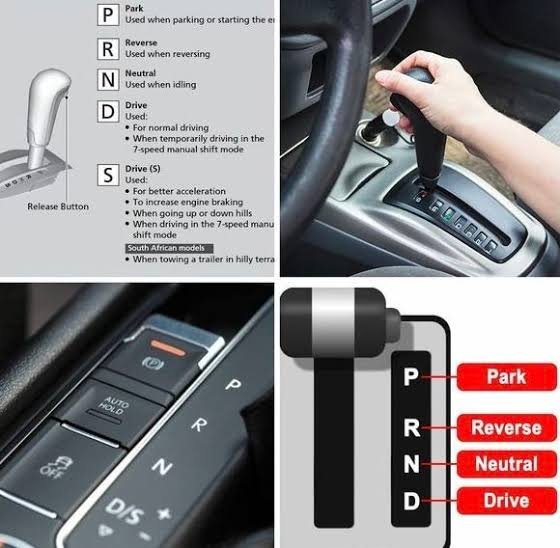
Those protections are valuable, although unusual controls can still create confusion. The deaths and rollaway incidents associated with certain electronic shifters have repeatedly reminded manufacturers that familiarity remains an important part of safety.
PRND has survived column levers, floor consoles, push buttons, rotary dials and touchscreen experimentation because it gives drivers a dependable mental map.
The letters are simple. The decades of engineering, regulation and occasionally alarming experimentation behind them were anything but.