The Rearview Mirror’s Origin Story Begins Before the First Indy 500
by AutoExpert | 7 September, 2026
The usual history of the rearview mirror is wonderfully neat.
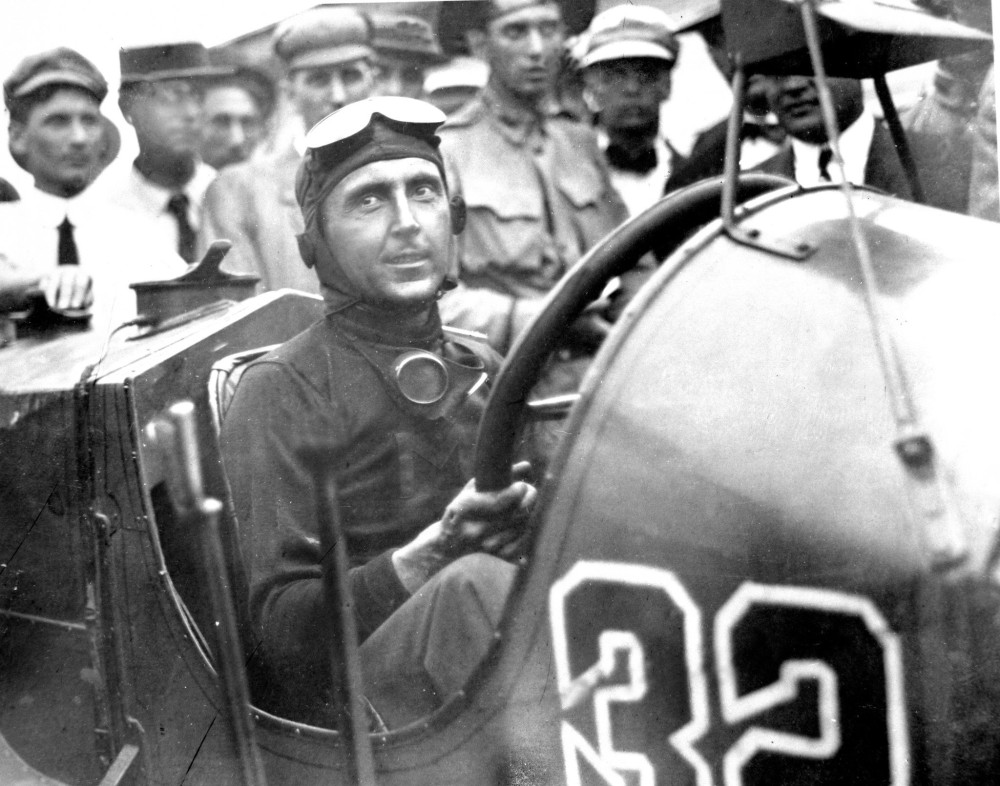
Ray Harroun entered the first Indianapolis 500 in 1911 with a mirror attached to his Marmon Wasp. He drove alone while his competitors carried riding mechanics, won the race and introduced the world to a device found in every car today.
It is an irresistible story. It contains racing, ingenuity, controversy and victory, all in one afternoon.
It is also much too tidy.
Harroun gave the rearview mirror its most famous early appearance, but the idea of using a mirror to watch the road behind had already entered motoring literature. The person explaining it was Dorothy Levitt, a British racing driver who wrote one of the most entertainingly practical driving guides of the Edwardian period.
Before mirrors, another person watched behind
Early racing cars commonly carried two people. The driver handled the steering, throttle, brakes and gear changes. Beside him sat the riding mechanic, whose responsibilities extended well beyond repairing the car.
He watched the machinery, operated pumps when necessary and warned the driver about faster competitors approaching from behind. With deafening engines, open exhausts and little opportunity to turn around, an extra pair of eyes was useful equipment.
Harroun’s yellow Marmon Wasp had been designed as a single-seater. Rival teams complained that he could not safely see approaching cars without a mechanic beside him.
His answer was a small mirror mounted above the car’s cowling.
Indianapolis Motor Speedway describes it carefully as the first widely recognized automotive use of a rearview mirror. That wording leaves room for the scattered mirrors, earlier experiments and horse-drawn applications that make any claim of absolute invention difficult to defend.
The device satisfied race officials, and Harroun started without a riding mechanic. After more than six hours and 500 miles around the brick-paved circuit, he won at an average speed of 74.6 mph.
The victory ensured that the mirror became part of Indianapolis folklore. A forgotten experiment on an unsuccessful car might have disappeared into an archive. The mirror on the winner of the inaugural Indy 500 had a far better publicist.
Later accounts suggest that vibration from the Speedway’s brick surface made the reflection difficult to use. Even if it provided less information than hoped, the idea was now attached to one of American racing’s foundational moments.
Dorothy Levitt had already looked backward
Two years before Harroun’s victory, Dorothy Levitt published The Woman and the Car: A Chatty Little Handbook for All Women Who Motor or Who Want to Motor.
Levitt was already well known in British motoring. She competed in cars and motorboats, set speed records and became one of the most visible female drivers of her time. Her book offered practical advice to women interested in driving without relying on a chauffeur.
The guidance feels astonishingly vivid more than a century later. Levitt discussed buying and maintaining a car, choosing suitable clothes, cleaning greasy hands and dealing with mechanical trouble beside the road. She recommended carrying gloves, hairpins, chocolate and, for women traveling alone, a small revolver.
Inside that collection of Edwardian motoring essentials was a hand mirror.
Levitt advised keeping it within reach rather than buried in the storage drawer. If the driver thought another car was approaching, the mirror could be raised briefly to see behind without turning around or releasing the steering wheel.
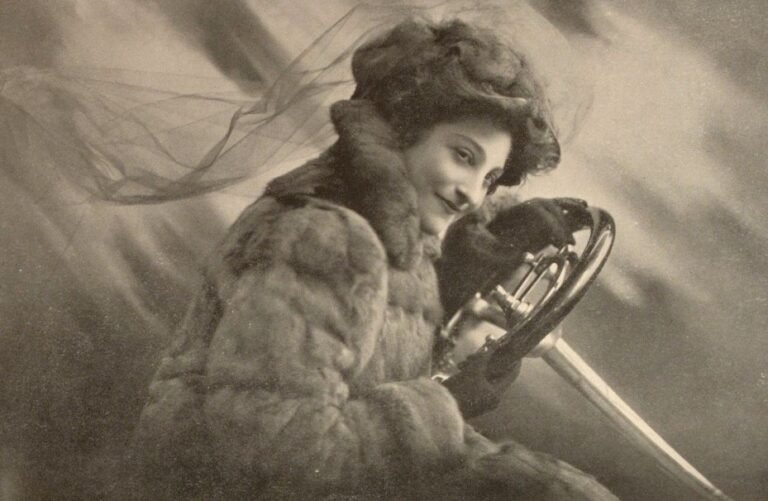
The relevant passage survives in the original 1909 handbook. It describes the central function of a rearview mirror with complete clarity, although Levitt’s version remained handheld rather than permanently attached to the car.
That distinction helps explain why different histories award the credit differently.
Levitt published the idea of using a mirror to monitor traffic behind. Harroun mounted one on a racing car and demonstrated the concept before an enormous audience. Earlier inventors and carriage builders had experimented with mirrors in other forms, while accessory manufacturers later turned them into practical products ordinary motorists could buy.
Each achievement answers a slightly different question.
Racing turned an idea into a legend
Harroun’s mirror was part safety device and part engineering solution. Removing the riding mechanic reduced weight and allowed the Wasp to use its narrow single-seat body. The mirror answered complaints that the design left its driver unaware of cars approaching from behind.
Winning completed the story. Photographs of the Wasp showed the small mirror prominently above the cockpit, giving newspapers and later historians a physical object they could point to.
Dorothy Levitt’s contribution was quieter. Her mirror lived in a pocket and appeared in a book aimed at women, a combination less likely to dominate the traditional histories of motor racing and automobile manufacturing. Yet the published date is difficult to argue with. Her advice appeared in 1909, before the Indianapolis 500 existed.
Neither account needs to erase the other.
Calling Harroun the sole inventor overlooks Levitt and the earlier use of mirrors on other vehicles. Handing the entire invention to Levitt ignores the difference between proposing a portable viewing technique and developing a fixed automotive installation that could become permanent equipment.
Automotive inventions rarely arrive in one perfect form. Ideas circulate between carriage builders, racers, engineers, accessory companies and ordinary drivers. Somebody imagines a solution, somebody else builds a convincing version and another company finally makes it reliable enough for mass production.
The answer to who invented the rearview mirror therefore depends on what counts as invention. Dorothy Levitt left one of the earliest clear motoring instructions for using a mirror to see behind. Ray Harroun gave the mounted mirror its defining public moment in 1911.
The little rectangle above today’s windshield carries both stories. One appeared in a remarkably modern driving guide. The other crossed the finish line first.