
Your Engine Can Be Low on Oil Without Complaining. The Red Warning Means Time May Be Running Out
by AutoExpert | 7 September, 2026
An engine can be low on oil and sound perfectly content. It may start normally, idle without complaint and carry the car through the morning commute. The driver sees no smoke, hears no knocking and receives no dramatic message from the dashboard. Everything seems fine because, for the moment, the oil pump can still reach what remains in the sump.
That quiet period is where the danger begins. Engine oil has several demanding jobs. It creates a protective film between rapidly moving metal surfaces, carries heat away from heavily loaded components, suspends contaminants and supplies hydraulic systems used by timing equipment and variable valve controls. On turbocharged engines, it also lubricates and cools a shaft that may spin well beyond 100,000 rpm.
As the quantity falls, the remaining oil has to work harder. Eventually, the pump can no longer maintain a reliable supply. The change from “slightly low” to “damagingly low” may arrive during a hard corner, sudden stop or steep climb, when the oil moves away from the pickup tube.
Low oil level and low oil pressure are different warnings
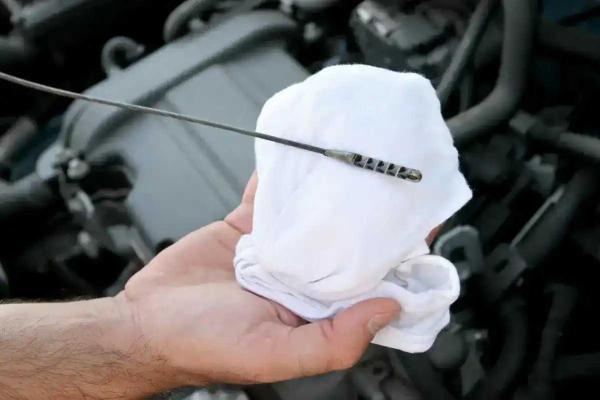
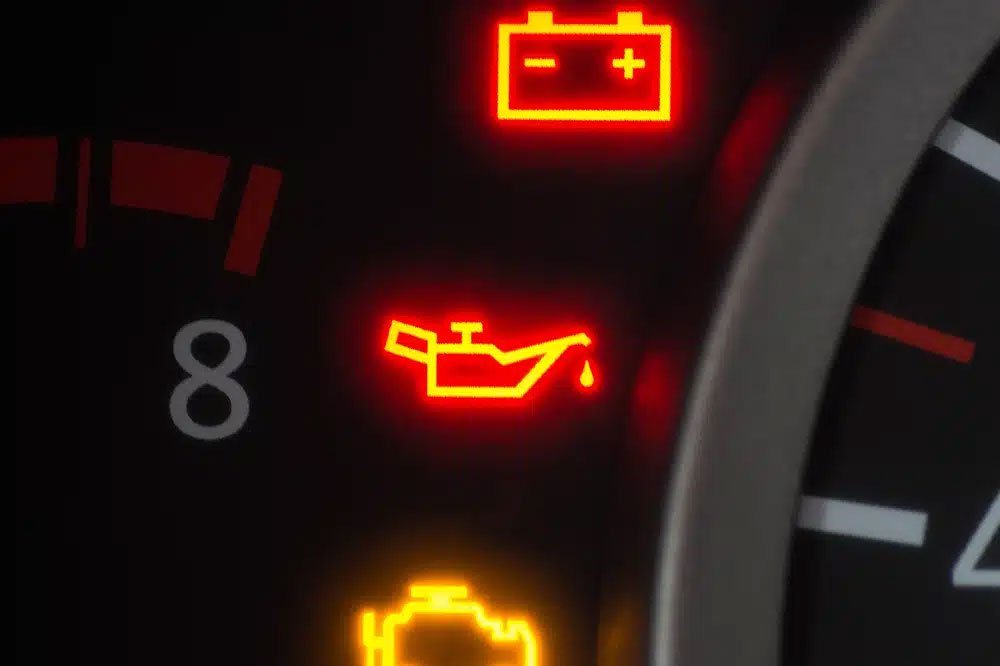
The dipstick measures how much oil sits in the engine’s sump. The familiar red oil-can symbol usually concerns oil pressure, meaning the engine may no longer be circulating oil with enough force to protect its internal parts.
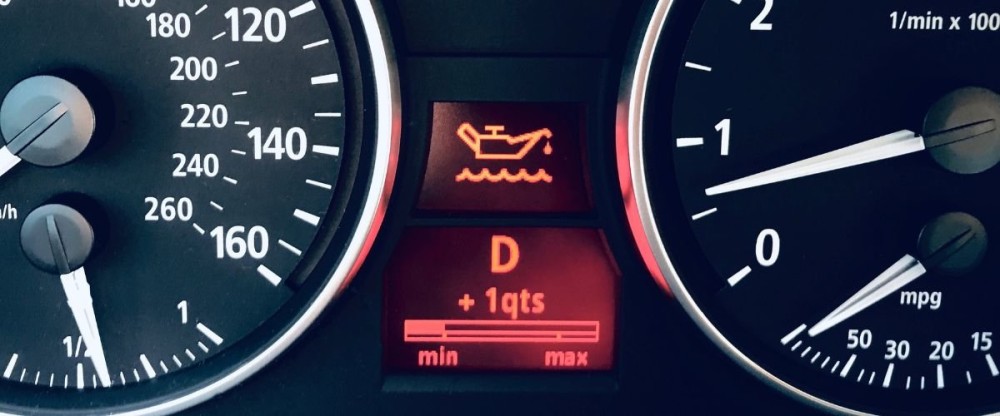
Some vehicles also have a separate oil-level sensor and may display an amber warning before pressure is lost. Others rely on the owner to check the dipstick. The owner’s manual identifies which system is fitted and what each message means.
A mildly low reading on the dipstick does not automatically mean the bearings are running dry. If the pickup remains submerged, the pump may continue supplying normal pressure. However, the smaller reserve heats up more quickly and has less capacity to manage contamination and consumption.
The first sign can be surprisingly brief. The oil-pressure lamp may flicker during a sharp bend or hard braking, then disappear when the car straightens. Oil has sloshed away from the pickup just long enough for pressure to fall.
That flicker deserves attention. Dashboard lights rarely rehearse for entertainment.
As the level drops farther, the warning may remain illuminated at idle and disappear when engine speed rises. A failing oil pump, blocked pickup, unsuitable filter or internal engine wear can produce similar behavior, so adding oil should never be treated as a complete diagnosis.
Honda’s owner guidance warns that operating an engine with low oil pressure can cause serious mechanical damage almost immediately. Ford gives similar instructions: stop safely, switch off the engine and check the oil level.
The damage begins where metal depends on a microscopic film
Inside a running engine, the crankshaft does not simply rub against its bearings. Pressurized oil creates an extremely thin supporting film between the surfaces. The same principle protects camshafts, timing components and other heavily loaded parts.
Once pressure collapses, that film begins to disappear.
Light ticking from the upper engine may be an early audible symptom because hydraulic lifters and camshaft components are losing their oil supply. A timing chain tensioner can also relax, allowing the chain to rattle against its guides.
Deeper knocking suggests trouble around the crankshaft or connecting-rod bearings. By this point, continuing to drive can turn repairable wear into an engine replacement.
Oil also helps control heat. Without a dependable flow, bearings and other components become hotter while friction increases. Metal surfaces can score, smear or transfer material between each other. A bearing shell may rotate out of position, block its oil passage and damage the crankshaft journal.
Turbochargers are particularly vulnerable. Their shafts depend on a continuous supply of clean oil while operating at tremendous speed and temperature. Oil starvation can destroy the bearings, allowing the compressor or turbine wheel to contact its housing. Blue exhaust smoke, loss of boost and an expensive mechanical whine may follow.
Smoke or a burning smell can also reveal how the level became low. Worn piston rings or valve seals may allow oil into the combustion chambers, producing blue-gray exhaust. A leaking gasket can release oil onto a hot exhaust component, creating an unmistakable odor from beneath the hood.
Those symptoms reflect oil loss or consumption. Waiting for them before checking the dipstick gives the engine far too much responsibility for its own rescue.
Complete failure can arrive without a useful countdown
There is no universal number of minutes or miles an engine can survive after losing oil pressure. Load, speed, temperature, design and the amount of oil remaining all influence the outcome.
An idling engine may last longer than one climbing a hill at highway speed. Neither situation offers a safe experiment.
Severe oil starvation can cause a connecting-rod bearing to seize against the crankshaft. The connecting rod may bend, break or punch through the engine block. In other cases, expanding components lock together and the crankshaft stops turning completely.
An engine that seizes while driving can cause an immediate loss of power. Depending on the vehicle and failure, steering and braking assistance may also change, making an already expensive problem more difficult to manage safely.
If the red oil-pressure light illuminates while the engine is running, pull over as soon as conditions safely allow and switch the engine off. Park on level ground, wait as directed by the owner’s manual and check the dipstick.
If the level is low, add only the correct specification and avoid overfilling. Restarting may be appropriate if the manufacturer’s instructions permit it, although the engine should be switched off immediately if the warning remains.
A normal dipstick reading with the pressure light illuminated is especially concerning. The fault may involve the pressure sensor, but it could also come from the pump, pickup, filter or worn internal components. The car cannot distinguish the inexpensive possibility from the destructive one. A tow is far cheaper than finding out through continued driving.
Regular checks remain the simplest protection. Engines can consume oil between scheduled services, particularly as they accumulate mileage. Long service intervals also mean months can pass without anyone opening the hood.
The oil-change reminder cannot measure everything. It may calculate oil life from mileage, temperature and driving conditions while remaining unaware that a leak has reduced the actual quantity.
Checking a dipstick takes less than a minute once the engine has settled. Replacing an oil-starved engine can consume several weeks, a large portion of a bank account and every kind thought the owner once had about the car.