
The Future of Driving: Exploring Advanced Mercedes Safety Tech at Immendingen Test Facility
by AutoExpert | 19 March, 2025
Picture this: You're cruising down a dual carriageway on a sunny autumn day. The low sun's in your eyes as you move into the slip lane to turn left. Suddenly – bam! – a motorcyclist appears out of nowhere directly in front of you. Your heart stops. You brace for impact...
But instead of a crash, there's just a warning beep, a weird static noise, and your Mercedes E 300 de slams on the brakes – just enough to let the motorcycle pass safely without getting you rear-ended by the car behind you.
Welcome to Immendingen, Mercedes' massive €200 million test facility in Germany, where scenarios like this play out hundreds of times a day. It's all to perfect the carmaker's Active Brake Assist system, which now comes standard on all new Mercs.
The technology is mind-bogglingly complex. A network of radars and cameras is constantly scanning the environment while you're fiddling with the air con or adjusting your mirrors. Meanwhile, thousands of lines of code are calculating exactly how hard and how long to hit the brakes if danger appears.
And that random burst of pink noise through the speakers? That's actually super clever – it makes your ear muscles contract to prevent temporary deafness from airbag deployment. That way, you can still hear emergency services, which the car will have already called for you.

The "motorcyclist" in this test isn't real, of course – it's a dummy on hidden castors, wirelessly connected to a "mission control" van. Just this setup alone costs about €300,000. Money well spent when you consider the horrifying statistics: in the last five years, 1,596 motorcyclists died on UK roads, with roughly a third of those fatalities involving car collisions.
Active Brake Assist doesn't just look out for bikers, though. It helps protect cyclists and pedestrians too. Mercedes has delivered more than 10 million cars with pedestrian collision avoidance in just over a decade.
The test day continues with more scenarios. The E-Class pulls out of a junction with a biker approaching fast from the side – again, the sensors spot the danger and bring the car to a halt just in time.

Then there's Evasive Steering Assist (ESA), designed to prevent those all-too-common rear-end shunts that cause whiplash and traffic jams. As test driver Jan Hoffmann accelerates toward a parked Mercedes foam mock-up, the forward radar and camera are busy checking if adjacent lanes offer an escape route.
When the warning sounds, Jan swerves right. This triggers ESA, which calculates exactly how much power steering assistance is needed to navigate around the obstacle and get safely back in lane without oversteering. Another potential crash avoided. And if Jan hadn't reacted? Active Brake Assist would have kicked in anyway.
While active braking became mandatory on all new cars in Europe from July 2024, Mercedes is pushing the boundaries with Drive Pilot – its automated driving system. Soon, German drivers with high-spec Mercedes models will be able to take their eyes off the road and literally watch movies or play games while cruising at up to 59mph.

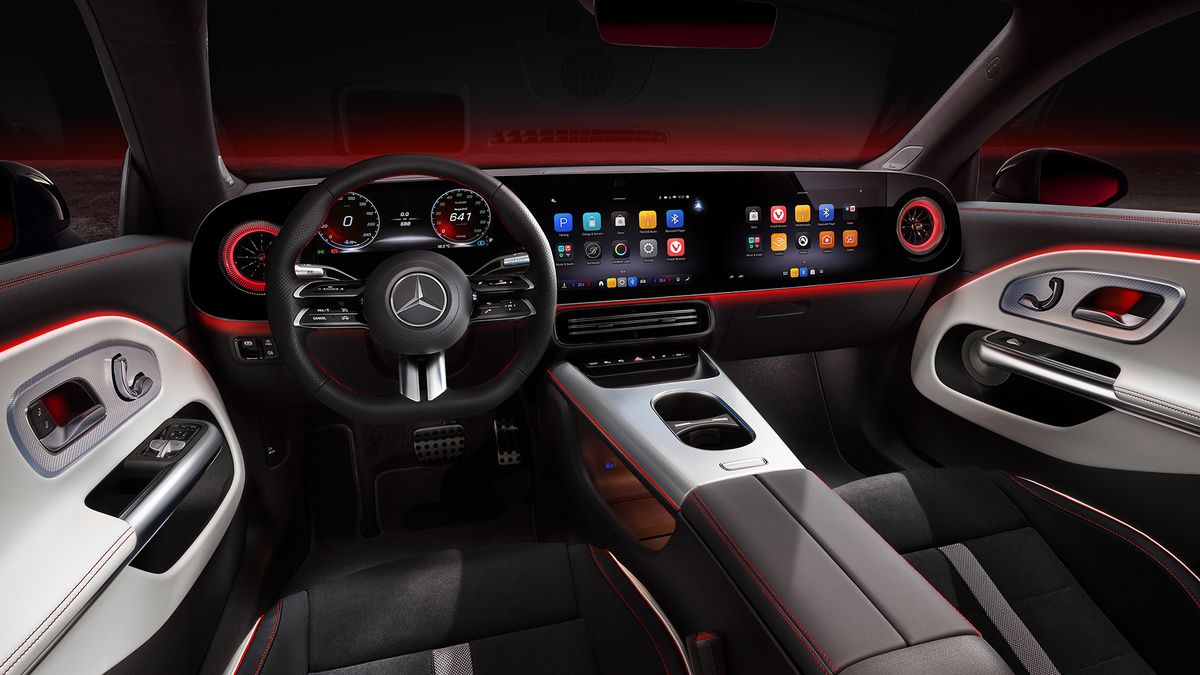
Riding in an S-Class with test driver Els Hentschel, the system gets activated with a press of a silver button on the steering wheel. A turquoise light strip illuminates – the signature color that indicates the car is driving itself. Soon, this will be visible on the exterior too, with additional front and rear lights to signal to other road users that the car is in self-driving mode. Two US states have already approved this feature.
The S-Class has even more tech than the standard Active Brake Assist setup. There's LiDAR, which fires laser light down the road to measure distances, additional cameras, and even a weather sensor – since Drive Pilot can't yet operate in rain due to potential sensor interference. All this hardware is orchestrated by sophisticated software that constantly evaluates the surroundings.
During the test, a Mercedes parked on the hard shoulder comes into view, and the S 580 smoothly shifts sideways to create space – just in case someone opens a door. Then an EQS suddenly cuts into our lane. It catches me off guard, but not the Mercedes, which calmly slows down. "There's no need for steering, but the car would have done so if necessary," Hentschel explains.
In the final demonstration, the leading vehicle starts reversing toward the S-Class – and just before a collision would occur, the Mercedes automatically honks its horn.
What happens if the driver needs to take back control? If the lead car changes lanes or speeds up, there's a gentle warning sound, red lighting, and a text alert. If the driver doesn't respond within ten seconds, the seatbelt starts tugging, and if there's still no reaction, Drive Pilot brings the car to a safe stop, turns on the hazard lights, and calls Mercedes' emergency center.
This is actually the second version of Drive Pilot. The first one was limited to just 39mph, making it useful only in traffic jams. The upgraded system can now follow trucks in the slow lane at 59mph while you finish that important email. Mercedes estimates it could take until 2030 to refine the system for speeds up to 80mph.
In Germany, Drive Pilot costs nearly €6,000, but existing S-Class and EQS owners with the right hardware will get a free upgrade. The 59mph version is set to roll out from January 2025, once German regulators give the green light – and this means owners shouldn't be liable for any accidents when the system is active.
While UK legislation has made it possible for the system to be approved by the Vehicle Certification Agency, Mercedes still needs to build a business case. This would include mapping all 2,300 miles of the UK's motorway network – for each lane. This super-detailed mapping, combined with a highly accurate antenna, lets Drive Pilot position the car within centimeters, helping keep it properly in lane. The system is so precise it can even detect shifts in the earth's tectonic plates!
"We won't do any beta testing with our customers," says autonomous driving spokesperson Alexandros Mitropoulos, in what seems like a jab at Tesla's Autopilot system. Despite billions of customer test miles and Elon Musk's promises, Tesla's system remains at Level 2 "partial automation." Mitropoulos adds, "If a Mercedes-Benz customer can buy it, they can be sure it's pretty safe."
Mercedes is on a mission with its "Vision Zero" – aiming to completely eliminate accidents by 2050.
"We would like to live in a world with no accidents and certainly no fatalities," Mercedes-Benz chairman Ola Källenius told Auto Express during the visit to Immendingen. "Everybody talks about Euro NCAP and its five stars, but internally we say one star is usually enough – the Mercedes star. We have a testing regime that's more comprehensive than some rating institutes because it's about real-life safety."
The company takes accidents seriously – they send a team to investigate every major crash involving a current model within 120 miles of their safety headquarters. Mercedes also has a long history of safety innovations, from crumple zones and decoupling steering columns to door locks that still work after an impact.
In 1978, Mercedes introduced ABS anti-lock brakes on the S-Class, the same model that co-introduced ESP electronic stability control in 1995. ESP prevents vehicles from leaving the road or rolling over by braking individual wheels and adjusting engine power when sensors detect an imminent loss of control.
"The logic 25 years ago was that new technology came in the S-Class, then you democratized it through your lineup, then maybe everybody else in the auto industry got it as well," explains Källenius. "That logic has been upended in the past 10 years, where we've said innovation could come in any model."
"So if we launch automated driving in the CLA that comes next year, it will be the most sophisticated system we've ever done. Any new generation of Mercedes is the safest we've ever made because technology never stops."
With systems like these, no wonder Mercedes predicts it will halve the number of people killed or seriously injured in accidents involving their cars this decade. That's certainly a welcome step toward reducing life-changing crashes worldwide.
Inside Mercedes' Incredible Test Track
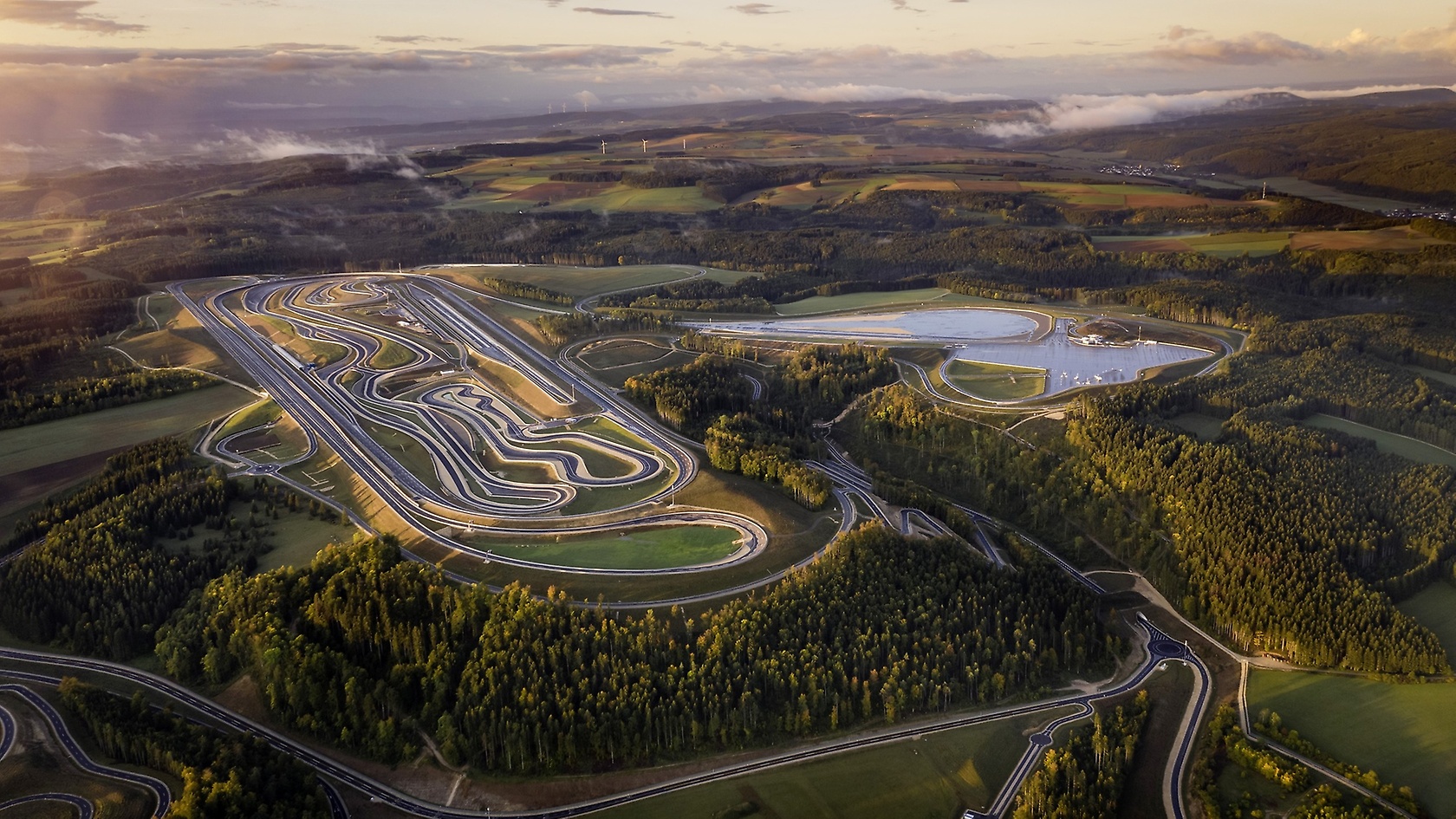
Where can you drive up ramps so steep that asphalt would slide off, tackle mountainous hairpins climbing 180 meters, then cruise a motorway that crosses from France to China? At Mercedes' Immendingen proving ground, which opened in 2018.
The company transformed a former military site about an hour south of Stuttgart into a 520-hectare testing paradise. It has everything: off-road trails, a high-speed bowl, hot and cold weather chambers, and wet and dry handling circuits. The road markings, signs, and conditions replicate roads from around the globe.
Up to 400 prototypes can test simultaneously, all equipped with devices that transmit their locations and speeds through Mercedes' private LTE network. There's a huge autonomous driving test area where engineers recreate traffic scenarios and even deploy mobile rain and snow machines to test sensors in harsh weather. The water for these tests is stored in tanks that could fill 36,000 bathtubs!
,xPosition=0,yPosition=0.5)
Mercedes has even built a mini city center, complete with a 500-car parking garage, to evaluate vehicles in urban settings. And all this is watched over by sheep (to mow the grass), llamas (to protect the sheep from foxes), skylark nesting areas, and wildlife corridors that allow animals – including a roaming bobcat – to pass safely. It's the ultimate eco-friendly playground for shaping the future of Mercedes cars.