
Stop! You're Probably Jump-Starting Your Car Wrong (And It Could Cost You Thousands)
by AutoExpert | 28 April, 2026
Knowing how to jump-start a car is one of those skills everybody assumes they have until their battery actually dies. Then you are standing in a parking lot, hood up, staring at a pair of jumper cables like they are some kind of ancient puzzle. Somebody nice has pulled up to help. And now you are trying to remember which color goes where while pretending you totally know what you are doing.
No judgment. Most people have been there. But here is the thing nobody mentions when they hand you a set of cables: modern cars are not the simple machines they used to be. Today's vehicles run dozens of sensitive electronic modules, and one wrong move during a jump-start can send a voltage spike through the system that fries your ECU, your infotainment screen, or your body control module. That kind of repair can run $1,000 or more at the dealer. All because you clipped a cable to the wrong spot.
So let's walk through this properly.
Before You Connect Anything
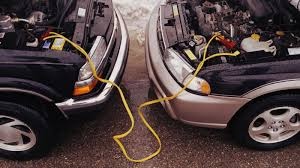
First, pull the working car close enough that the cables can reach, but make sure the two vehicles are not touching each other. Turn off both cars completely. Not just the engine. Turn off the headlights, the radio, the climate control, the phone charger, everything. The fewer electronics drawing power during the jump, the lower the risk of a surge.
The Correct Jumper Cable Order
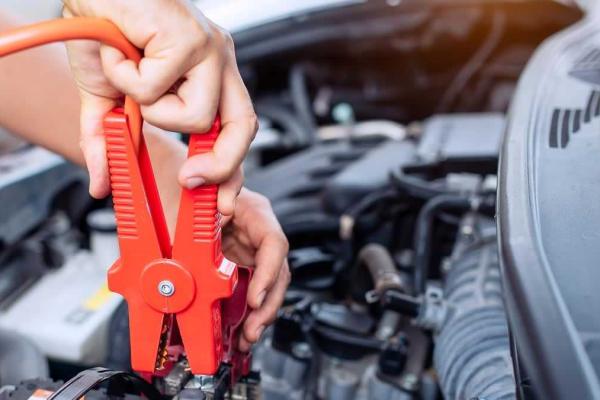
Now grab the cables. Red is positive. Black is negative. That part is simple enough. But here is where people mess up. You connect in a specific order, and you disconnect in the reverse order. Getting this wrong is where the damage happens.
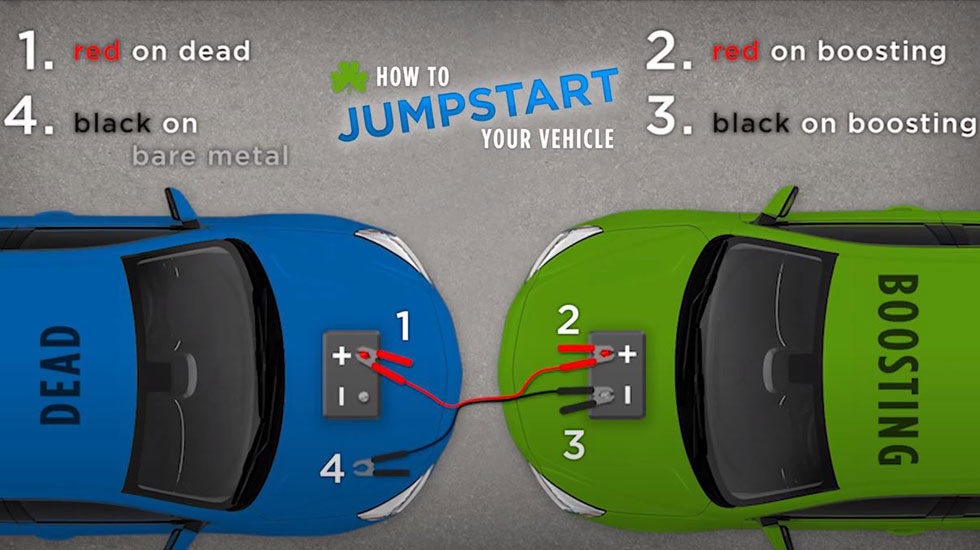
Start with the dead battery. Clip the red cable to the positive terminal. You will see a plus sign or the letters POS stamped into the battery or the terminal cover. Then take the other red clip and connect it to the positive terminal on the good battery. So far so good.
Now the black cable. Clip one end to the negative terminal on the good battery. Here is the critical part that trips everyone up: do NOT connect the other black clip to the negative terminal on the dead battery. Instead, find a bare metal surface on the engine block or the frame of the dead car. A bolt, a bracket, an unpainted metal piece away from the battery. That is your ground point. The reason? When you make that last connection, there can be a small spark. If you make that spark right next to the battery, and the battery has been off-gassing hydrogen (which they sometimes do), you could get a very bad day. Grounding to the engine block keeps the spark away from the battery.
Starting the Dead Car Safely
With everything connected, start the working car and let it run for two or three minutes. Do not rev it up like you are at a drag strip. Just let it idle. That gives the dead battery enough charge to turn over without dumping a wall of current all at once.
Then try starting the dead car. If it fires up, great. Let it run. Do not shut it off right away. You need to drive it for at least 15 to 20 minutes to let the alternator recharge the battery. A short trip around the block is not enough. If you turn it off too soon, you will be right back where you started.
How to Disconnect Without Causing a Voltage Spike
To disconnect, reverse the order. Black from the engine block first, then black from the good battery, then red from the good battery, then red from the formerly dead battery. Taking them off in the wrong order can cause that same voltage spike you were trying to avoid.
When Jump-Starting Is Not Enough
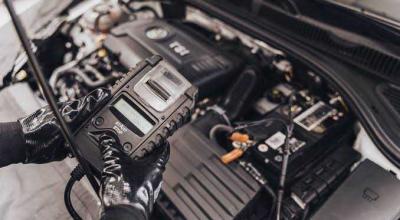
If you find yourself needing jumps more than once in a couple of months, the battery is telling you something. Most car batteries last three to five years. After that, they start losing their ability to hold a charge, especially in extreme heat or cold. A new battery runs $150 to $250 for most vehicles, and swapping one in takes about 20 minutes at an auto parts store. They will usually install it for free. That is way cheaper and less stressful than getting stranded again.
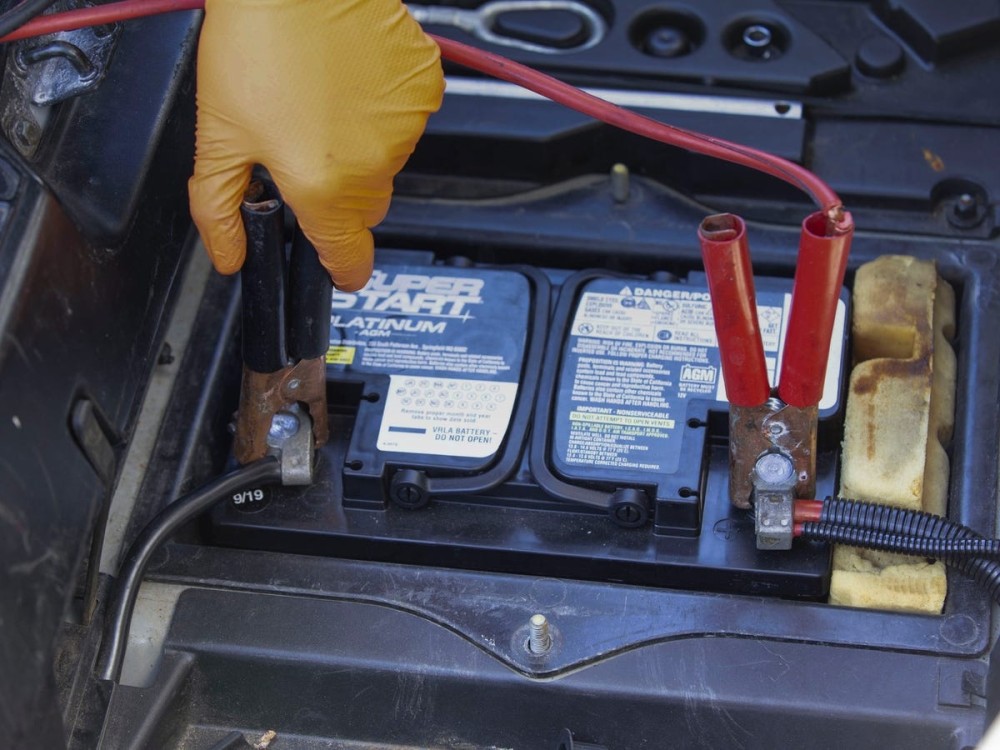
And if you want to skip the whole jumper cable dance entirely, pick up a portable lithium jump starter. They are about the size of a thick paperback, cost $50 to $80, and let you jump your own car without needing another vehicle at all. Toss one in your trunk and forget about it until you need it. Future you will be very grateful.