Lost Legends: 10 Iconic American Racetracks That Vanished
by AutoExpert | 27 May, 2025
Racing in America has always been about more than just cars going fast in circles. Since that first race in Chicago back in 1895, the country has seen nearly a hundred racetracks come and go, each with its own story to tell.
Some tracks vanished due to tragic accidents, others couldn't keep up financially, and a few simply outlived their purpose. Here are ten of the most memorable racetracks that once called America home but exist now only in the memories of racing fans.
10. Watkins Glen Grand Prix Course (1948-1952)
New York • 6.6 miles • 17 turns
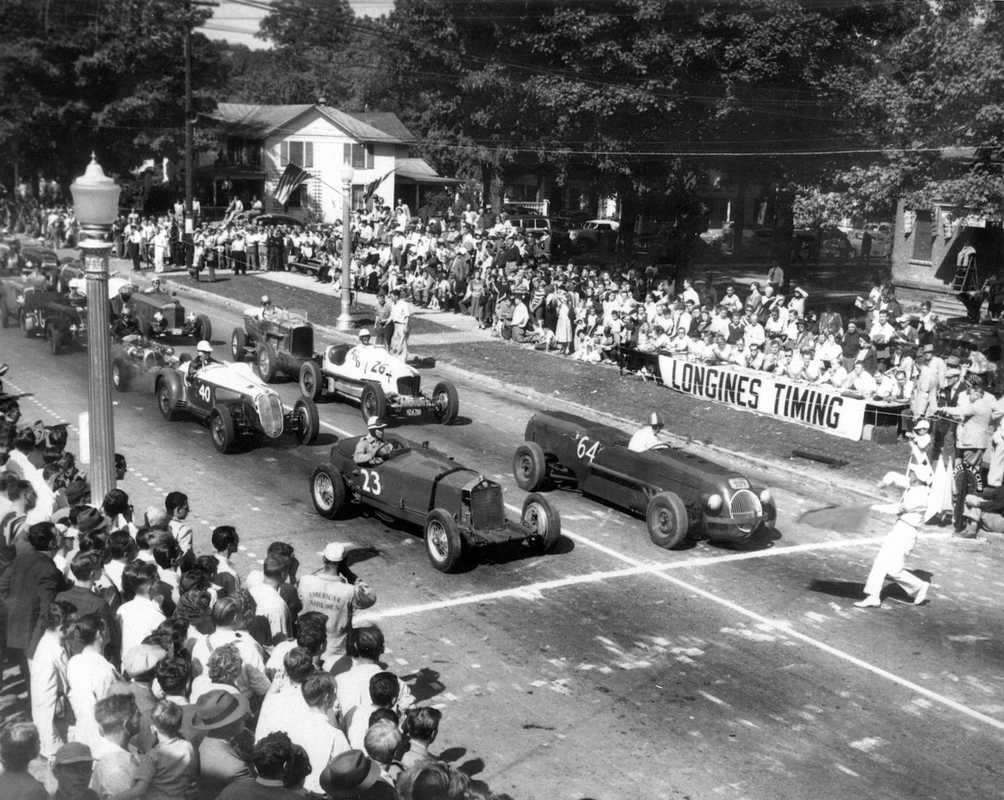
Before Watkins Glen International became the legendary track everyone knows today, there was the original Watkins Glen circuit. This beast of a track stretched over six miles through the New York countryside and hosted the first major American road race after World War II.
Everything was going great until 1952, when disaster struck. A car went off course during a race, killing a spectator and injuring several others. That was it for the original track – by 1957, racing had moved to the current Watkins Glen location.
9. Marchbanks Speedway (1951-1970)
California • 0.5 miles • 6 turns
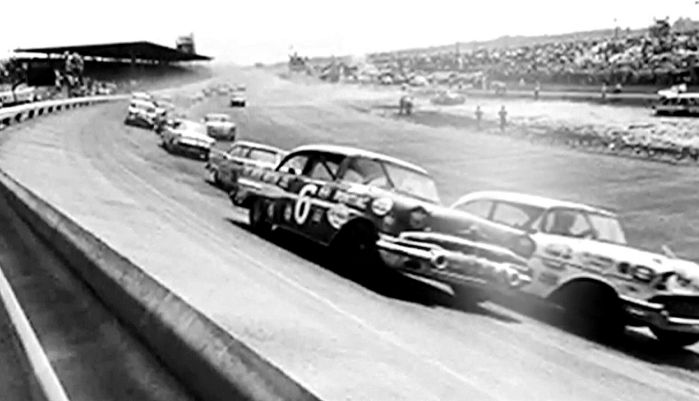
What started as a simple dirt track on a cotton farm in California eventually became a proper paved speedway that hosted NASCAR, open-wheel racing, and motorcycles. The track evolved from its humble half-mile beginnings into a 1.4-mile circuit with serious banking.
NASCAR showed up three times, but legal troubles and lack of funding for necessary improvements killed the track. The last race happened in 1969, and that was the end of this scrappy little speedway.
8. Marlboro Motor Raceway (1952-1969)
Maryland • 1.8 miles • 10 turns
This Maryland track was like a racing playground with multiple configurations – dirt oval, paved oval called "The Bowl," road courses, and even a karting track. It hosted NASCAR races and became a local racing hub for nearly two decades.
The end came not from accidents or money troubles, but from good old-fashioned competition. When Summit Point Raceway opened nearby, all the events moved there, leaving Marlboro Motor Raceway high and dry.

7. Paramount Ranch Racetrack (1956-1957)
California • 2 miles • 11 turns
Talk about a short but memorable life. This track, built on a movie ranch in California, lasted just two seasons before being deemed too dangerous. The layout was actually pretty cool – lots of elevation changes, a three-quarter-mile straight, and challenging turns spread over two miles.
Unfortunately, a series of nasty crashes convinced everyone that maybe racing on a movie set wasn't the best idea. After just seven racing events, the track closed for good, though the ranch still exists as a historical site.
6. Riverside International Raceway (1957-1989)
California • 2.5-3.3 miles • 9 turns
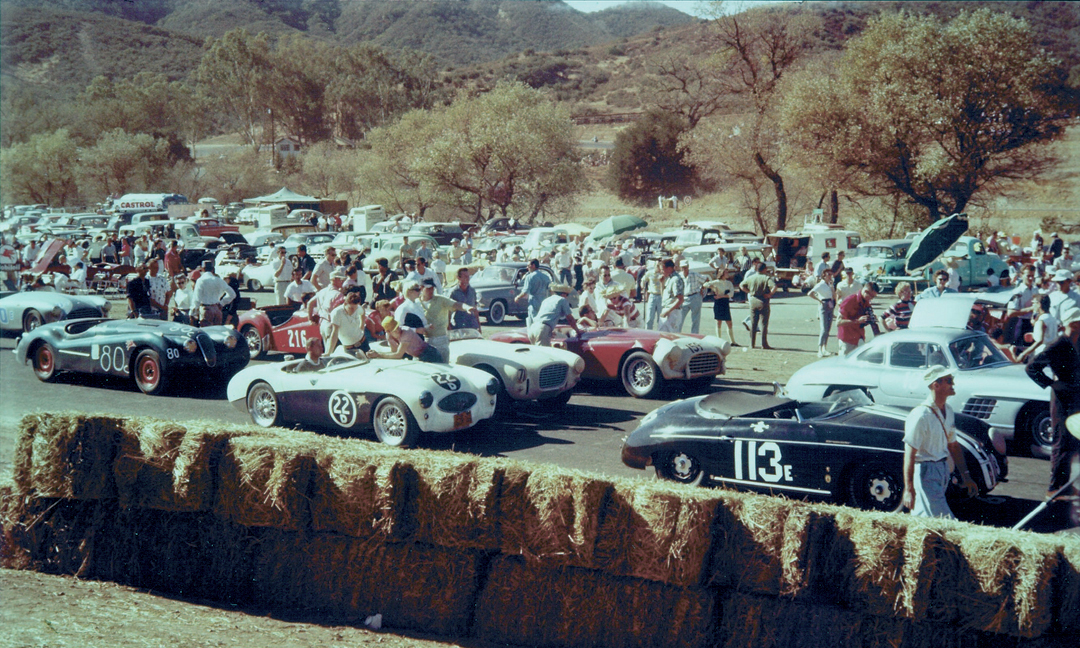
Riverside was the real deal – a proper racing venue that hosted everything from NASCAR to sports car championships. The track had multiple configurations and was home to some seriously important races, including the Trans-Am Series and World Sportscar Championship.
But Riverside had a dark side. Over its 32-year history, 21 people died at the track, including racing legend Ken Miles. Despite its significance in American racing history, the track's reputation for danger ultimately contributed to its closure in 1989.
5. Meadowdale International Raceway (1958-1968)
Illinois • 3.27 miles
Here's a weird one – this track was built not for racing, but to help sell houses in a Chicago suburb. The developers figured a racetrack would attract buyers to the area during the post-war boom.
The track had a unique feature called the Monza Wall – a steep 180-degree turn that was as scary as it sounds. Poor management, needed improvements that never happened, and several fatalities spelled doom for Meadowdale after just ten years.

4. Continental Divide Raceway (1959-1983)
Colorado • 2.8 miles • 10 turns
Thirty miles south of Denver sat this impressive facility that had everything – a 2.8-mile road course, a dirt oval, and a drag strip. Major racing series like USAC, Trans-Am, and Formula 5000 all showed up to race in the Colorado mountains.
A horrible crash in 1969 shook one of the owners, and when that same owner was later diagnosed with cancer, the writing was on the wall. The drag strip went first (Evel Knievel did a farewell jump over 11 cars), then the road course, and finally the whole operation shut down in 1983.
3. Augusta International Raceway (1960-1970)
Georgia • 3 miles • 21 turns
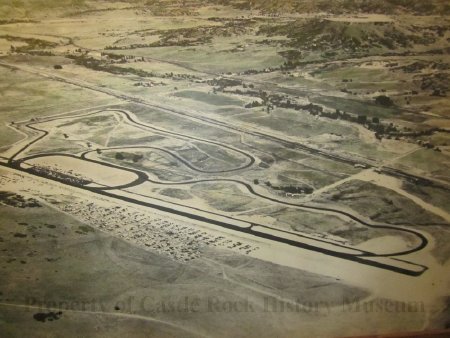
The owners of this Georgia track had big dreams – they wanted to bring stock car racing to the state with a massive five-mile road course and a tri-oval dirt track. Reality hit hard, though, and they ended up with a three-mile road course and no oval at all.
When main shareholder Glen Roberts died in a crash in 1964, the track's fortunes took a hit. Poor attendance didn't help either, and by 1969, only 29 cars showed up for what would be the final race.

2. Stardust International Raceway (1965-1971)
Nevada • 3 miles • 13 turns
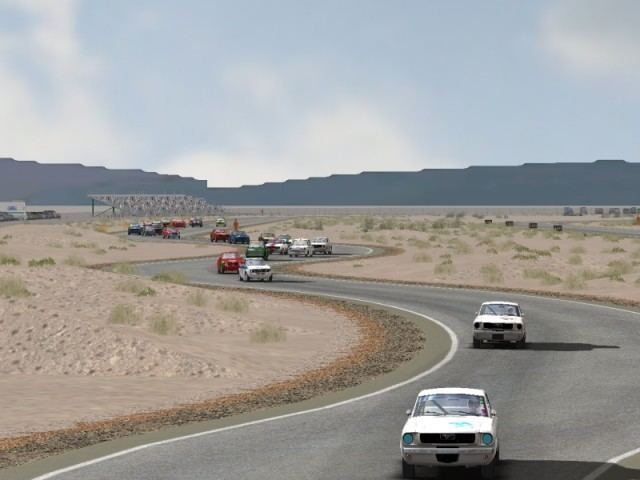
Leave it to Las Vegas to build a racetrack designed to attract the ultra-wealthy. The same company that owned the Desert Inn and Stardust casinos built this three-mile circuit in the desert, hosting everything from Champ Cars to drag racing.
When the parent company dissolved in 1968, the track changed hands but couldn't survive. It closed in 1971, though the property later became home to Las Vegas Speedrome and eventually the Las Vegas Motor Speedway we know today.
1. Palm Beach International Raceway (1965-2022)
Florida • 2.25 miles • 11 turns
The most recent loss on this list, Palm Beach International closed just two years ago after nearly 60 years of operation. The track opened in 1964 and hosted major series like Trans-Am and Formula Atlantic over the decades.
Interestingly, Formula One star Max Verstappen holds a lap record there from his 2014 visit. The track got a makeover in 2008 when enthusiasts bought it and renamed it from Moroso Motorsport Park, but even that couldn't save it. A "Last Lap" event in 2022 marked the end of an era.

The End of an Era
Each of these tracks tells a story about American racing – some tragic, some inspiring, all part of the rich tapestry of motorsports history. While Koenigsegg may be setting new records at today's tracks, these lost venues remind us that racing has always been about more than just speed. It's about community, passion, and sometimes, knowing when to say goodbye.