There Is a $15 Filter in Your Car You Have Probably Never Changed. It Is Killing Your AC.
by AutoExpert | 4 June, 2026
If you want to know how to change cabin air filter on your car, here is the short version. It takes about three minutes. It costs about $15 in parts. You do not need a single tool on most vehicles. And there is a very good chance you have never done it.
You are not alone. The cabin air filter is the most quietly ignored maintenance item in modern cars. Most owners do not know it exists. Some shops will not even tell you about it during a routine service unless they can charge you $60 to $90 to swap it for you. The actual job is something most twelve-year-olds could handle in less time than it takes to microwave popcorn.
Here is why you should care, especially right now, going into summer.
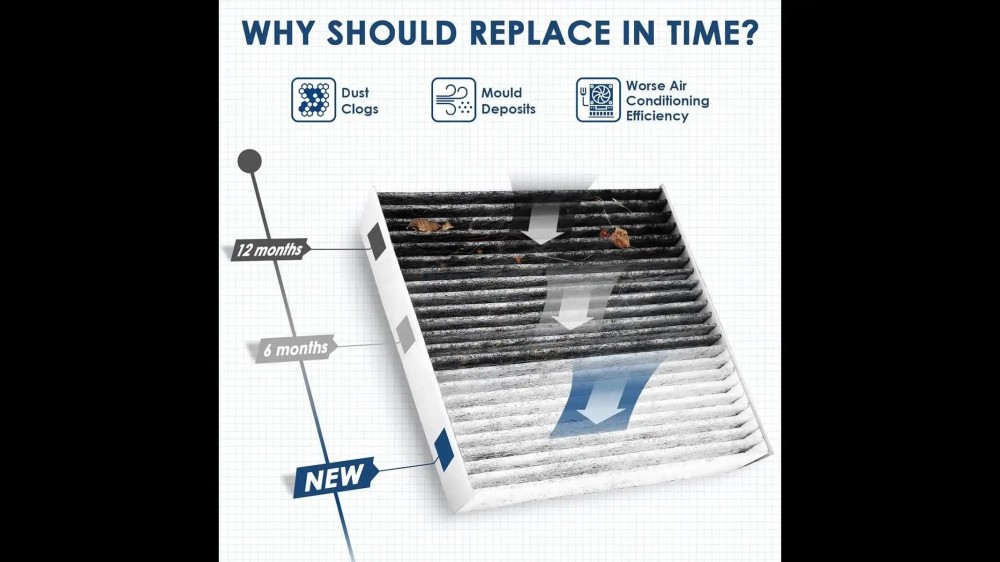
A clogged cabin filter is the number one reason a car's air conditioning starts to feel weak. The AC system can be working perfectly, with a full refrigerant charge and a healthy compressor, and you will still feel limp airflow out of the vents if the air cannot get through the filter. If your AC seems fine when you crank it to max but feels thin on lower settings, the filter is your first suspect. Not the refrigerant. Not the compressor. The filter.
It also matters for what you breathe. A cabin filter sits between the outside world and your face. Pollen, dust, soot from the diesel pickup in front of you, road grit, mold spores. All of it gets caught in that paper pleat. After about a year, that filter is doing less of its actual job and more of just sitting there being clogged. Allergy sufferers especially will notice the difference within a day of swapping it.
Now, how to find yours.
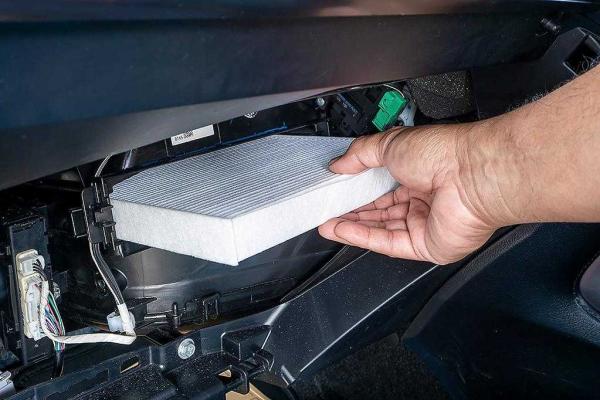
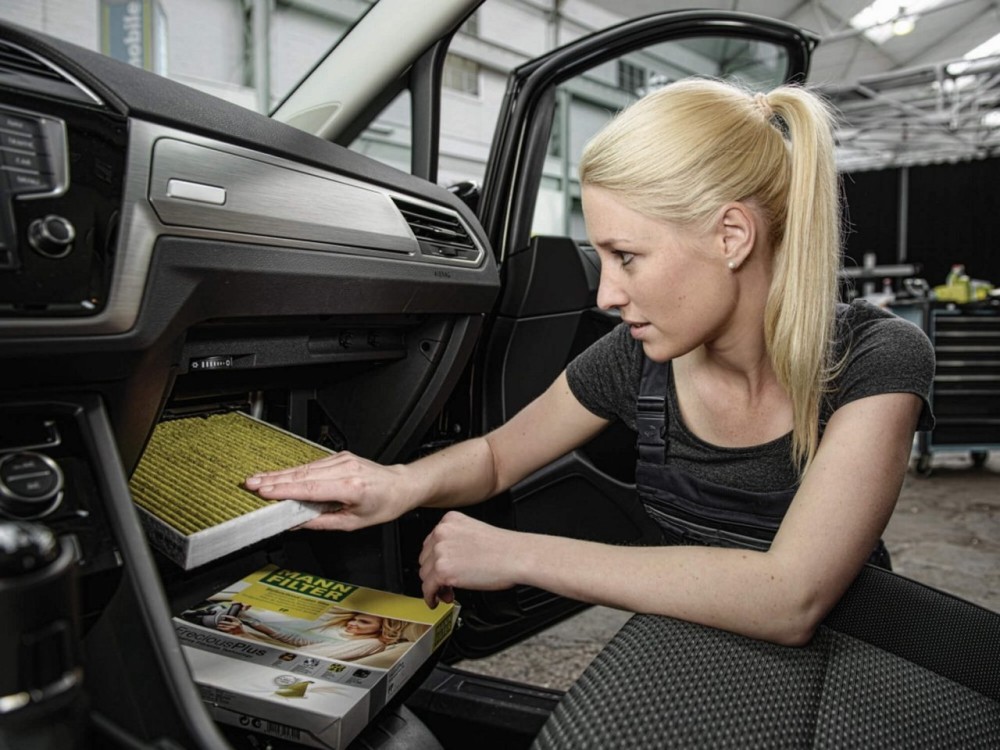
On roughly 80 percent of cars built since 2005, the cabin filter lives behind the glovebox. Open the glovebox, empty it out, and look for two little tabs on either side. Squeeze both tabs in and the glovebox swings down farther than it normally does. Behind it you will see a plastic cover, usually with two clips, that pops off and reveals the filter. The filter slides out like a drawer.
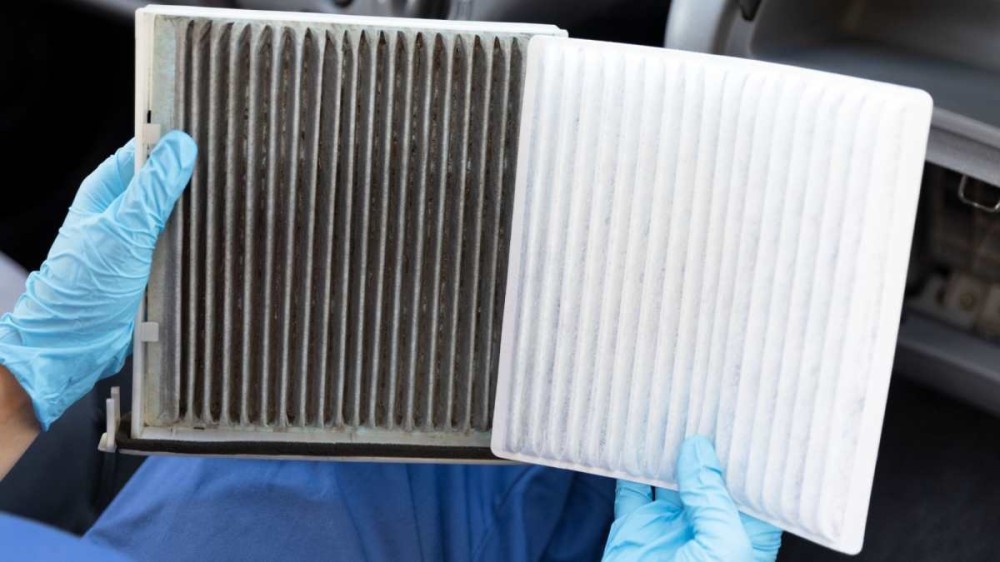
The old one will probably look terrifying. Brown, leafy, sometimes with a chunk of acorn that a mouse moved in for the winter. That is your reminder that this thing has been working.
When you slide the new one in, look for an arrow printed on the side. That arrow points in the direction of airflow, which on most cars is down or toward the floor. Put it in backward and the filter still works, just not as well. Pop the plastic cover back, click the glovebox tabs back into place, and you are done.
A few tips that save you headaches.
Buy the filter for your specific make and year online. The big chain stores often charge double for the same part. A name brand cabin filter for most popular cars runs $12 to $18. Skip the bargain bin no-name versions. They flow worse and shed paper into your AC ducts.
Be careful with the trendy "charcoal" or "HEPA" cabin filters. They sound great, and for some cars they work well. For others, especially older vehicles whose blower motors were not designed for the extra restriction, you will trade slightly cleaner air for noticeably weaker AC. If your owner's manual does not specifically endorse the upgrade, stick with the standard type.
Replace it every 15,000 to 20,000 miles, or once a year if you mostly drive in cities or anywhere near construction.
Three minutes. Fifteen bucks. Cold AC, clean cabin air, and one less thing for a shop to oversell you on.