
That Concrete Highway Wall Has a Surprisingly Clever Way of Redirecting a Crashing Car
by AutoExpert | 7 September, 2026
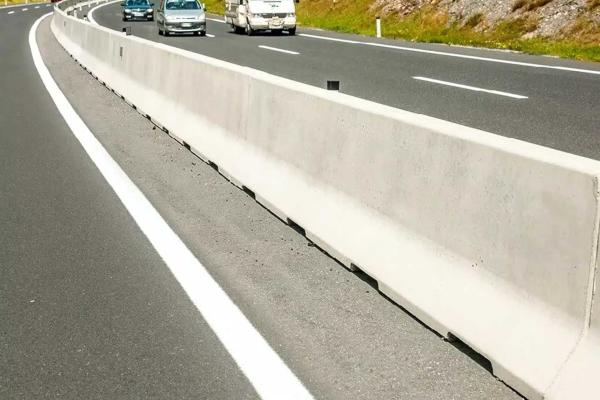
A concrete barrier beside a highway looks like one of the least forgiving objects a car could encounter. It is heavy, rigid and often positioned only a few feet from traffic moving at serious speed.
Its appearance tells only part of the story.
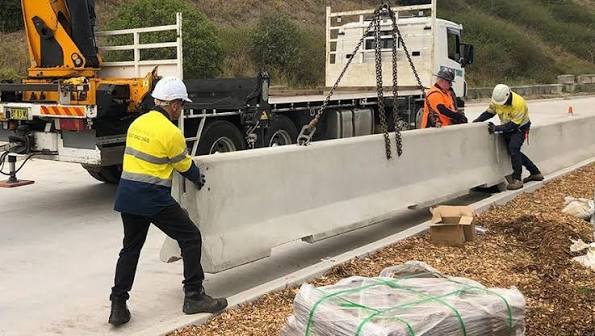
The familiar roadside barrier has been shaped around a very specific assignment. When a vehicle strikes it at an angle, the barrier should prevent the car from crossing into opposing traffic, reduce its tendency to roll and guide it back toward its original direction of travel.
No designer expects the encounter to be gentle. The aim is to replace a potentially catastrophic head-on collision, steep drop or roadside impact with something more survivable.
That explains the strange profile seen on Jersey barriers and similar concrete dividers. The wider base and angled lower face are the product of decades of crash testing, adjustment and occasionally uncomfortable lessons about what vehicles do after their tires touch concrete.
The wall is supposed to influence the car
Most barrier impacts are angled rather than perfectly head-on. A distracted driver drifts across a lane, a vehicle is pushed sideways during a collision or a tire loses grip in a bend. The car reaches the barrier while still carrying considerable forward momentum.
A well-designed concrete barrier takes advantage of that motion.
The tire encounters the lower sloping face first. As it begins to climb, part of the vehicle is lifted slightly. This movement helps redirect the wheel and body along the barrier instead of allowing the car to dig into it or pass through it.
According to the Federal Highway Administration’s guidance on roadside barriers, this lifting and redirection can limit damage during lower-speed impacts and reduce the forces experienced by occupants in certain moderate impacts.
The car still has to lose energy. Tires scrub, body panels deform and suspension components absorb punishment. The concrete wall simply manages the direction in which the vehicle continues moving.
Its surface needs to be smooth and continuous for the same reason. A protruding joint or badly aligned section can catch a wheel rather than guide it. Portable barriers must also be properly connected, because a row of individual concrete blocks will behave very differently from a linked barrier system.
Even the space behind a temporary barrier matters. Some systems are designed to move sideways during an impact. Place one too close to workers, equipment or a drop, and the barrier may have nowhere to perform that movement safely.
Why the Jersey barrier has that familiar shape
Early concrete median barriers appeared in California during the late 1940s. New Jersey engineers later refined the profile, producing the design that became commonly known as the Jersey barrier. California often calls a related version a K-rail.
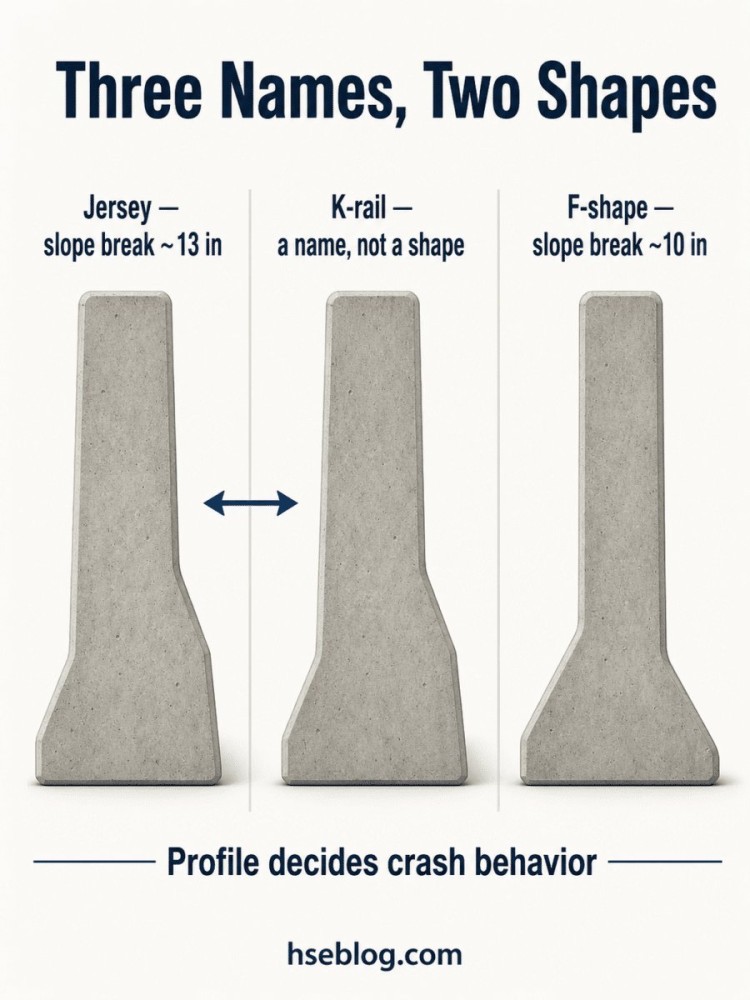
The classic Jersey shape starts with a short vertical face at road level. Above it, the concrete slopes inward before becoming almost vertical farther up the wall.
Those changes in angle have specific jobs. The short base provides a firm contact point. The sloping section interacts with the tire and encourages the vehicle to rise and turn. The upper wall contains larger body movement and helps prevent the vehicle from crossing the barrier.
A typical Jersey profile has a three-inch vertical section near the pavement, followed by a slope that changes angle approximately 13 inches above the road. That shape worked well for many vehicles, although testing revealed a weakness as smaller cars became part of the evaluation.
A light car could climb farther up the lower slope than intended, increasing the possibility of rollover.
Engineers responded with the F-shape barrier. It looks so similar to the Jersey design that most drivers would never notice the difference from the other side of the windshield. The important change occurs close to the ground: the lower slope ends at about 10 inches rather than 13.
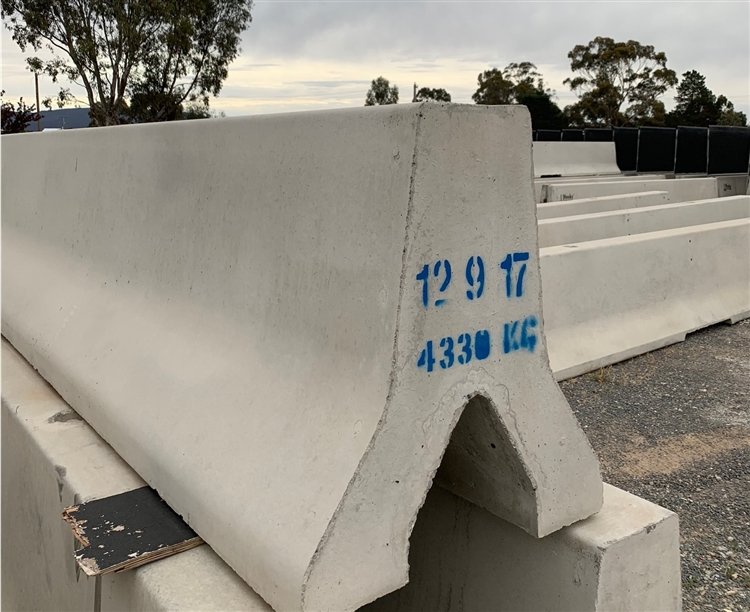
That small adjustment reduces how high a smaller vehicle can climb while preserving the barrier’s ability to redirect it. Three inches on a drawing may appear insignificant. During a fast, angled collision, those three inches can change the path taken by an entire car.
Some highways use constant-slope barriers instead. Their faces rise at one continuous angle, simplifying construction and resurfacing work. Vertical concrete walls are also used in certain locations. These shapes generally produce less tire climb, although they transfer more of the impact forces directly through the vehicle because less energy is being converted into upward movement.
Every profile brings compromises. The best choice depends on expected traffic, available space, vehicle types, road geometry and the consequences of a vehicle crossing the barrier.
A barrier must work with vehicles that keep changing
The average vehicle on the road has changed enormously since the first concrete dividers appeared. Small sedans became common, followed by growing numbers of SUVs, pickups and heavier electrified vehicles. Their bumper heights, centers of gravity and overall masses differ considerably.
Roadside hardware therefore cannot remain frozen in the 1950s.
Modern barriers are evaluated under crash-testing standards such as the American Association of State Highway and Transportation Officials’ Manual for Assessing Safety Hardware, usually shortened to MASH. The program uses defined vehicle weights, impact speeds and approach angles to determine how a barrier behaves in different situations. The FHWA’s implementation guidance explains how MASH criteria apply to new and modified roadside equipment.
Full-scale tests are particularly important. Computer simulations help engineers study possible designs, but concrete barriers operate in a messy physical world filled with deforming metal, bursting tires, shifting loads and vehicles that seldom arrive at a convenient laboratory angle.
Height matters as well. A barrier designed to contain passenger cars may be inadequate for a heavy truck with a much higher center of gravity. Locations carrying substantial commercial traffic may require taller systems engineered and tested for heavier vehicles.
Road resurfacing can create another complication. Adding fresh asphalt raises the pavement beside an existing barrier, effectively burying part of its carefully calculated lower profile. The barrier may still look perfectly healthy while the geometry that made it work has quietly changed.
Concrete barriers remain popular because they are durable, require relatively little maintenance and can prevent vehicles from entering extremely dangerous areas. They also resist impacts without the large deflections associated with many flexible systems.
None can make a highway crash harmless. Speed, impact angle, vehicle design and seat-belt use still determine much of what happens inside the cabin.
Yet the next time a Jersey barrier appears to be nothing more than a long gray wall, look at the few inches nearest the pavement. Much of its engineering lives there. The shape was designed to catch a tire, lift it by a controlled amount and persuade several thousand pounds of moving vehicle to continue along the road rather than across it.
Concrete provides the strength. Geometry does the clever work.