
Cars Survived Nearly a Century Without Cup Holders. Then America Refused to Drive Thirsty
by AutoExpert | 4 September, 2026
The automobile conquered continents, crossed deserts and survived two world wars before anyone decided it desperately needed a secure place for a paper cup.
For much of automotive history, drivers received a steering wheel, several pedals and a dashboard full of metal switches. If somebody brought a drink, they held it between their knees, balanced it on the floor or accepted that braking might add coffee to the upholstery.
Modern buyers would consider such treatment barbaric.
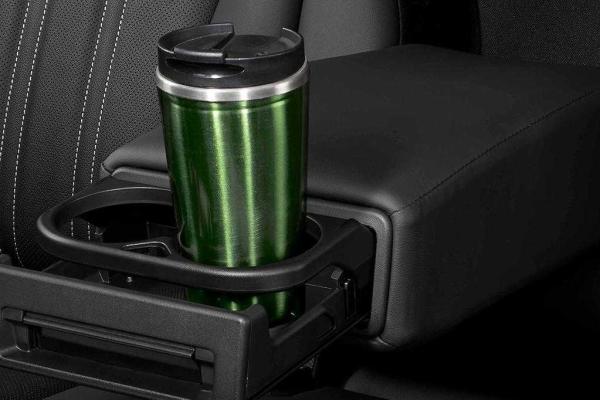
Cup holders now influence center-console layouts, door panels and even third-row seating. Some are heated or cooled. Others slide, fold, illuminate or grip containers in several sizes. Family vehicles occasionally provide more drink spaces than seats, presumably in case every passenger brings a backup beverage.
The industry took decades to reach such abundance.
Drive-in restaurants did not require mobile coffee
Car culture and food culture were already close friends by the 1950s. Drive-in restaurants allowed customers to order without leaving the vehicle, while servers delivered food on trays that attached to an open window.
The crucial difference was that people normally ate while parked.
A drink could sit on the tray, dashboard or seat without being launched during a turn. There was little pressure for manufacturers to engineer a permanent solution into the car itself.
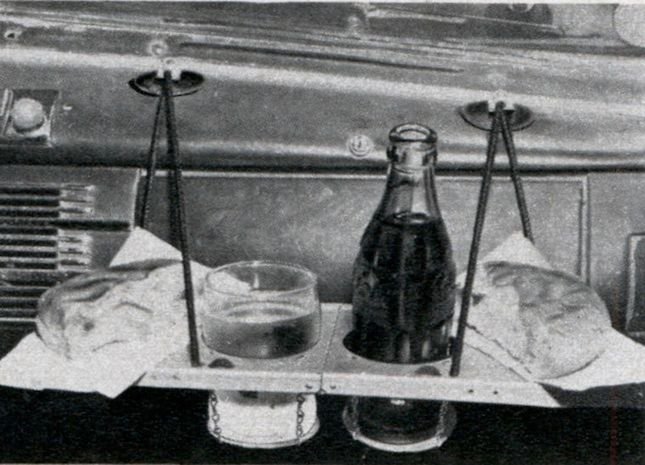
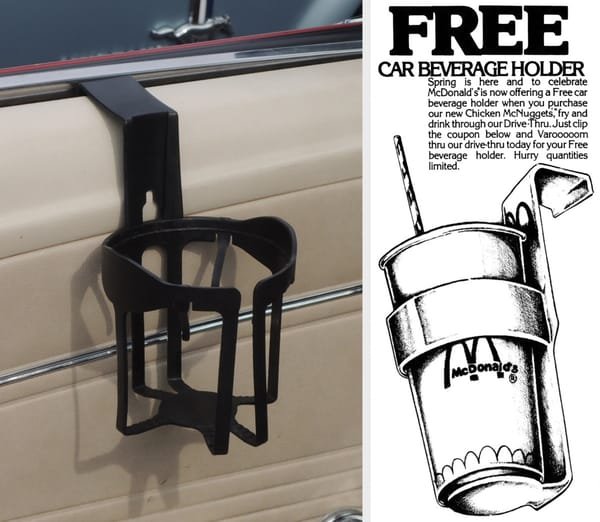
Aftermarket companies saw an opportunity. Accessory trays could hang from the dashboard or hook over a door. Some offered spaces for drinks, food and cigarettes, creating a small dining table inside the cabin.
Early factory attempts were often little more than circular depressions stamped into a glovebox door. They could hold a cup while the car was stationary, provided the cup was not too tall, the road was perfectly flat and nobody breathed heavily near it.
The history documented by Bon Appétit traces dedicated automotive snack trays back to at least the early 1950s. Practical cup containment existed, but the modern built-in holder was still waiting for the way people used cars to change.
The minivan understood what families were actually doing
The breakthrough arrived with the Dodge Caravan and Plymouth Voyager, introduced for the 1984 model year.
Chrysler’s minivans were built around ordinary family life rather than an idealized vision of motoring. Children brought snacks. Parents brought coffee. Journeys involved school runs, shopping bags and several people asking whether they were there yet.
Integrated cup holders suited that reality perfectly.
The earliest minivan holders were shallow by modern standards, but their presence helped turn a convenience into an expectation. The AAA history of automotive cup holders credits the Caravan and Voyager with popularizing built-in holders in mass-produced vehicles.
Meanwhile, American driving habits were becoming increasingly beverage-friendly. Commutes grew longer, drive-through restaurants multiplied and disposable cups became larger. Coffee moved from the breakfast table into the morning journey.
A car was becoming a place where people ate, drank, made phone calls and spent a substantial part of the day. Its interior began evolving accordingly.
America and Europe disagreed over the purpose of a car
American manufacturers embraced cup holders with enthusiasm. European brands were more reluctant.
Part of the divide came from different driving environments. American roads, automatic transmissions and long highway journeys made drinking behind the wheel relatively easy. Larger vehicles provided more room for consoles and storage.
European cars were often smaller, manual gearboxes kept the driver’s right hand busy and twisting roads were less friendly to uncovered coffee. Designers also tended to view the cabin as a place for driving first. A large plastic ring beside the gear lever could feel like an insult to carefully arranged controls.
The cultural disagreement produced some memorably grudging solutions. Cup holders hid inside dashboards, folded from armrests or emerged through mechanisms far more complicated than the task required.
BMW chairman Bernd Pischetsrieder reportedly summarized the surrender wonderfully in 1996: “All BMWs now have cupholders. I hate them.”
American buyers had won.
Holding a drink is harder than it looks
A good cup holder has an awkward job.
It must secure a narrow can, a wide takeaway cup and a tall bottle without allowing any of them to rattle, tip or block important controls. It must survive heat, cold, spilled sugar and years of coins being dropped into it.
Its position requires equal care. Place it too far forward and the driver must stretch. Put it beside the shifter and a large drink may interfere with gear changes. Install it above electronic controls and the first spilled coffee becomes a service appointment.
Engineers use flexible tabs, rubber inserts and stepped bases to accommodate different containers. Retractable designs save space but add hinges, springs and gears that can eventually break.
The Smithsonian’s collection even includes a General Motors cup holder used in 1990s sedans, preserving an object so ordinary that millions of drivers never considered it worthy of a museum.
Yet it records a genuine shift in automotive design. The cabin was no longer arranged only around the machinery of driving. Human clutter had earned a permanent address.
The cup-holder arms race continues
Modern vehicles have pushed the idea far beyond two holes in the center console.
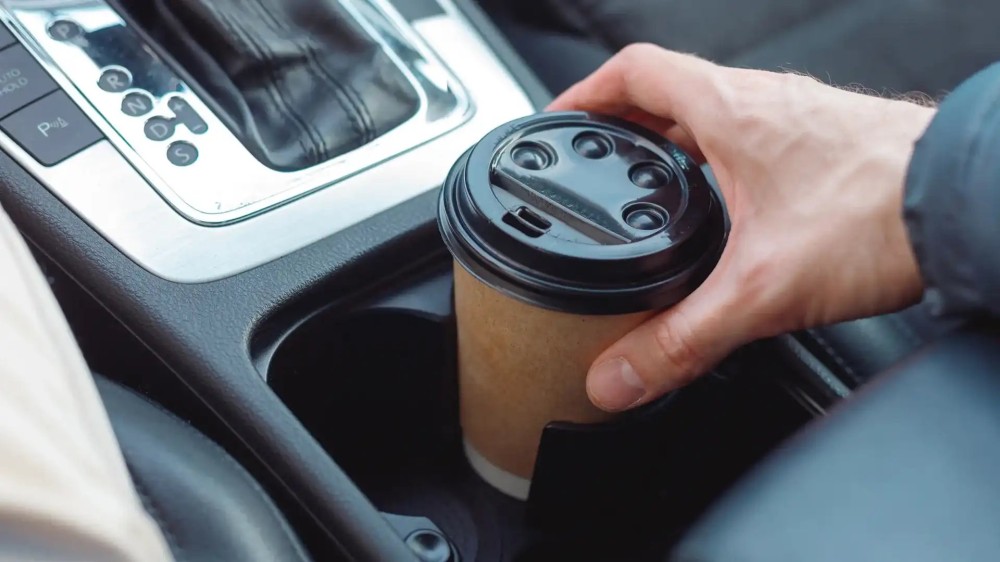
Luxury models can warm or cool drinks. Large SUVs provide holders across three rows. Some designs include removable liners for cleaning, adjustable grips and spaces large enough for the oversized bottles drivers now carry everywhere.
The cup holder has also become a quiet test of whether a car was designed for the market where it is sold. A vehicle can offer impressive horsepower, beautiful leather and a sophisticated infotainment system, then annoy its owner every morning because the coffee cup blocks the controls.
Cars existed without proper cup holders for the better part of a century. Once drivers received them, however, there was no polite way back.
The feature that began with clip-on trays and shallow dashboard circles now helps decide whether an interior feels genuinely useful.
Engineering may be obsessed with speed, efficiency and aerodynamics. Sometimes the part owners appreciate most is the one preventing a cappuccino from entering a corner at 30 mph.