
From Fragile Tubes to Tubeless: The Innovation That Revolutionized the Modern Car Tire
by AutoExpert | 4 December, 2025
Modern tires feel pretty routine now, but they’ve gone through a long, weird evolution. Back in the 1800s, wheels were literally wood and metal until rubber finally became practical thanks to Charles Goodyear’s vulcanization process. A few decades later, inflatable rubber tires showed up — first as an expensive experiment, then eventually as the norm for early cars.
By the early 1900s, most automobiles were rolling on tube-type tires: basically a rubber tire wrapped around an air-filled inner tube. They were cushier than solid rubber, but also incredibly fragile. A small nail could flatten a tire instantly, and overheating was common — especially as roads improved and cars started moving faster.
Everything changed in the late 1940s when a B.F. Goodrich engineer, Frank Herzegh, came up with the first tubeless tire. By the early ’50s, the design was patented, adopted, and impossible to ignore. Tubeless tires were safer, lighter, cheaper to maintain, and far less dramatic when punctured. Tube-type tires didn’t stand a chance.
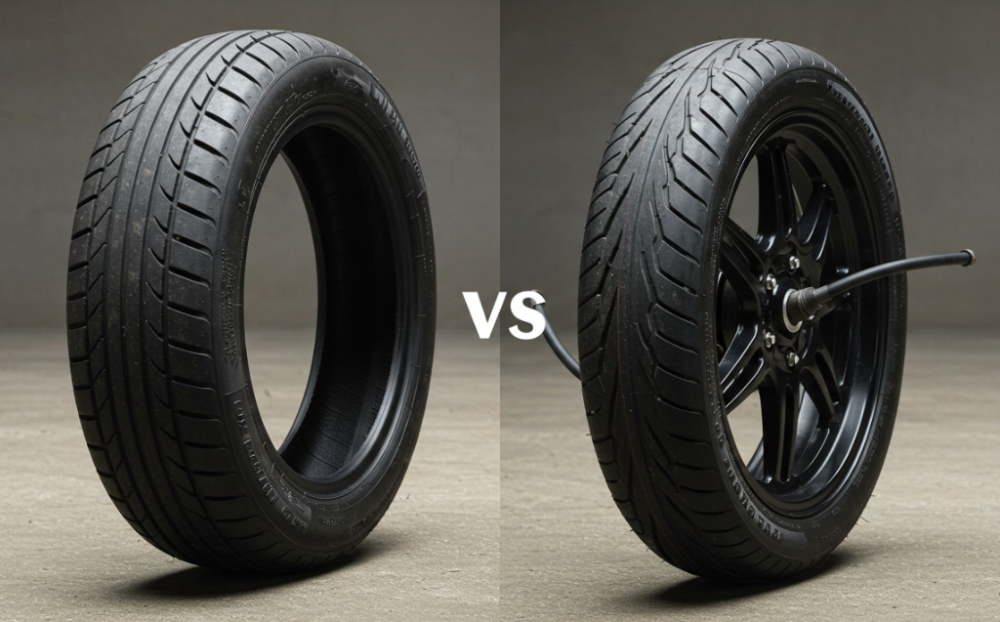
Tubed vs. Tubeless: What Actually Changed?
Tubed tires relied on a separate inner tube to hold air. That setup worked, but created friction inside the tire, which turned into heat — and heat turned into blowouts. When a tube got punctured, the air escaped instantly. One nail, and drivers were wrestling the steering wheel.
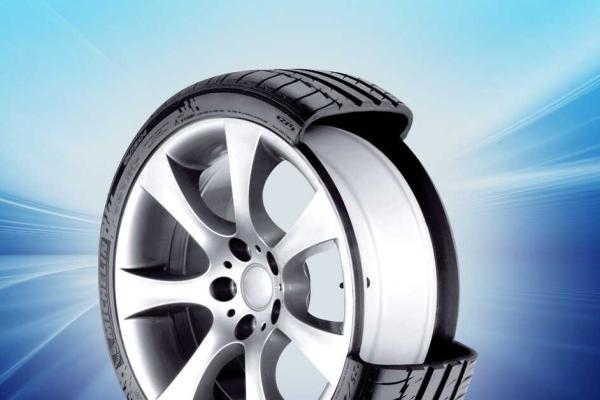
Tubeless tires removed the tube entirely. The tire seals directly to the wheel, so there’s less heat, slower air loss, and better durability overall. They’re also easier to repair — a simple plug often gets you back on the road. The design is lighter, which helps with fuel economy and ride comfort, too.
Of course, tubeless tires aren’t perfect. Run-flat versions exist, but many drivers find them heavy, stiff, and expensive. Researchers are experimenting with tougher materials and even airless concepts, but for now, tubeless tires are still the sweet spot for safety and performance.