Electric Off-Roading: Silent Trails, Powerful Crawls, Greener Adventures
by AutoExpert | 2 April, 2025
If someone loves the outdoors, it's truly the only way forward.
It's 2022. Picture a massive vehicle lumbering through a rock-crawling trail in Joshua Tree National Park, straddling the border of the Mojave Desert. This beautiful, stunning place to explore is being marked by a tired old Lexus LX470 dripping black CV axle grease all over the rock it's perched on. The driver wipes off as much as possible, then presses on.

Fast forward to 2025. In Anza Borrego State Park—a beautiful, open space twice the size of Joshua Tree with open camping and minimal supervision—there are gorgeous rock formations and crunchy desert sand underfoot. But there's also the smell of antifreeze. A 230,000-mile, $2,500 Chevy Tahoe has lost all its coolant. The driver is stuck until it can be patched, and the desert is now watered with bright-orange, toxic soup that keeps the 5.3-liter V-8 from melting its heads. The truck averages 13 mpg.
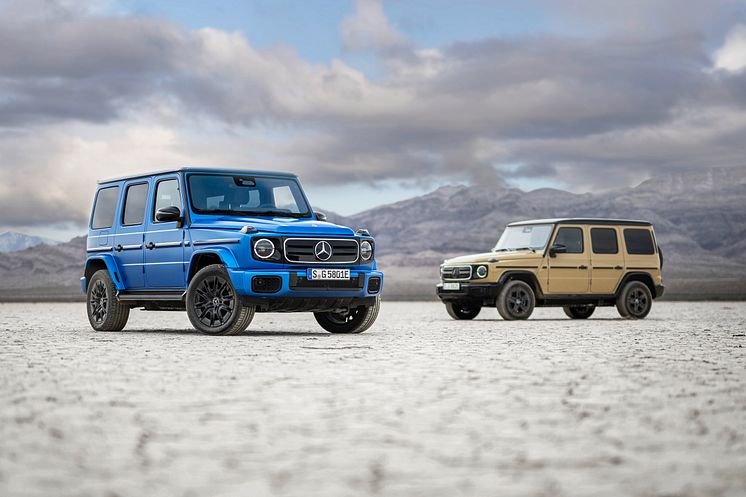
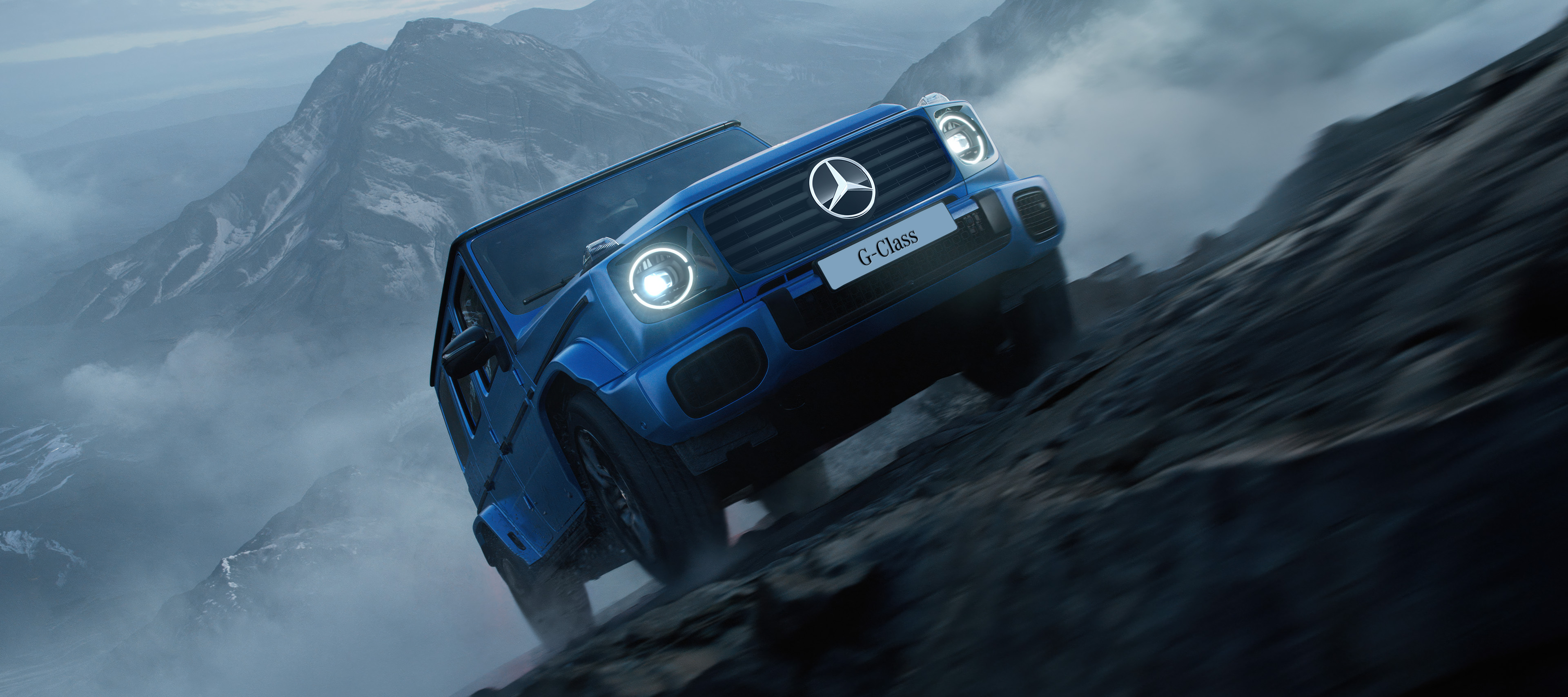
Two weeks later in 2025. Cleveland National Forest's Bear Valley Trail crunches under 6,801 pounds of German steel. The Mercedes G 580 With EQ Technology—or simply the electric G-Wagen—is no hippie vehicle. Its tank turn mode still tears up dirt. Its weight demolishes tires, leaving microplastics in the air. Its battery still needs coolant, and its axles are still greased. But with no tailpipe emissions, no fuel lines, and no V-8 thunder, it treads more gently on this place.
That matters. If someone really loves off-roading, it should matter to them, too.
The Off-Roader's Dilemma
Scott Fitzgerald famously wrote that "the test of a first-rate intelligence is the ability to hold two opposing ideas in mind at the same time and still retain the ability to function."
If that's true, any off-roader possesses first-rate intelligence. Because to love wheeling, one has to love being outside. But to do it properly requires a big, thirsty truck—one that's likely too beaten-up to have all of its emissions systems in working order. Or, in the case of a Tahoe (an extremely mild option suitable only for basic forest roads), emissions equipment that works as intended but still pumps out CO2 like an 1800s steel mill.
Evidence of this contradiction is everywhere. Visit any rock-crawling trail and there's evidence of fluid leaks, scrapes from trucks, trampled plant life, and more. Off-roaders try to be good stewards of the land, and most are, but there's no truly clean way to pilot a 5,000-pound gas-burner through a forest.
;Resize=(828))
This isn't about moral judgment. The paradox extends beyond cars. The most sustainable thing anyone can do for the planet is never go anywhere, yet not seeing any of its splendor up close seems like a dreary existence. A virgin meadow can remain that way only if nobody hikes through it. Quantum mechanics teaches that observation affects the observed, and that holds true in nature, too.
Everyone has to draw their own line, but it's messy business—not something solved by tribal membership or political proclamations alone. People who spend the most time outdoors and care deeply about public lands aren't necessarily EV owners.
Many struggle to part with their old gas trucks. While these vehicles harm the Earth, they're often the only way to reach some amazing places. Electric alternatives cost too much and rely on charging stations that often don't exist in the backcountry. This isn't a solved problem, nor does it require spending $80,000 on a Rivian tomorrow.
But here's a simple truth: Electric is better.
EV off-roading doesn't solve the core paradox of the hobby. Manufacturing an EV is itself a messy process, just like refining gasoline. But in a world where people won't give up exploring to preserve nature for the next generation, the lesser of two evils seems clear. An EV doesn't affect the climate as much as a gas car. It has a simpler drivetrain with fewer opportunities for leaks, spills, and pollution. It doesn't belch poison. It doesn't disrupt the forest with the endless clatter of explosions from its engine.

It's not a perfect answer. But it's a better one.
There's a bonus, too: It's more fun.
The Experience Nature Intended
Beyond the moral issue, there's a practical one. People head to the desert to enjoy nature, but in a traditional truck, there's always something in the way: noise. Wanting to hear birds, rustling brush, or beautiful silence itself just isn't possible. The clatter of the truck drowns everything out, leaving only lunch stops or camp sites for true, perfect quiet.
An Electric G-Class or Rivian doesn't solve this entirely—their pedestrian warning sounds can't be disabled (free idea: add a truly silent, off-road only mode). But it replaces the rickety clatter with a gentle hum and stops altogether whenever the vehicle isn't moving. This means every time the driver slows down or stops, they can drink in the sound. Above 5 mph, the powertrain becomes inaudible anyway as tire noise on a dirt trail takes over. When testing the G-Wagen on Bear Valley Trail, the driver didn't just see hawks—they heard them.

There's also no need to listen to or feel an engine straining against gravity, fighting a torque curve better built for highways. Whether it's a G-Wagen, F-150 Lightning, or Rivian, any EV truck just hops right over obstacles without protest. There's no running through the rev range in low range—just seamless crawling forward.
The G-Wagen demonstrates less wheel slip too, as its four individual motors respond independently to changing conditions. That requires clever software (sure to be refined over time), but even the first attempt is exceptional. The truck doesn't protest over even the slickest rocks, and any slip in one wheel is instantly overcome by the combined torque of the others.
Seasoned off-roaders debate whether individual wheel motors or dual motors with locking differentials are actually better for smooth off-road operation. But only an EV offers the flexibility of choice. No gas truck has ever offered this kind of precise control, and any wheel-specific torque usually relied on either brakes or complicated torque-vectoring setups—neither being the simple, consistent solution ideal for backcountry driving.
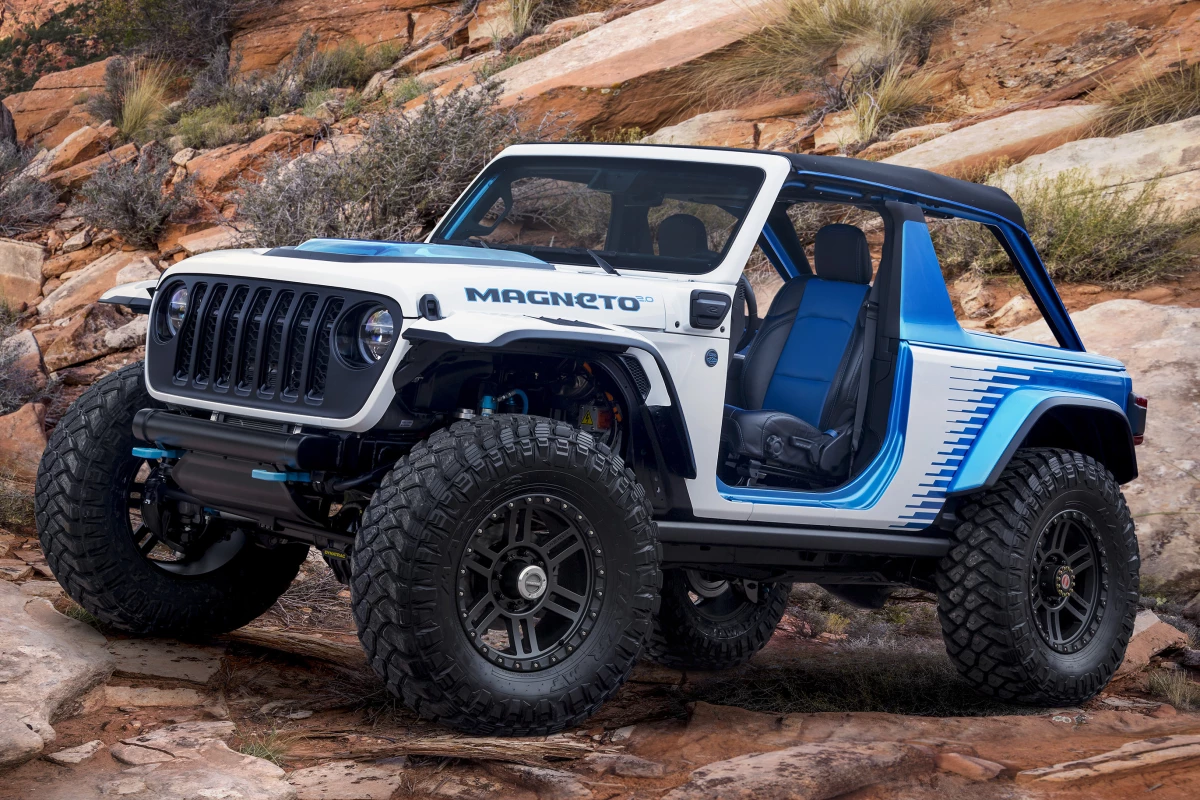
Simplicity is really the key benefit. The truck needs a battery pack and motors to move—everything else is luxury. EVs present incredible opportunities for fault tolerance. Batteries may degrade, but they almost never fail completely. With four motors, there's no reason why the failure of one, two, or even three should strand a driver. When power split is managed by separate motors, there's no transfer case to worry about. There's no low-hanging oil pan either, and the battery pack shielding of even a road-going EV is strong enough to handle tough impacts. Plus, a battery is far more capable of continuing with cooling issues than any engine. Most importantly, these systems aren't as mechanically interconnected, meaning there's less chance of a cascading failure.
That's the future on the horizon. But we're not there yet. Compared to the hundred-plus years spent refining internal-combustion products, it's no wonder gas options are generally better developed for niche applications. There's no EV Jeep Wrangler or 4Runner equivalent that can compete on cost.
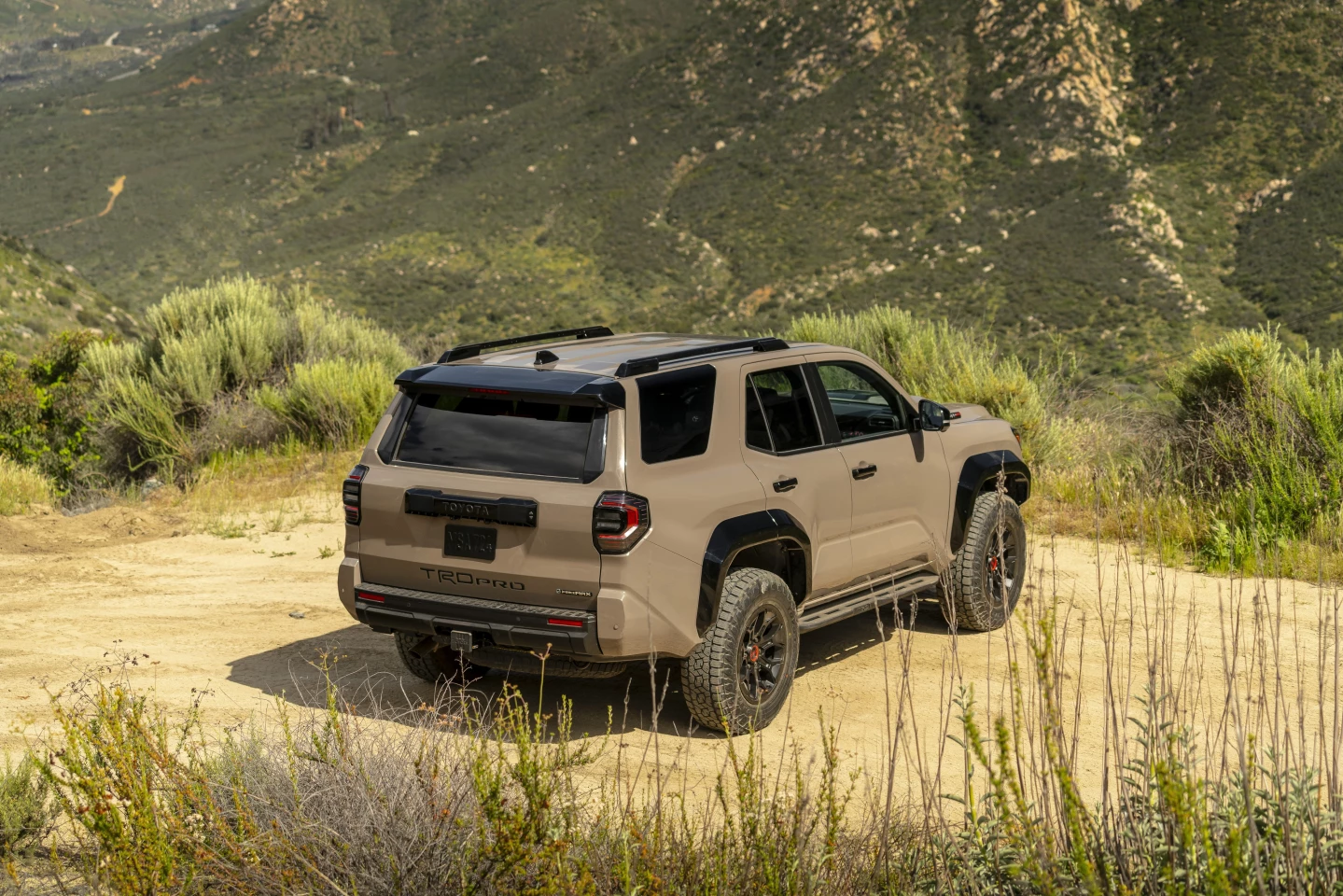
That's why hard-core off-roaders aren't expected to switch immediately. No one needs to abandon their beloved 3rd-gen 4Runner or Jeep XJ. But it's worth starting to think not just about the existing trade-offs of electric off-roading, but the incredible possibilities. Look at how a four-motor G-Wagen can pirouette in place. Note how it can reverse an inside wheel during sharp corners, tightening the turning radius. Think about how 1,000 lb-ft of torque would improve crawling capabilities. Imagine actually listening to the forests while driving through them.
This isn't just possible—it's already here. Once prices come down and charging networks improve, the off-roading world will eventually realize one simple truth: EV off-roading isn't going to be as good as ICE off-roading. It's going to be much, much better.