Edge AI Is Quietly Taking Over Your Car — And Automakers Are Scrambling to Keep Up
by AutoExpert | 5 December, 2025
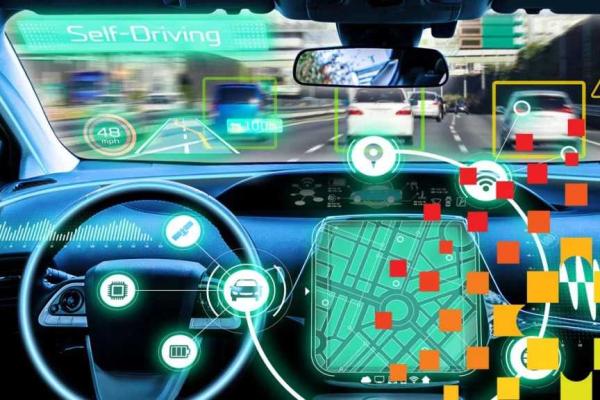
AI isn’t just living in phones and laptops anymore — it’s creeping into the dashboard, the safety systems, and even the way a car listens when you talk to it. And now automakers have a big decision to make: Should the car think for itself, or phone home to the cloud every time it needs an answer?
That’s the real debate behind the rise of edge AI, and it’s reshaping the entire auto industry.
What “edge AI” actually means
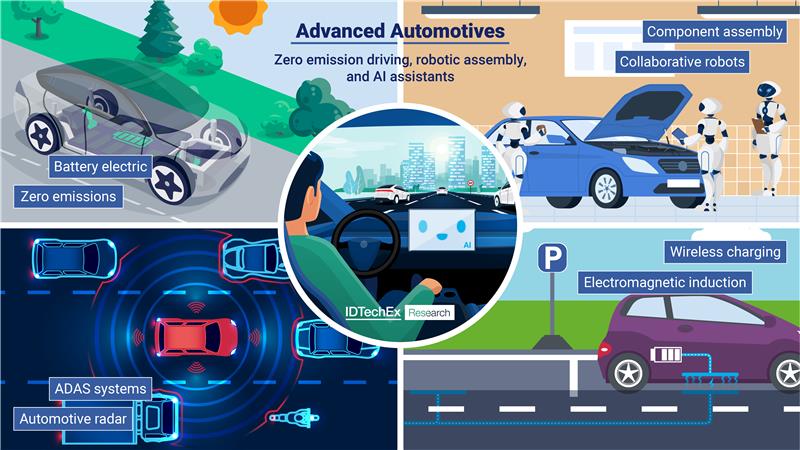
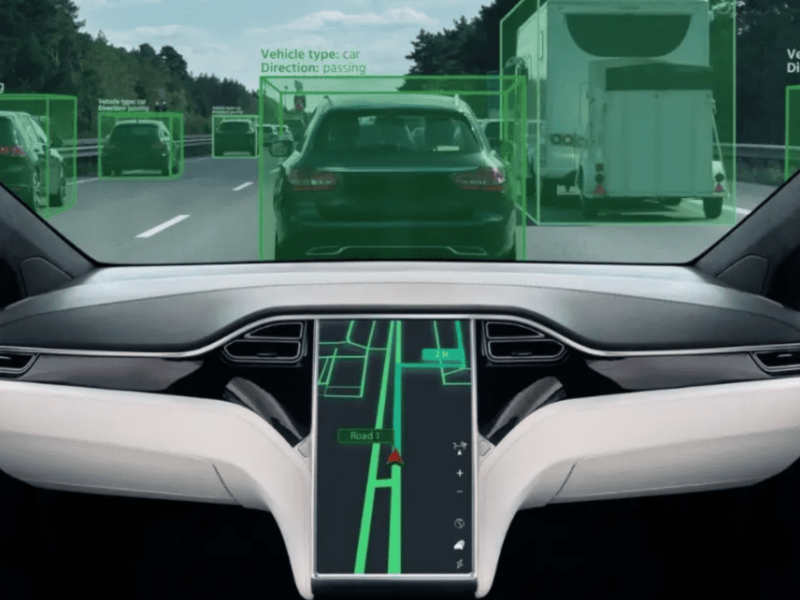
In simple terms, edge AI lets the car run its own AI models right on the vehicle’s computer instead of sending everything to a server somewhere. No waiting on cell towers. No hoping there’s signal. No awkward lag when you say, “Turn the AC down.”
This is only possible now because in-car computers have finally gotten powerful enough — and AI models have become small and efficient enough — to work in real time.
Why automakers care so much
Drivers expect cars to feel as smart as the rest of their tech. And AI touches almost everything inside a modern vehicle:
Safety systems that can sense danger faster than humans.
Smarter voice assistants that understand normal speech.
EV tools that can predict range more accurately.
In-cabin monitoring that notices if a driver is tired or distracted.
Security systems that watch for hacks in real time.
If any of these features depend on cloud access, you lose them the moment the car goes out of coverage — which, in the U.S., still happens more often than anyone admits.

The problem with relying on the cloud
Cloud-based AI helped automakers move quickly, but it has real drawbacks:
It breaks when the signal drops.
It can feel slow — even seconds matter for safety systems.
People aren't thrilled about their conversations being sent to servers.
And constant data streaming is expensive.
So automakers are shifting more and more intelligence into the vehicle itself.
Why edge AI is taking over
Running AI inside the car solves most of those problems:
The car works even with zero bars.
Responses are faster.
Sensitive data never leaves the vehicle.
Automakers don’t have to pay telecom bills for every request.
But like everything in automotive, there’s a catch.
Cars don’t have unlimited computing power. They have to manage battery drain. They need updates that won’t brick the system. And every new model has to fit inside a very tight hardware budget.
The tech under the hood has to evolve
To handle more AI locally, cars need an upgraded foundation:
Faster processors
More onboard memory
Real-time operating systems
Specialized chips like neural processing units (NPUs)
Software that can update safely, without a trip to the dealership
That’s why chip companies are no longer just selling chips — they’re selling full AI platforms. Tier-1 suppliers are scrambling to level up. And automakers are redesigning the entire electrical architecture of their vehicles.
A huge market is forming
The demand for high-performance automotive chips is exploding. Analysts expect advanced microchips for cars to hit $18 billion by 2030, largely because of AI.
So what wins — edge, cloud, or both?
The short answer: both.
A safety system can’t wait for a cloud response.
A natural-sounding voice assistant might need a heavier model running remotely.
Infotainment and diagnostics often live somewhere in the middle.
That’s why the future of in-car AI is going to be a hybrid — smart enough to run on its own, but connected enough to pull in bigger brains when needed.
Where the industry goes from here
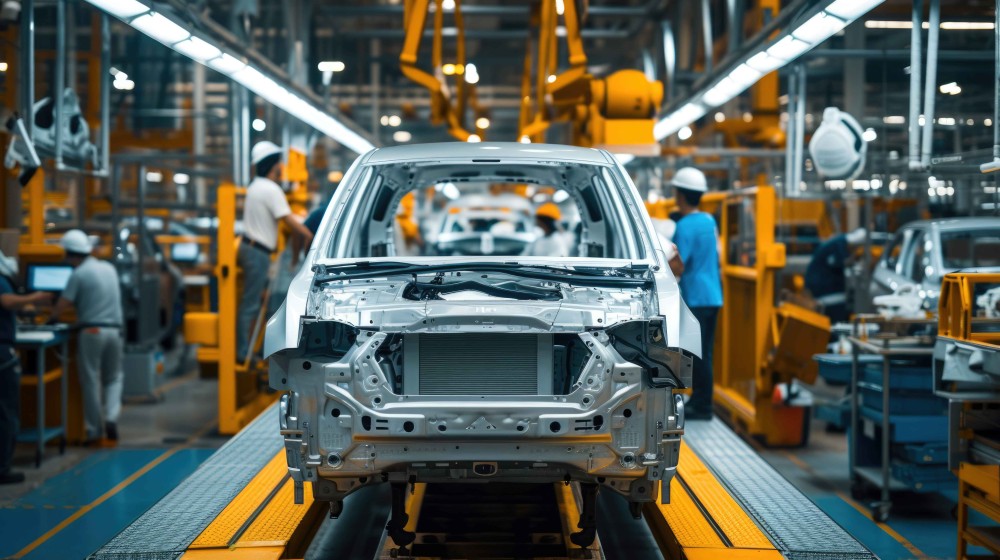
For AI-powered cars to work the way people expect, automakers, chipmakers, and suppliers will have to collaborate far more closely than before. New standards, new chip designs, new software layers — everything is on the table.
The shift is clear: AI is becoming the new competitive edge. And the companies that figure out how to run it fast, safely, and locally are going to define the next generation of vehicles.