
Your EV Slows Down Without the Brake Pedal. Does the Driver Behind You Get a Warning?

by AutoExpert | 17 September, 2026
In a conventional car, the relationship between the brake pedal and the brake lights feels reassuringly simple.
Press the pedal and the red lamps illuminate. Release it and they go dark. Drivers behind do not need to understand the hydraulic system or calculate deceleration. They see the lights and know that the car ahead intends to slow.
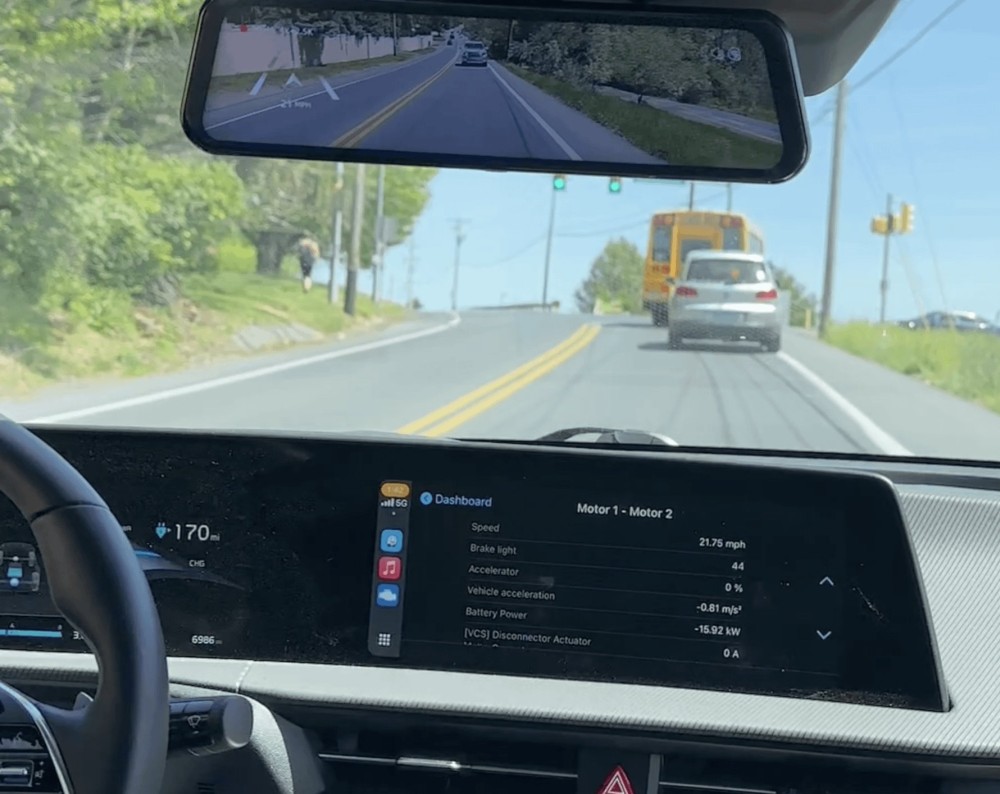
One-pedal driving complicates that tidy arrangement.
An electric car can decelerate firmly when its driver lifts the accelerator, sometimes slowing all the way to a complete stop. The brake pedal may remain untouched throughout the process.
That raises an obvious question: do brake lights come on with regenerative braking?
Usually they do when the car is slowing significantly. Gentle regeneration may not activate them, and the precise behavior depends on the vehicle, its software and the market for which it was designed.
Regenerative braking changed the old signal
When an electric vehicle accelerates, its motor uses electrical energy to turn the wheels. During regenerative braking, that process is partly reversed. The wheels drive the motor, the motor behaves as a generator and some of the vehicle’s kinetic energy returns to the battery.
Generating that electricity creates resistance, which slows the car.
At a low regeneration setting, lifting the accelerator can feel similar to engine braking in a conventional vehicle. At its strongest setting, the response can resemble a confident press of the brake pedal.
Engine braking has always created a small communication gap. A driver can downshift a manual car and lose speed without illuminating the brake lights. Regenerative braking makes the question more important because the deceleration can be much stronger and can occur every time the accelerator is released.
Connecting the lights only to a physical pedal would no longer describe what the car was actually doing. Many EVs therefore use their control systems to decide when regenerative deceleration is strong enough to require a warning.
The lights respond to deceleration, not simply pedal position
International regulations provide a threshold for vehicles using automatically commanded or regenerative braking.
Under UNECE Regulation No. 13-H, regenerative deceleration greater than 1.3 meters per second squared must generate the signal used to illuminate the stop lamps. At lower levels, the system may illuminate them.
That approach reflects what following drivers need to know. A mild lift from the accelerator does not necessarily require the same warning as strong one-pedal braking. Once the car begins slowing more assertively, the brake lights should communicate that change.
The software also needs to prevent the lamps from flickering every time deceleration moves slightly above or below the threshold. Regulations allow measures such as averaging, time delays and hysteresis so the signal behaves predictably instead of flashing nervously through traffic.
Honda’s regenerative-braking guidance describes the basic distinction plainly: the brake lights illuminate during substantial deceleration, while gentle regeneration may occur without them.

That is why there is no universal accelerator position at which the lights come on. Vehicle speed, regeneration strength, battery condition, gradient and requested deceleration can all influence the result.
A driver may lift the pedal slightly at highway speed and see no brake-light indication. A more decisive lift in maximum regeneration mode can bring the lamps on immediately.
American rules developed around the brake pedal
The American lighting standard was written in a world where applying the service brakes was the obvious event that triggered the stop lamps.
In a regulatory interpretation, NHTSA explained that federal rules require the lamps to illuminate when the service brakes are applied. The agency also said the standard does not prohibit them from illuminating when a supplemental braking system slows the vehicle after the accelerator is released.
That distinction leaves manufacturers considerable responsibility for deciding how regenerative braking should communicate with other road users.
Most globally sold EVs are engineered around requirements from several markets, so deceleration-based activation is common. However, implementation details can differ. The system must determine when to switch the lamps on, when to keep them illuminated and when to turn them off as the vehicle approaches a stop.
Those details matter.
Consumer Reports drew attention to several EVs whose brake-light behavior during strong one-pedal deceleration did not always give following drivers the warning testers expected. The concern was not whether the cars could stop. It was whether the lamp logic accurately communicated how quickly they were slowing.
Software updates can change that behavior without replacing a bulb, pedal switch or braking component. That alone shows how far the brake light has evolved from a simple electrical contact beneath the pedal.
Why some EVs appear to tap the brakes repeatedly
Following an electric car can occasionally produce a strange display. Its brake lights illuminate for a moment, disappear and then return, even though the vehicle seems to be traveling smoothly.
The driver may not be touching the brake pedal repeatedly. Small accelerator movements can alternate between propulsion, coasting and regenerative braking. Each sufficiently strong transition into regeneration may activate the brake lights.
A driver still becoming accustomed to one-pedal mode can create more of this activity by repeatedly lifting and reapplying pressure. With experience, accelerator movements usually become smoother.
The system must balance two competing problems. If the threshold is too high, a car may slow substantially without enough warning. If it is too sensitive, every small speed correction can illuminate the brake lights and reduce their value as a clear signal.
Good calibration makes the behavior feel unremarkable to everyone else on the road. Poor calibration becomes visible from three cars back.
How to check what your own car is doing
Some EV instrument displays show a small image of the vehicle with its exterior lights. When the brake lights activate, the rear lamps on that graphic may glow. The owner’s manual may also describe their behavior during regeneration or one-pedal driving.
A simple stationary check can confirm the ordinary brake-pedal switch, but regenerative activation requires the vehicle to be moving. The safest approach is to have another person observe from a suitable location away from public traffic, or to look for the reflection of the rear lamps on a wall during controlled low-speed driving.
The exercise should never involve somebody standing behind a moving vehicle or a driver experimenting in traffic while staring at the instrument display.
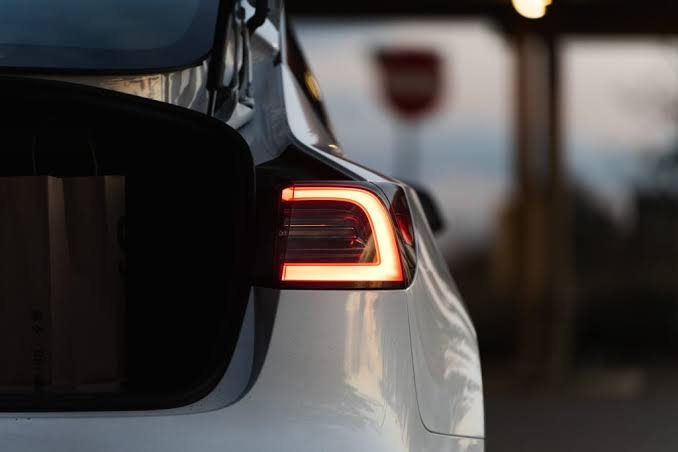
Owners should also remember that regeneration strength can change. A cold or fully charged battery may accept less recovered energy, reducing the amount of regenerative braking available. The car may blend in its friction brakes or coast more readily, depending on its design.
Pressing the brake pedal remains the clearest deliberate signal when stronger or more predictable braking is required.
Brake lights once answered a mechanical question: has the driver pressed the pedal?
Electric cars ask a more useful one: is the vehicle slowing enough that everyone behind it deserves a warning?
The answer is now calculated several times a second.