Your Coolant Is Pink, but That Does Not Mean the Pink Bottle on the Shelf Belongs in Your Car
by AutoExpert | 28 July, 2026
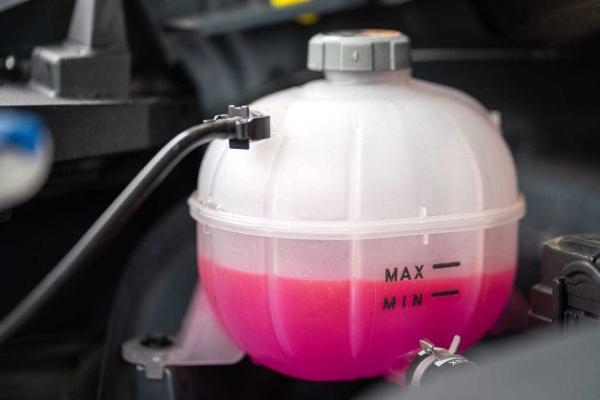
Opening the hood and finding a low coolant reservoir seems like a straightforward problem. The liquid inside is pink. The parts store sells pink coolant. Buy bottle, pour liquid, close hood.
Unfortunately, coolant does not follow the rules of children’s shape-sorting toys. Matching the color does not necessarily mean matching the product.
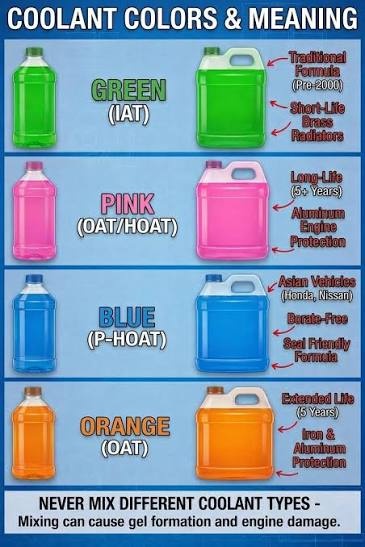
Two coolants can look almost identical while using different additive packages. Two others can be completely different colors and still meet the same vehicle specification. The dye makes coolant easier to see and helps manufacturers distinguish their products, but it is not a universal technical code.
There is no rule stating that every green coolant has the same chemistry, every orange coolant is interchangeable or every pink bottle belongs in the same group.
What matters is inside the bottle
Coolant does more than carry heat from the engine to the radiator. It protects the system against freezing, boiling and corrosion. It also helps defend a complicated mixture of metals, seals, plastics and hoses that must survive thousands of heating and cooling cycles.
The additives responsible for that protection vary.
Older vehicles commonly used inorganic additive technology, usually shortened to IAT. Newer formulas may use organic acid technology, hybrid organic acid technology or manufacturer-specific variations of those systems. The names matter less to most owners than the specification printed in the manual.
That specification tells you what the cooling system was designed to use. Color does not.
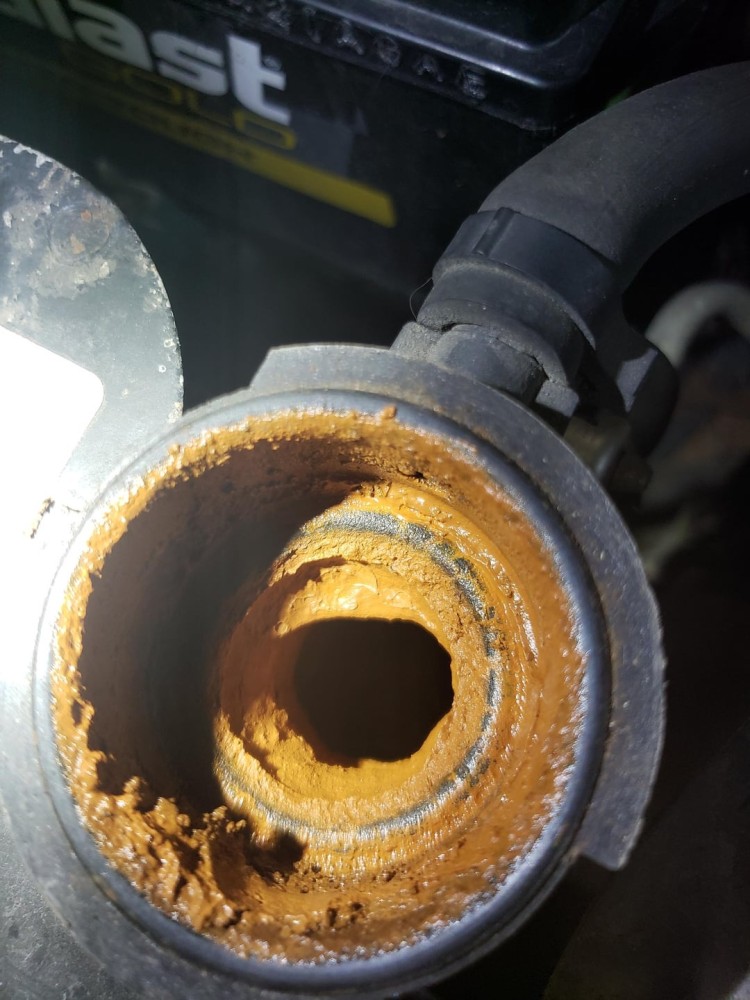
Adding an incompatible product may weaken the coolant’s corrosion protection or shorten its service life. Some combinations can create deposits or sludge that restrict small passages. Problems may not appear immediately, which is what makes a casual top-up so tempting. The engine starts, the heater works and nothing dramatic happens in the driveway.
Months later, the system may be far less well protected than it should be.
Mixing colors is therefore the wrong question. The useful question is whether both products meet the precise specification required by the vehicle.
“Universal” still deserves a careful look
A bottle labeled universal or suitable for all vehicles sounds reassuring. It may genuinely be compatible with a wide range of cooling systems, but the label should not overrule the owner’s manual.
Look for the required specification or approval, not a vague promise on the front of the container. If the correct approval is not listed, choose another product.
Concentration matters too. Premixed coolant is already blended with the correct proportion of water and can usually be poured directly into the reservoir. Concentrated antifreeze must be diluted according to the manufacturer’s instructions, normally with distilled or deionized water.
Accidentally diluting a premixed product again leaves the system with too much water and too little freeze, boil and corrosion protection.
The reservoir cap also deserves respect. A hot cooling system is pressurized. Opening it can release boiling coolant with considerable force. Checking and topping up should be done only when the engine is cold and according to the instructions for that particular car.
What if nobody knows what is already in the car?
This happens frequently with used vehicles. The coolant looks healthy, but there is no invoice, label or reliable service history identifying it.
Guessing by color does not solve the mystery.
A repair shop may be able to identify useful clues, test the coolant’s freeze protection and inspect its condition. When compatibility remains uncertain, draining and refilling the system with the correct product is often more sensible than building a chemical cocktail one bottle at a time.
A low level also raises a second question: where did the coolant go?
Cooling systems are designed to remain closed. A tiny change between hot and cold readings is normal, but repeated top-ups are not routine maintenance. A leaking hose, radiator, water pump, reservoir, heater core or internal engine problem may be responsible.
Filling the bottle without investigating the loss can turn a useful warning into a hidden fault.
The correct coolant may be blue, green, orange, yellow, pink or purple. What matters is the specification written in the manual, not whether the colors look attractive together.
Under the hood, chemistry wins every time.