The Parking Brake Is Off, but the Red Light Stayed On. Check the Fluid
by AutoExpert | 2 September, 2026
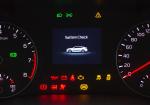
The parking brake has been released, but the red warning light remains on. The first reaction is usually to pull the lever again or press the parking-brake switch a few times. Perhaps the sensor has not noticed. Perhaps the car needs a little persuasion.
Sometimes the light disappears, and the journey continues. When it does not, the warning should not be treated as a stubborn parking-brake indicator.
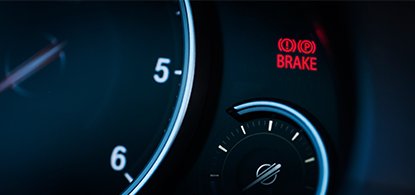
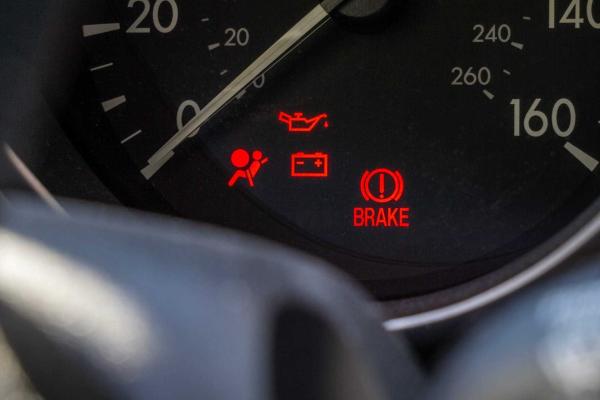
On many vehicles, the same red symbol watches more than one part of the braking system. It may illuminate because the parking brake is applied, the brake-fluid level is low or the system has detected a fault serious enough to require immediate attention.
One red light can carry several warnings
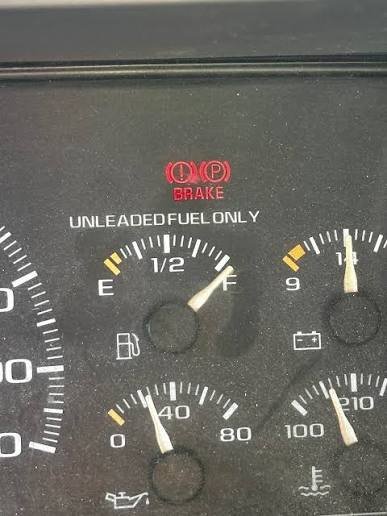
Dashboard symbols are not completely standardized in meaning. A red circle containing an exclamation mark may represent the parking brake on one car and the wider brake system on another. Some vehicles use the word “BRAKE,” while others display separate messages alongside the symbol.
Manufacturer guidance commonly connects the warning to both the parking brake and brake-fluid level. Honda’s indicator instructions, for example, advise checking whether the parking brake is fully released and whether the brake-fluid level is low.
The owner’s manual gives the precise meaning for the vehicle, but color already provides an important clue. Red warnings generally indicate a condition needing prompt attention. They are more urgent than the amber maintenance reminders drivers are accustomed to postponing.
If the light remains on after the parking brake is fully released, pay attention to the way the brake pedal feels. A pedal that is unusually soft, sinks farther than normal or requires repeated pumping is a reason to stop driving and arrange professional assistance.
A change in braking performance should never be tested by continuing the journey and hoping the next junction provides an answer.
Low brake fluid does not always mean a leak
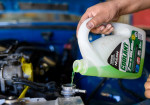
Brake-fluid reservoirs are usually translucent and marked with minimum and maximum lines. With the vehicle parked safely on level ground, the fluid level can often be checked without removing the cap.
A level close to or below the minimum mark may trigger the warning light.
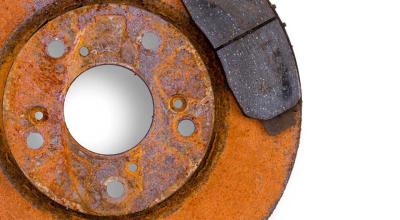
Brake fluid can gradually fall as the brake pads wear. When the pads become thinner, the caliper pistons extend farther to keep the pads close to the discs. More fluid remains inside the calipers, leaving less in the reservoir.
That gradual movement does not mean brake fluid is being consumed like engine oil. It means the level can offer a clue about brake-pad wear.
A sudden drop is more worrying. Brake fluid circulates through a sealed hydraulic system, so a substantial loss may point to a leaking hose, pipe, caliper, wheel cylinder or master cylinder. Dampness near a wheel, fluid beneath the car or a soft pedal should be treated seriously.
Simply filling the reservoir to switch off the light can hide the evidence. If worn pads caused the level to fall, topping it up without inspecting the brakes may delay necessary maintenance. If a leak caused it, fresh fluid will eventually follow the old fluid out.
Brake fluid can also damage paint, and the correct specification varies between vehicles. Opening the reservoir carelessly introduces dirt and moisture into a safety-critical system.
The parking-brake switch may still be responsible
Not every persistent warning predicts hydraulic failure.
A mechanical handbrake usually operates a small switch near the base of the lever. Dirt, misalignment or wear can keep the switch closed after the lever has been lowered. Pedal-operated parking brakes use similar position sensing, while electronic parking brakes rely on switches, motors and control modules.
If the fluid level is correct, the pedal feels normal and the brakes appear to operate properly, a faulty parking-brake switch becomes more plausible. Even then, the warning should be diagnosed rather than covered with tape or ignored.
Cars equipped with electronic parking brakes may display additional messages if an actuator cannot release fully. Driving with a brake partly applied can overheat the pads and discs, reduce fuel economy and create a strong burning smell.
The red brake warning may also appear alongside the ABS or stability-control light. That combination can indicate a broader electrical or hydraulic fault, and the braking system may no longer provide all of its normal assistance.
Know when the car should stay where it is
Stop and seek professional help if the warning is accompanied by a soft pedal, reduced braking, pulling to one side, grinding noises, visible fluid loss or a parking brake that will not release.
If the pedal feels normal and there are no obvious signs of trouble, the manual may permit cautious travel to a repair facility. The manufacturer’s instructions should decide, not convenience.
A red brake light is easy to misunderstand because it performs the humble job of confirming that the parking brake is on. Once the parking brake has been released, however, the same lamp may be delivering a much more important message.
The lever is only the first thing to check. The fluid reservoir and the feel of the pedal come next.