Automakers Brace for 2035: Navigating the Shift to Electric Vehicles Amid Regulatory Uncertainty
by AutoExpert | 13 March, 2025
Think about this for a second: it takes up to 72 months—that's six whole years—to create a brand-new car model from scratch. So if an automaker starts planning today, that shiny new vehicle won't hit dealerships until 2031.
And that's cutting it awfully close to 2035, when the European Union and several US states plan to drop the hammer on internal combustion engines. Which begs the obvious question: Who's going to buy (or sell) a car that might be banned from certain roads just four years after it rolls off the lot?

This whole mess has gotten even messier with the Trump administration looking to turn back the clock on EVs, leaving carmakers in a seriously awkward position. They're trying to build for tomorrow while standing on some pretty wobbly foundations today.
Automakers Are Getting Cold Feet
Car executives are starting to sweat as EV sales plateau. Ford is begging for no tariffs, while Porsche is pumping the brakes on parts of its electrification strategy and wants the 2035 deadline extended.
It's not just Porsche, either. Both Italy and Germany are trying to wriggle out of the 2035 standards. BMW's CEO Oliver Zipse has been especially vocal, claiming the current goals are "no longer realistic."
Interestingly, the broader European Automobile Manufacturers' Association isn't fighting the 2035 deadline itself. They just want governments to pony up more incentives and charging infrastructure investments to avoid what they call "multi-billion-euro fines."
So far, the bans are holding—but they're under some serious fire.
California Leads the Charge (Literally)
California has a unique ability to set its own emissions standards thanks to the 1967 Clean Air Act (remember when LA smog was so bad you could practically slice it?).
"As part of the Advanced Clean Cars II regulations, all new passenger cars, trucks, and SUVs sold in California will be zero-emission vehicles by 2035," says the California Air Resources Board, not mincing words.
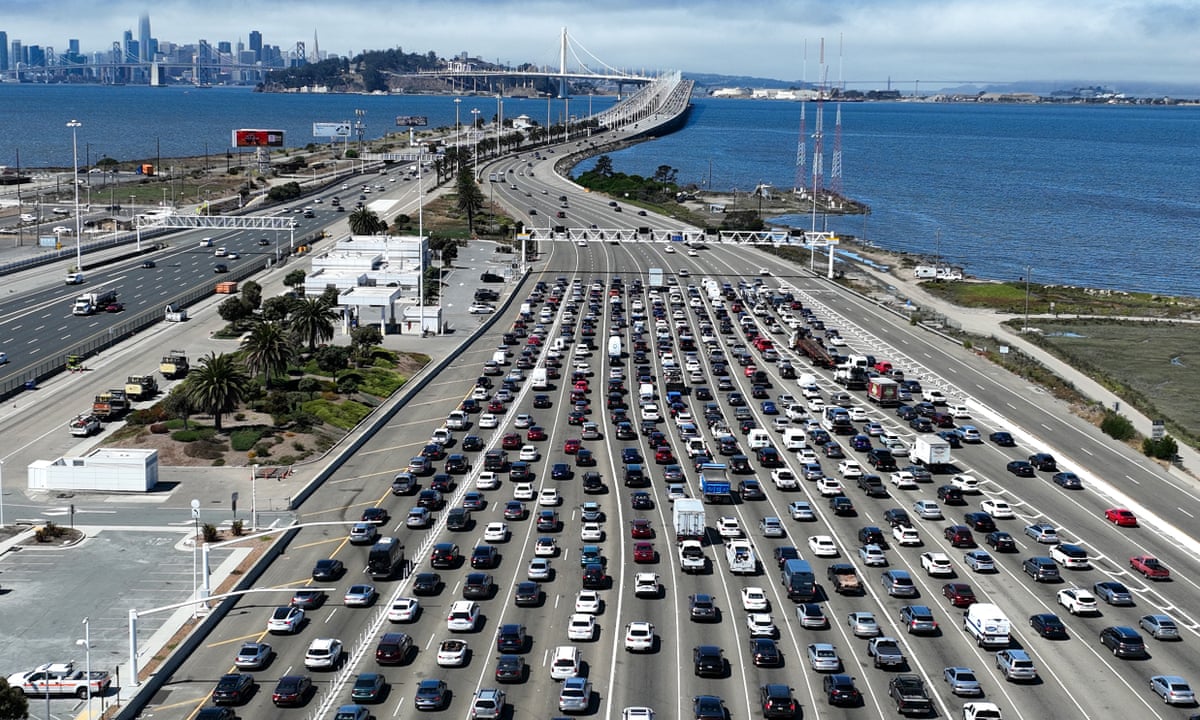
The cool thing about this setup is that other states can choose between following California's lead or sticking with federal standards. So far, about 16 states have jumped on the California bandwagon, either fully or partially. Together, these states make up a whopping 40.2% of the US car market. That's huge!
During Trump's first rodeo as president, California and its allies fought tooth and nail against federal attempts to strip away the state's authority. Now they're gearing up for round two, with state officials promising to fight any new attempts to mess with their regulatory independence.

Trump's Got Plans
Beyond targeting California, Trump's also looking to water down existing federal standards while taking aim at the $7,500 federal tax credit and EV charging subsidies.
Was anyone really surprised when groups like the American Fuel and Petrochemical Manufacturers came out swinging against California's ban? Their president, Chet Thompson, declared that "stopping Gavin Newsom's ban on sales of new gas cars and revising EPA's national vehicle standards to safeguard consumer freedom will be key pillars of the Trump legacy."
Worth noting: This group was the top oil and gas lobbyist in 2024, dropping a cool $26.3 million in campaign contributions. They've got plenty of friends, too. American Energy Alliance President Tom Pyle chimed in, saying, "President Trump is making good on his promise to immediately begin unwinding the reckless energy policies of the Biden-Harris administration."
Even the Alliance for Automotive Innovation, which represents the carmakers themselves, argues that zero-emission sales mandates are doomed to fail because they "require consumers to choose to purchase the corresponding percentage of new vehicles of a specific type of powertrain."
This same Alliance is also cheering Trump's move to revisit the Corporate Average Fuel Economy (CAFE) standards, claiming, "The existing CAFE rules are extremely challenging to achieve—even in the best of circumstances. They also expose automakers to billions of dollars in civil penalties."
What's Really Going to Happen?
EV sales aren't quite meeting predictions right now. Some folks are spinning this as a catastrophic collapse, but honestly, it's more of a mixed signal than a clear disaster.
So what's the future look like? Well, that depends on who you ask. EV supporters see Trump as a speed bump, not a roadblock.
Ben Prochazka from the Electrification Coalition told Autoweek, "The current rhetoric and funding freezes have certainly created a challenging time for EVs, but sales have continued to remain strong globally and in the US."
Lindsey Perkins at Plug In America has a similar take: "We can't predict the future, but I can tell you what we do know. We know that EVs are here to stay. This administration can slow the transition, but the change is under way. EVs provide consumers with superior technology. They're more efficient, save consumers money on fuel and maintenance, and are fun to drive. Our annual surveys find nine of 10 EV drivers intend to make their next car electric, showing people love their EVs."

Responding to the "unleashing American energy" talking point from anti-EV voices, Perkins points out, "Plugging into the US grid diversifies US transportation energy to renewables and other domestic sources, which really unleashes American energy. This protects markets from embargoes, shortages, and political conflicts."
Meanwhile, Secretary of Energy Chris Wright calls efforts to reach net-zero emissions "sinister" and says his priority is to "get out of the way" of unrestricted oil, gas, and coal production.
But here's an interesting twist: Coal was already on its deathbed during Trump's first term, hitting a 43-year low in 2019. Between 2010 and 2020, more than 50 coal companies went bankrupt, and power generation from coal dropped by over 100 gigawatts.
And get this—domestic oil production actually went up under both Trump AND Biden. Biden even approved the massive ConocoPhillips Willow project in Alaska.
Trump's record is also more complicated than the sound bites suggest. After initially opening up more coastal waters to drilling, he pulled a 180 and issued a 10-year ban on drilling in the eastern Gulf and along the Florida, South Carolina, and Georgia Atlantic coasts. Why? Because opposition in those states threatened to sink some Republican candidates in 2020.
The reality is that presidents can influence but not really control either energy production or the auto industry. The direction is largely determined by economics, technology, and what consumers actually want to buy.
If EVs keep getting better and cheaper than gas cars (as Plug In America's Perkins believes they will), then their dominance by 2035 might be inevitable, regardless of who's sitting in the White House.

But in this crazy world, there are no guarantees—and that's precisely why everyone's so on edge right now.