Anode-Free Batteries: EV's No-Compromise Future or Just Hype?
by AutoExpert | 2 April, 2025
When you pop the hood of an EV, you won't see the hundreds of moving parts found in traditional cars. But don't let that fool you—the battery powering that vehicle is a marvel of complex chemistry. It's this invisible dance of materials that determines everything from how far you can drive to how quickly you can charge.
Battery makers are in a heated race to crack the code on the perfect formula, and one approach is generating serious buzz: the anode-free solid-state lithium-metal battery.
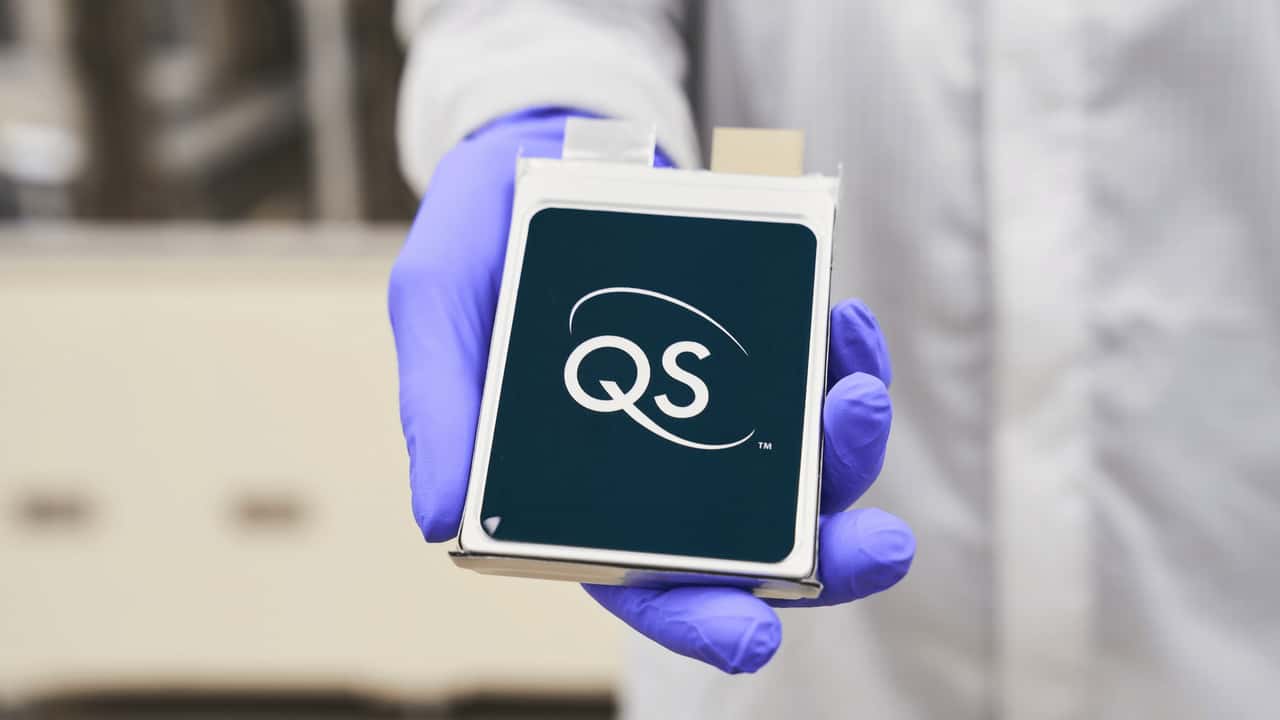
At least one battery exec is bold enough to claim this technology will finally deliver the "no compromises vehicle"—impressive range, fast charging, solid safety ratings, and a long lifespan all in one package. Sounds too good to be true? Maybe. Before these batteries power the cars in your local dealership, there are still some significant hurdles to overcome.
"If you want to make a big step change in cost, energy per mass and energy per volume, the biggest change you could make is to eliminate the anode," explains Tim Holme, co-founder and CTO of battery startup QuantumScape.
What's an Anode and Why Ditch It?
Your typical lithium-ion battery contains four main components: anode, electrolyte, separator, and cathode. They work together to move electrons back and forth during charging and discharging. The anode has earned something of a bad reputation—it's often considered one of the dirtiest components both environmentally and from a manufacturing standpoint.
Most anodes today use graphite—stable and long-lasting, sure, but it limits how fast you can charge and how much energy you can pack in. Processing graphite requires toxic chemicals, and China controls most of the supply chain. Some companies are pushing silicon anodes instead, but those come with their own baggage: high costs, questionable cycle life, and stability issues (though companies in that space claim they're making progress).
Anodes also contribute significantly to why EV batteries weigh so much. Holme points out that the anode is basically a thick carbon layer that takes up considerable space and mass in each cell. Manufacturing it isn't exactly green either, releasing substantial carbon emissions during production.
The In-Situ Solution
QuantumScape isn't alone in trying to reimagine the anode—companies like Factorial, Our Next Energy, and Ensurge Micropower are all developing their own anode-less cells.
What makes QuantumScape's approach interesting is their lithium-metal battery with an anode that forms "in situ"—meaning it creates itself within the battery rather than being inserted as a separate component. While conventional batteries start with a pre-formed anode (usually graphite or silicon), lithium-metal batteries can begin with just a cathode and electrolyte.
When you charge the battery for the first time, lithium ions deposit onto the current collector, forming a lithium-metal anode on the spot. This approach simplifies manufacturing, cuts costs, and improves energy density. QuantumScape claims their solid-state lithium-metal cells could boost a 350-mile range EV to somewhere between 400-500 miles. Though it's worth noting this comparison isn't necessarily against the most energy-dense lithium-ion batteries currently available.
"Lithium metal is the best anode. It's better than graphite and better than silicon," Holme insists. "Solid-state plus lithium metal makes for the best battery. There's no technical trade-off. But it's an engineering challenge."
.jpg)
The Dendrite Problem
One of those engineering challenges has plagued lithium metal batteries for decades: dendrites. These sharp metal structures can grow inside batteries like tiny stalagmites and eventually ruin them.
Daniel Parr, a technology analyst at UK research firm IDTechEx, notes that dendrite formation has historically caused early battery degradation and limited cycle life in lithium metal designs.
QuantumScape's solution? A proprietary solid-state separator made from ceramic that supposedly prevents dendrites from forming. Their electrolyte uses an organic liquid, while the cathode can incorporate nickel, iron, or both.
"Iron is of course cheaper, but lower energy density and nickel is higher energy density, but more expensive," Holme explains. "Our plan is to offer both platforms to our customers and let them choose."

The QSE-5: How Does It Stack Up?
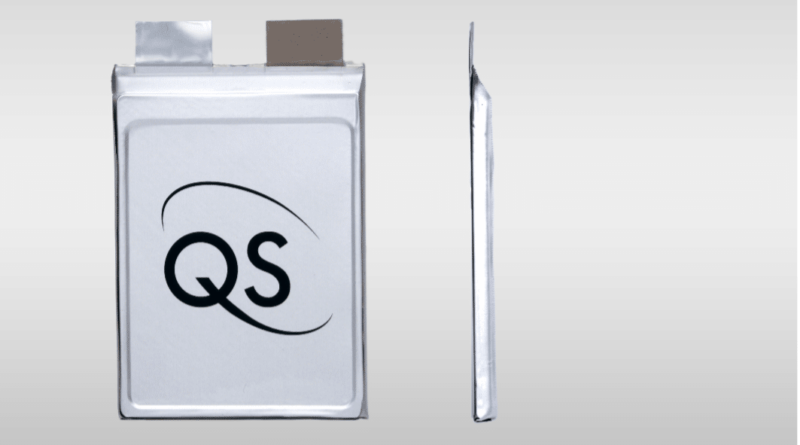
The company's current battery prototype, the QSE-5 cell, embodies this novel chemistry. The name breaks down simply: "QS" for the company, "E" for energy, and "5" representing five milliamp-hours of capacity—similar to Tesla's 2170 cell found in some Model Y variants.
The QSE-5 achieves an energy density of 305 watt-hours per kilogram, which honestly seems only marginally better than Tesla's 4680 NMC cells used in the Cybertruck and Model Y (estimated at 272-296 Wh/kg). Competitor Factorial claims its all-solid-state Solstice battery delivers a whopping 450 Wh/kg. So for an experimental solid-state battery, the QSE-5's density sits on the lower end of expectations.
Still, the benefits go beyond pure energy density, according to QuantumScape. Eliminating the chemical reactions between anode and electrolyte means less capacity fade over time, translating to longer battery life. Safety improves because the ceramic separator is non-combustible and stable even in extreme temperatures.
In a crash scenario, an EV with this type of battery would be less likely to ignite. (While EV fires are statistically rarer than gas car fires, when they do happen, they're notoriously difficult to extinguish.)
From Lab to Road
QuantumScape has already shipped "B-samples" (near-production prototypes used for advanced testing) to automakers and plans to send more this year.
One key partnership is with PowerCo SE, a battery subsidiary wholly owned by Volkswagen Group. "We've licensed them the technology and we're working together to deploy it," Holme says. "They're building gigafactories in Spain, Germany and Canada and we'll be working with them to put it into production."
The non-exclusive licensing agreement allows PowerCo to produce up to 40 gigawatt hours of batteries using QuantumScape's technology, with an option to double that to 80 GWh—enough to power roughly a million EVs annually.

The Cost Question
When asked how these batteries will compare price-wise to current lithium-ion cells, Holme offered an interesting analogy to SpaceX's disruption of the rocket industry.
"If you look at the first SpaceX rocket compared to what NASA did at the time, it wouldn't be as [cost] competitive," he noted. "As they have improved, they have brought down SpaceX costs to orders of magnitude below what NASA was operating at."
Translation: Expect these batteries to cost more—at least initially.
"If we also get on the learning curve, ramp up our volumes, come down in costs, we can be competitive and even beat lithium-ion in time," Holme added.
The road from laboratory breakthrough to mass production is long and winding, but if companies like QuantumScape can deliver on their promises, the next generation of EVs might finally silence range anxiety for good.