Affordable EVs: Ditch Gas Car Mindset for Mass Adoption
by AutoExpert | 2 April, 2025
Electric vehicles can absolutely be the affordable, reliable transportation people need—but only if society stops trying to force them into the same box as gas cars.
The reasons behind China's dominance in the EV market are pretty well-known by now. The country has thrown serious government support behind electric vehicles, cut through red tape, offered buyer incentives, and provided cheap property for manufacturers. Local companies with little to no experience making traditional gas vehicles saw the EV transition as an exciting opportunity rather than a burden (which is how many Western automakers clearly view it). But there's another crucial factor that doesn't get nearly enough attention.

A much larger percentage of Chinese EV buyers are first-time car owners. Many others had only owned one or two vehicles previously. This matters for a simple reason: In China, electric vehicles don't carry all the baggage that's weighing them down in markets like the US.
Meanwhile, the average new car buyer in America was about 51 years old in 2022, according to Cox Automotive. Even used-car buyers averaged 49, with both groups having higher-than-average incomes. These are relatively wealthy folks who grew up in a country dominated by cars—specifically gas-powered ones. They were raised when air travel was much less affordable and common, meaning almost all of them have fond memories of family road trips in gas cars. They've bought gas vehicles for most of their adult lives and relied on them for the vast majority of their travel.
Now they're being told that EVs are here to replace their beloved gas guzzlers. But for the big, heavy vehicles most American buyers prefer, road-trip capability in an EV means paying a huge upfront price premium, juggling multiple planning and charging apps, and enduring a longer, more tedious driving experience. They're being asked to buy a product from the same companies that have always sold them gas cars, shaped like the cars they're familiar with, but costing more money and often with worse reliability.
No wonder people are annoyed.
One driver's experience illustrates this well. After replacing a $2,500 Chevy Tahoe used for camping with a leased Chevy Blazer EV, the driver loved it around town, but found the eco-friendly tires limited off-pavement capability. The seats didn't fold completely flat, preventing sleeping in it while camping. A 1,000-mile round trip to Utah wasted hours on charging.
The traveler had to skip an amazing overlook at Bryce Canyon because of range anxiety and having only one of two needed Tesla charger adapters. Using Superchargers meant parking across two spots, making other drivers view them as inconsiderate. The real kicker? With charging prices between $0.53 and $0.65 per kWh at many stations, there were no savings compared to making the trip in a gas crossover.

The experience was clearly frustrating.
From a gas-car perspective, these hesitations make sense. People think about road trips. They think about driving deep into the wilderness. They think about summer vacations to places that are 14 hours away. They think about restless children at rest stops and all the hassle of learning a completely new way to do something gas cars have handled perfectly well for decades.
But here's the reality: an EV simply isn't a gas car. It's fundamentally different, which means it comes with a different set of trade-offs. The current versions are either too expensive or they're bad at road trips—and these two problems are connected.
Because when EVs are freed from the expectation of handling road trips, everything else becomes much less problematic.
.jpg)
That frustrating road trip experience described earlier represents just three days out of about eight months of ownership. It happened during an extreme use case—a 1,000-mile trip to rural America. That's the classic American road trip dream many people share, but it's nowhere near how most drivers primarily use their cars. Many people living in places like California for years might only go more than 500 miles on a trip once or twice. More frequent trips to places like Joshua Tree National Park and Anza Borrego Desert State Park are well within many EVs' comfortable range. Even these are outliers.
Despite all those ads showing mountain trails, despite all the marketing hype about towing capacity, performance specs, "finding new roads" or conquering the wilderness, that kind of driving represents maybe one-tenth of all the miles most cars actually cover. In reality, cars take people to work. To school. To visit friends. To the next city over. They shuttle people from place to place, with very little heroic adventure involved.
For all of those everyday cases, an EV is a far better solution. Yet society's obsession with the exception—road trips—has overshadowed that advantage. EVs require almost no regular maintenance, with sealed motors and much simpler drivetrains. But when EVs are forced to fit the road-trip mold, they have to be heavy, which means more money spent on tires. EV simplicity should make them cheaper to produce, too—except that giant battery makes them $15,000 more expensive than the gas version.
Some would argue they need to take road trips. Even though these might happen only once a year, they're important for various reasons. The solution isn't taking that away. The answer might be to keep using gasoline for these specific needs, at least for now. Offering extended-range EVs, hybrids, and even full gas powertrains to people who frequently travel long distances makes sense. Gas trucks are amazing machines, and it'll be a while before any EV can fully replace something like the Ford F-150 for the same price. Letting the fossil-burners handle road trips seems logical. They're perfectly capable of doing so.
That approach would free up EV designers to focus on the actual advantages of this transition. Automakers are already choosing to make range-extended EVs with small batteries and gas powertrains for additional range. As an alternative, they offer more expensive pure-electric options with hundreds of miles of range.
The industry could flip that script. Offer the same small battery pack on both options. Give the EV a 150-mile range and make road-trip capability the premium feature. Range-extender rentals or the ability to rent additional battery modules could be possibilities. Dealership service centers will surely be looking for new ways to stay busy as EVs quickly surpass gas vehicles in reliability.
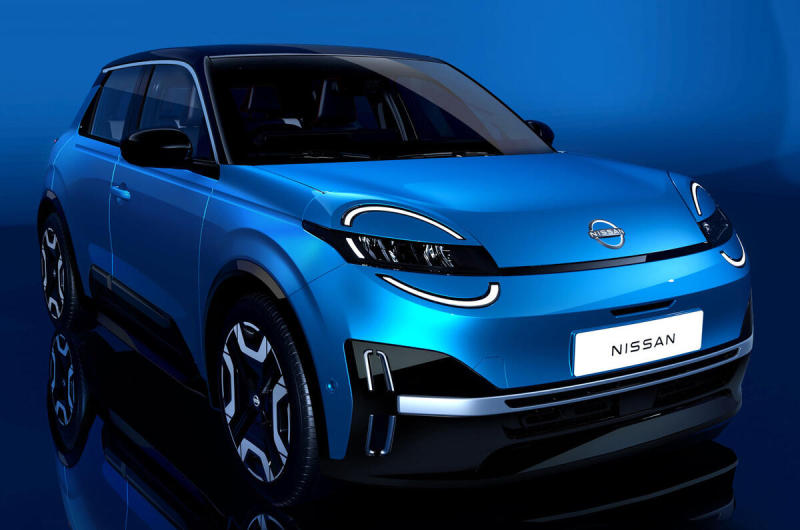
Low-range EVs that are actually exciting should also be considered. Buyers may have ignored the Nissan Leaf and Mini Cooper SE, but perhaps that's because Americans won't buy hatchbacks regardless of what powers them. A city SUV with enough space and range to take a mountain bike to the woods, but with a $30,000 price tag before credits could work. If Chevy can offer a 319-mile Equinox EV for $35,000, even greater savings should be possible.
A luxury version could work too. Many drivers might happily keep an old gas truck for specific needs if their daily driver was a leather-wrapped electric pod with excellent audio and comfortable seating. With small motors and a small battery, the simplicity of the design means luxury features should be more accessible than ever. An electric Ford Ranger makes sense too, with anyone wanting road-trip range directed to the hybrid version. The EV should be the cheaper, simpler, smoother option—not a direct replacement for a product that's already nearly perfected.
This is a chance for reinvention. But it requires moving past the binary thinking of EVs being either better or worse than gas vehicles. Society needs to stop approaching them as simply cars with batteries, and instead see them as an entirely new transportation option. They won't replace gasoline in every possible scenario, at least not yet. But for the lives people actually live, for 90% of the miles most people actually drive, they're the ideal solution.
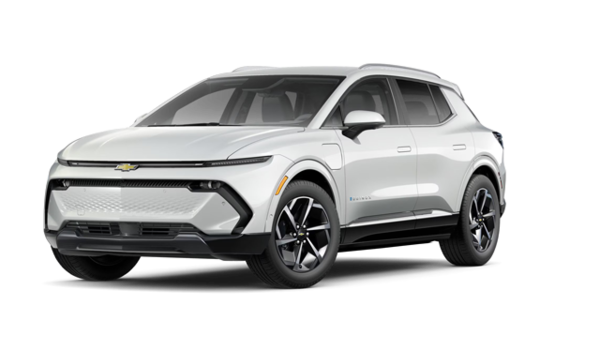
EVs aren't gas cars—and that's exactly what makes them great.