Mastering the Two-Second Rule: Essential Tips for Safer Driving
by AutoExpert   |  5 February, 2025

Share :

Ever heard the advice to leave "two seconds" of space between your car and the one in front? It's golden advice that pops up everywhere from driver's ed to those articles about driving safely. If it's been a while since you've been in a driving class, you might be wondering, "What exactly does 'two seconds' mean, and how do I measure that?"

Here’s how you nail it: The trick is super straightforward—use the time-lapse method:

Two-Second Rule

  1. Spot a Marker: Find something stationary on the side of the road, like a streetlight or a sign.
  2. Start Counting: As soon as the rear of the car ahead passes that marker, count to yourself "one thousand one, one thousand two." It’s a rhythm thing to keep you from counting too fast.
  3. Check Your Spot: If you haven't passed the marker by the time you hit "two," you’re good. If you pass it before you finish, slow down a bit—you’re too close for comfort.

This method is brilliant because it scales with your speed. It doesn't matter if you're driving fast on the highway or slow in city traffic; two seconds will always give you the space you need.

Two-Second Rule

Why does it even matter? Perfect driving conditions—clear skies and dry roads—are ideal for sticking to the two-second rule. But when things get dicey, like in rain or fog, or when the road's a mess, you've got to tweak it:

  • Nasty Weather: Slick roads from rain or ice mean your car won’t stop as quickly.
  • Poor Visibility: If it's foggy or dusty, or if construction is messing with visibility, that extra room becomes a lifeline.
  • Rough Roads: Gravel or dirt can reduce your car’s grip.
  • Towing Something: Hauling a trailer or a boat? That extra weight means you need more room to stop without a scare.

Bumping up your following distance in these scenarios isn’t just cautious; it's a must.
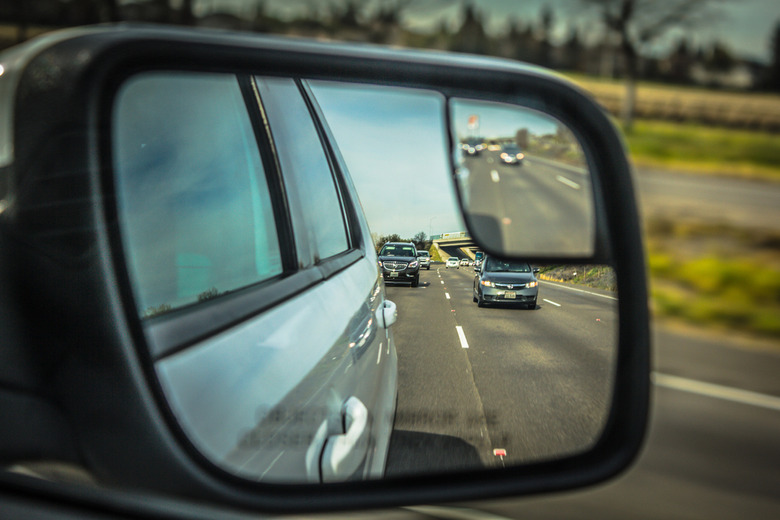
Two-Second Rule

What’s the big deal anyway? Keeping that buffer could prevent a fender bender—or worse. Rear-end crashes are making up nearly half of all two-car smash-ups, and sadly, they're often deadly. Plus, there’s a perk to driving safely: many insurance companies cut you a deal on premiums for being a cautious driver. No accidents or tickets for a while? Cha-ching—savings on your car insurance.

Two-Second Rule

So, the takeaway? Driving is about safe arrivals, not just fast ones. Giving yourself that two-second buffer is one of the easiest ways to ensure you and everyone else on the road get to where you’re going safely. Remember, those two little seconds could be the difference between a normal drive and a really bad day.

Recomended:

Everyone Says Pop-Up Headlights Were Banned, but That Is Not What Actually Happened - Photo
Others
Everyone Says Pop-Up Headlights Were Banned, but That Is Not What Actually Happened

Few automotive features can make a parked car look as alive as pop-up headlights. Turn the switch and two neat sections of bodywork rise from the hood, pause with theatrical precision and reveal the l

AutoExpert
This Talking Datsun Hid a Tiny Six-Track Record Player Beneath the Dashboard - Photo
Others
This Talking Datsun Hid a Tiny Six-Track Record Player Beneath the Dashboard

A new car speaking to its driver no longer feels remarkable. Navigation systems issue directions, safety assistants complain about lane markings and voice controls wait patiently for somebody to remem

AutoExpert
Honda Built Navigation Before GPS Using Helium, Transparent Maps and a Glowing Green Dot - Photo
Others
Honda Built Navigation Before GPS Using Helium, Transparent Maps and a Glowing Green Dot

There was a time when getting lost required some commitment. A driver would unfold a road map across the steering wheel, locate two towns that appeared to be printed directly on top of one another, th

AutoExpert
Your Front Brakes Do Most of the Work, So Why Did the Rear Pads Wear Out First? - Photo
Others
Your Front Brakes Do Most of the Work, So Why Did the Rear Pads Wear Out First?

The usual explanation sounds perfectly logical. When a car slows down, its weight moves toward the front. The front tires carry more load, so the front brakes provide more of the stopping force. That

AutoExpert
Rubber Is Naturally Pale, So Why Did the Automotive World Make Every Tire Black? - Photo
Others
Rubber Is Naturally Pale, So Why Did the Automotive World Make Every Tire Black?

A bright red car, a metallic blue car and a taxi painted the color of a highlighter will normally leave the factory with exactly the same footwear. Black tires. The color seems so inevitable

AutoExpert
A Fatal Hand-Crank Accident Helped Change the Way Every Car Starts - Photo
Others
A Fatal Hand-Crank Accident Helped Change the Way Every Car Starts

Starting a modern car requires so little effort that the action barely registers. Turn a key, press a button or let the vehicle recognize that its driver has climbed aboard. A second later, the engine

AutoExpert
You Installed the Correct Battery, but Your Car May Still Think the Old One Is There - Photo
Others
You Installed the Correct Battery, but Your Car May Still Think the Old One Is There

Changing a car battery used to be one of the cleaner bargains in home mechanics.Remove two terminals, undo the clamp, lift out the old battery and fit the new one. The clock might need resetting a

AutoExpert
Highway Rumble Strips Are Designed to Sound Awful, but Making Them Quieter Could Save Lives Too - Photo
Others
Highway Rumble Strips Are Designed to Sound Awful, but Making Them Quieter Could Save Lives Too

One tire wanders across the painted line and the previously quiet cabin erupts with a harsh mechanical growl. The steering wheel trembles, the seat vibrates and, for half a second, it feels as if some

AutoExpert
People Once Wanted Car Radios Banned Because Listening While Driving Seemed Far Too Dangerous - Photo
Others
People Once Wanted Car Radios Banned Because Listening While Driving Seemed Far Too Dangerous

A dashboard without a radio now looks unfinished. Even the most basic car is expected to provide music, news and something to fill the silence when traffic has stopped moving but the clock has not.

AutoExpert
The Seatbelt That Chased You Across the Door Was America’s Cheaper Alternative to an Airbag - Photo
Others
The Seatbelt That Chased You Across the Door Was America’s Cheaper Alternative to an Airbag

Open the door of certain 1980s or early 1990s cars and a small buckle begins travelling along the roofline. Sit down, close the door and the shoulder belt glides toward the B-pillar, hopefully passi

AutoExpert