Automakers Own Powerful Computers, but Their New Cars Still Begin as Giant Clay Sculptures
by AutoExpert | 18 September, 2026
Inside a modern automotive design studio, there are enormous screens, virtual-reality headsets, laser scanners, 3D printers and computers capable of rendering a car so convincingly that its paint appears wet.
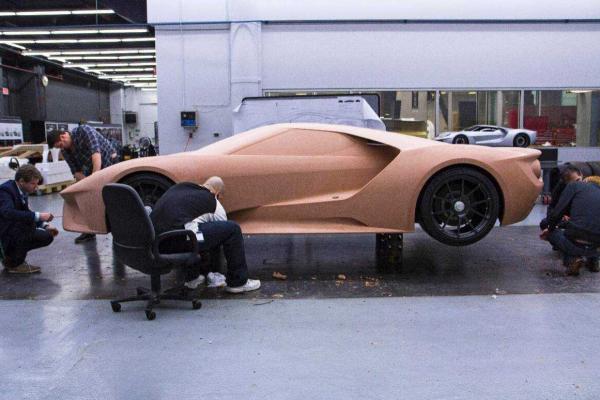
There is also a person standing beside a life-sized lump of brown material, scraping it with a hand tool.
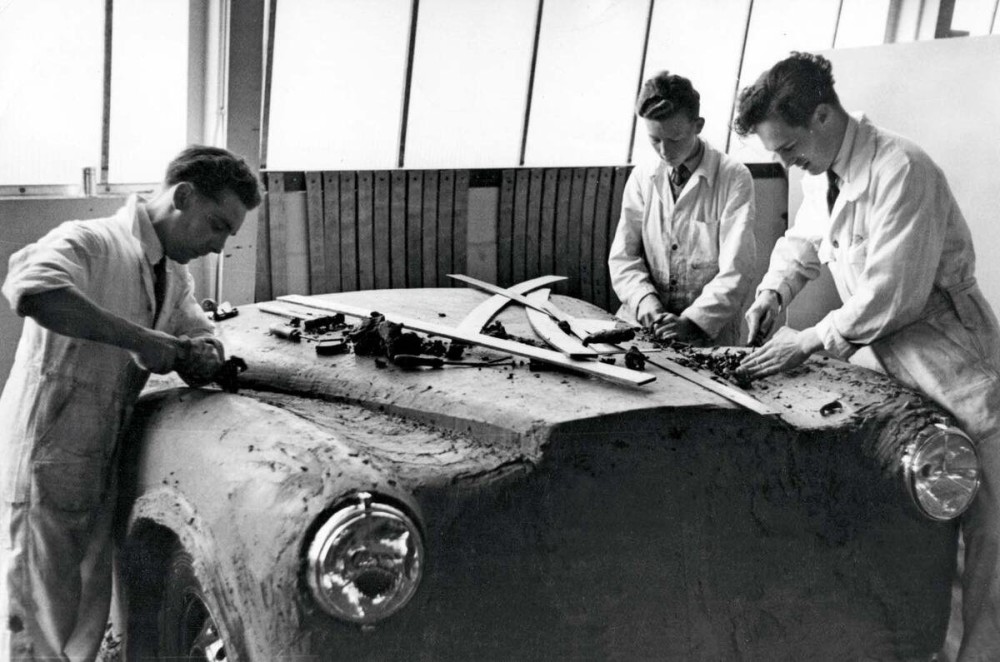
Clay modeling looks charmingly out of place in an industry that measures panel gaps by fractions of a millimeter. Yet physical models remain an important part of creating many new vehicles. Computers have changed when clay enters the process and how much of it is needed, but they have not persuaded designers to abandon it.
The explanation begins with a simple limitation. A vehicle can look wonderful on a screen and strangely awkward when it occupies the same space as a person.
Automotive clay is not pottery clay
A full-size model is rarely a solid block of clay. If it were, moving one around the studio would require equipment better suited to a small quarry.
The process generally begins with an adjustable metal armature. Foam or another lightweight material creates the rough volume of the vehicle, and a relatively thick outer layer of industrial modeling clay provides the surface that designers can cut, scrape and rebuild.
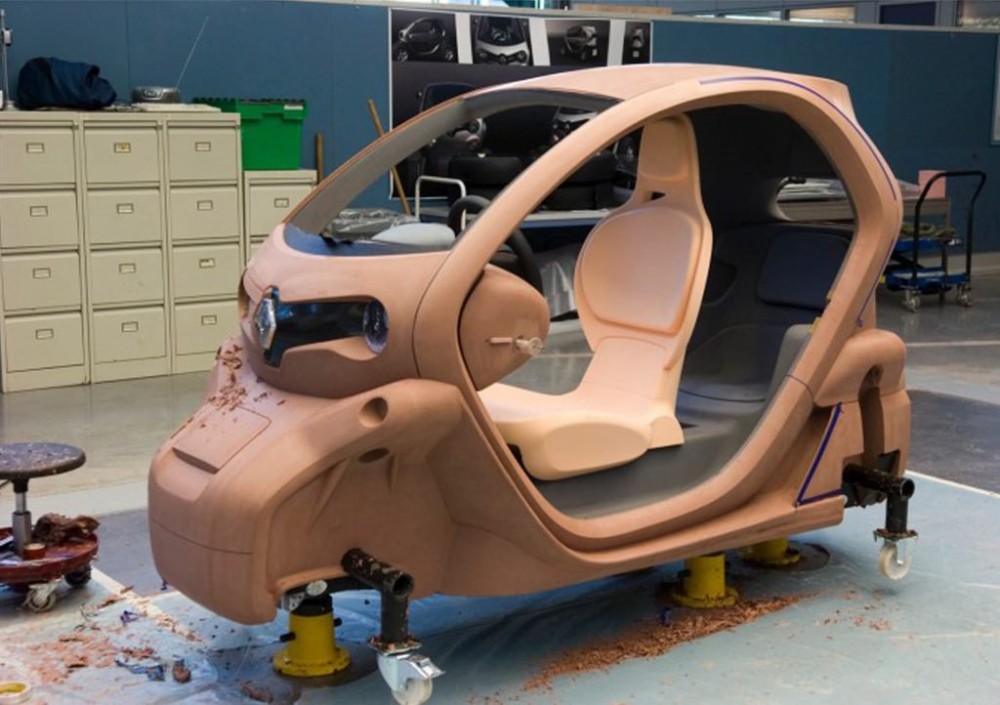
Despite the familiar name, automotive clay is closer to a carefully formulated modeling compound than the wet earth used for ceramics. Traditional formulas contain waxes, oils and fillers, and the material becomes easier to apply when warmed. Some older formulations also contained sulfur, which contributed a distinctive workshop smell and later created compatibility problems with certain electronic components and jewelry.
The initial shape may now be milled by a computer-controlled machine using digital design data. That produces an accurate starting point, but the machine does not necessarily deliver the final character. Skilled modelers refine the shoulders, wheel arches, shut lines and subtle changes in curvature by hand.
A few millimeters can change the way a surface catches light. On a large luxury sedan, that adjustment may make the body look taut and elegant rather than vaguely swollen. On a sports car, it can determine whether a rear haunch appears muscular or merely heavy.
This is difficult work disguised as gentle scraping.
Harley Earl made clay part of the automotive design language
Clay entered the industry before digital rendering, wind tunnels and even dedicated corporate design departments became routine.
Harley Earl learned about vehicle construction through his father’s custom coachbuilding business in California. According to the National Corvette Museum’s account of his career, Earl produced clay models to show customers what their future vehicles could look like.
That ability attracted the attention of General Motors. Earl moved to Detroit in 1927 and eventually built automotive styling into a formal corporate discipline. Designers no longer had to rely entirely on flat drawings or wait for expensive metal prototypes before judging a shape.
Clay allowed a proposed body to exist in three dimensions while it was still easy to change. A roof could be lowered, a fender sharpened or a grille opening narrowed without rebuilding an entire metal body.
The material also created a common language between designers, engineers and executives. Someone could point to a physical curve instead of attempting to explain it through a stack of drawings. Adhesive tape placed across the surface could mark a new character line, window edge or piece of trim. After the decision, the modeler adjusted the clay beneath it.
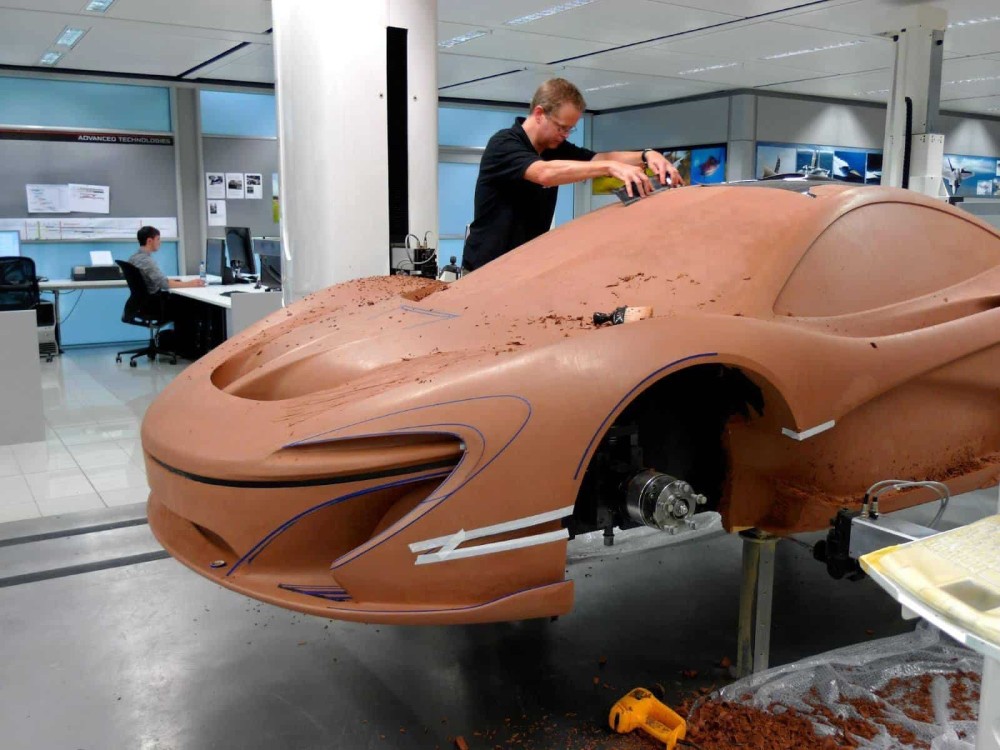
A model may even carry two competing proposals, one on each side. Human beings expect a production car to be symmetrical, but a design studio can temporarily treat the left and right halves as separate experiments.
Sunlight remains a ruthless design critic
Digital models offer enormous advantages. Colors can be changed instantly. Dozens of wheel designs can be reviewed without producing dozens of physical wheels. Engineers in different countries can inspect the same virtual vehicle, and packaging problems can be found months before prototype parts arrive.
The number of physical prototypes has fallen accordingly. In a report on modern vehicle development, The Washington Post described how General Motors now combines virtual reality, 3D printing, computer-controlled milling and traditional modelmaking.
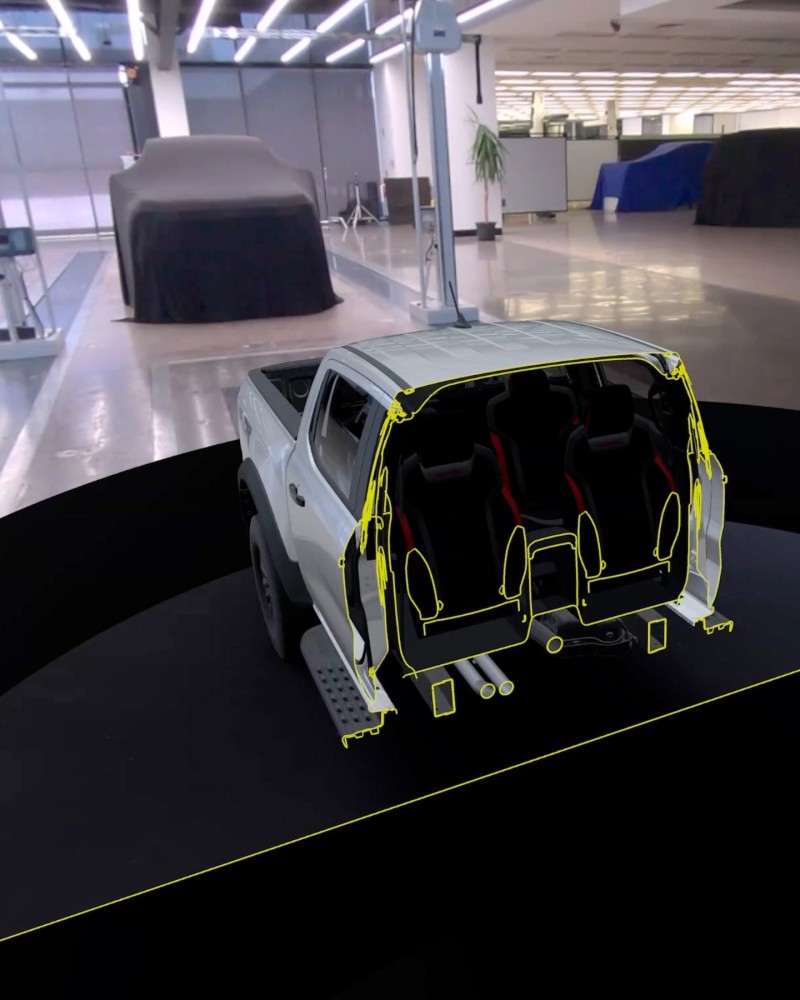
Even so, a full-size object provides information that a monitor cannot reproduce perfectly.
Designers can walk around it, crouch to wheel height and view it from the height of another driver’s seat. They can judge whether the hood feels too tall, whether the wheels appear lost beneath the body or whether the roof begins tapering at the wrong point.
Then they can roll it outside.
Natural light exposes surface problems with almost comic efficiency. Reflections travel across a car’s flanks, revealing a ripple, flat area or abrupt transition that looked perfectly smooth in a rendering. This becomes especially important on modern vehicles, where large, relatively clean panels rely on extremely subtle curvature for their character.
The clay may be covered with a specialized film to resemble painted sheet metal or glass. Under studio lamps and daylight, the model begins to behave visually like a real car. Designers can study how highlights move across it rather than relying solely on simulated reflections.
The craft survived by adopting the computer
Clay and digital design are often presented as rivals, but current development processes treat them more like dance partners.
A computer produces the initial surface. A milling machine transfers that surface into clay. Modelers make physical changes after seeing the vehicle at full scale. Laser scanners then return those changes to the digital file, where engineers can assess manufacturing feasibility and aerodynamic consequences.
The model may travel through this loop repeatedly.
At Porsche’s Weissach Development Centre, modelmaking sits alongside design, aerodynamics, electronics, powertrain development and safety testing. Traditional craft and advanced engineering occupy the same development ecosystem because each catches problems the other may overlook.
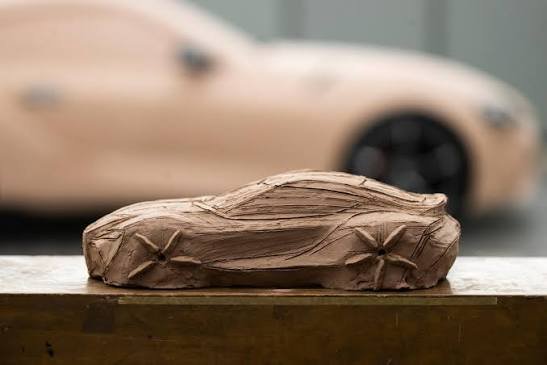
The job has evolved too. A modern modeler may work with hand tools in the morning and scanning software in the afternoon. The title “clay modeler” no longer captures the full range of skills involved, but the ability to understand a surface through touch remains valuable.
Computers have made the process faster, more accurate and easier to share. Clay contributes something quieter: physical presence.
A new car must eventually leave the flattering glow of a screen and sit in an ordinary parking space, under ordinary daylight, surrounded by people. Before committing millions to tooling, automakers still prefer to meet it in person.