Your Car Looks Clean but Feels Like Sandpaper. The Dirt Has Bonded to the Paint

by AutoExpert | 10 August, 2026
The car has been washed, rinsed, and dried. From a few steps away, the paint looks spotless. Run a hand across the hood, however, and the surface tells a different story. Instead of feeling slick, it catches at the fingertips. Some areas feel gritty. Others resemble very fine sandpaper beneath the clear coat.
Another round of shampoo rarely changes anything because ordinary dirt has already left. What remains has attached itself firmly enough to survive the wash.
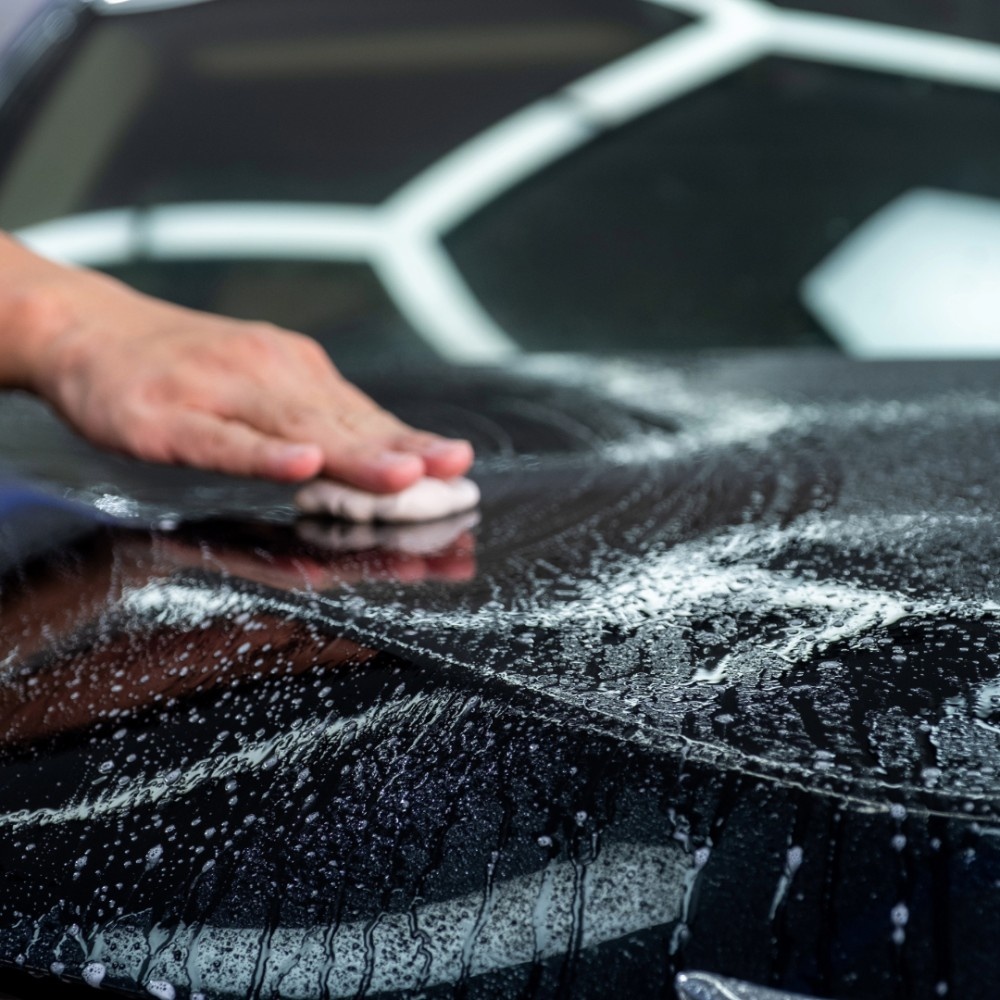
Detailers call it bonded contamination. Cars collect far more of it than road mud and the occasional unfortunate insect.
Where the roughness comes from
Tiny metal particles are common culprits. Rail transport, industrial activity and brake wear can send microscopic iron fragments into the air. They settle onto the car, lodge against the clear coat and begin oxidizing.
On white or silver paint, they often appear as small orange or brown dots. The sight can be alarming, particularly on a nearly new car. It looks as though the body panels are rusting from underneath.
In many cases, the metal particle is rusting on top of the finish rather than corrosion breaking through the panel.
Volkswagen has described industrial fallout as airborne particles originating from sources including rail transport and vehicle brake linings. New cars can therefore arrive with contamination already present after rail shipment, storage near industrial areas or weeks spent beside busy roads.
Paint can collect other stubborn visitors too: tree sap mist, road tar, overspray, mineral deposits and particles released by factories or construction work. Regular washing removes whatever sits loosely on the surface, but bonded material needs a more targeted approach.
One simple check uses a clean, thin plastic bag. After washing and drying the car, place a hand inside the bag and glide it lightly across the paint. The plastic increases fingertip sensitivity, making embedded grit much easier to feel.
There should be no pressing or scrubbing. The point is to detect contamination, not drag it across the finish.
Start with chemistry before reaching for clay
Iron-removal products react with ferrous contamination and help dissolve it without requiring heavy physical rubbing. Many change color as they work, producing the dramatic purple streaks familiar from detailing videos.
The product must be suitable for automotive paint and used exactly as directed. Apply it to a cool surface away from direct sunlight, allow only the recommended dwell time and rinse thoroughly. Letting a strong chemical dry on the paint can create a new problem before the old one has left.
Tar, sap and mineral deposits may require different products. One bottle rarely handles every contaminant safely, and stronger does not mean smarter.
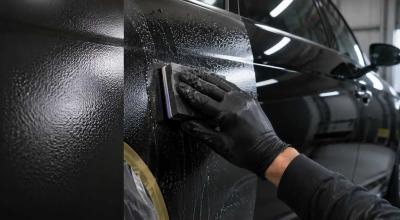
Once chemical decontamination is complete, detailing clay or a synthetic clay pad can remove particles still bonded to the surface. The clay glides across lubricated paint and picks up material protruding from the clear coat.
Lubrication matters enormously. Clay dragged across dry paint can leave marring and fine scratches. Work in small sections, use very light pressure and inspect the clay frequently. Fold it to expose a clean surface as contamination builds.
If a traditional clay bar falls onto the ground, retire it. A piece of grit collected from the pavement can turn the next pass into sandpaper in the most literal possible sense.
Even careful claying can leave faint marks on softer paint, so polishing may be necessary afterward. Aggressive polishing should not be the first response to contamination because it removes a small amount of clear coat. Dissolving or lifting material from the surface preserves more of the finish.
Some orange spots really do need body repair
Surface contamination usually feels raised and responds to chemical or mechanical decontamination. Corrosion originating beneath the paint behaves differently.
Bubbling, flaking or swelling around a stone chip, panel edge or damaged seam may indicate that the metal below has begun rusting. Clay will not solve that, and repeated rubbing may break the weakened paint further.
Overspray can also require professional attention, particularly when it covers a large area or the underlying finish is delicate. The same applies to severe water etching that has penetrated the clear coat.
After decontamination, the paint should be protected with wax, sealant or a suitable coating. Protection will not make the car immune to fallout, but it can make future contamination easier to remove.
A freshly washed car can look clean while carrying thousands of particles too small to notice individually. The fingertips find them first. Once the right treatment removes them, the difference between clean paint and genuinely clean paint becomes impossible to forget.