A CVT Has No Fixed Gears, So Why Does It Pretend to Shift?
by AutoExpert | 21 September, 2026
Press the accelerator hard in a conventional automatic car and its behavior follows a familiar rhythm. The engine climbs through the rev range, the transmission changes gear and the engine note drops before beginning the climb again.
Many continuously variable transmissions now perform the same little routine.
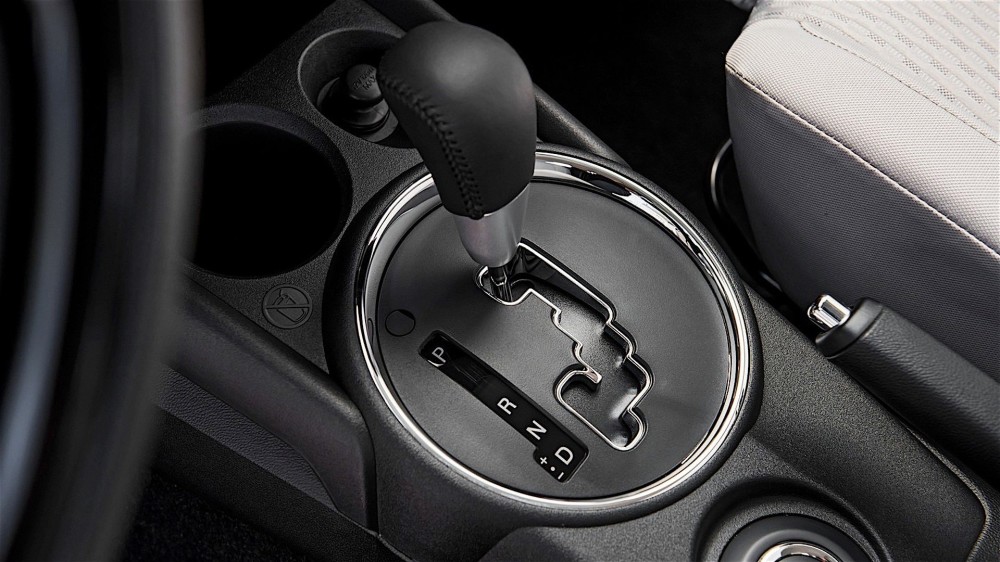
The curious part is that a traditional CVT does not have a stack of fixed forward gears to change between. Left entirely to its own devices, it can accelerate without producing those familiar pauses and drops in engine speed.
The shifts have been added by software because an efficient transmission can feel strangely broken when it behaves exactly as designed.
A transmission that changes shape
A common belt-driven CVT uses two pulleys connected by a metal belt or chain. Each pulley is formed from opposing conical faces that can move closer together or farther apart.
As the faces close, the belt rides higher and the effective diameter of that pulley increases. When the faces separate, the belt moves inward and the diameter decreases. Coordinating the two pulleys gives the transmission a continuously changing ratio rather than a handful of fixed ones.
Nissan’s technical explanation describes how a lower ratio supports acceleration while a higher ratio permits quieter, more economical cruising. Between those extremes, the transmission can select whichever ratio best suits the moment.
That freedom provides a genuine advantage. Under hard acceleration, the engine can rise to the speed at which it produces strong power and remain there while the transmission continuously adjusts the ratio. During gentle driving, the system can favor lower engine speeds to reduce noise and fuel consumption.
Nothing requires it to imitate first, second or third gear.
Efficient acceleration can sound like slipping
Drivers have spent generations learning what acceleration should feel and sound like. Rising revs followed by a crisp upshift suggest that the transmission has completed a task and the car is gathering speed normally.
A CVT can break that relationship. The engine may quickly climb to 4,500 rpm, stay there and fill the cabin with a steady drone while the speedometer continues rising. The engine note changes very little even though the car is accelerating.
Mechanically, that can be perfectly normal. From the driver’s seat, it can resemble a slipping clutch or a struggling automatic transmission.
The sensation is sometimes described as a rubber-band effect. The accelerator is pressed, the engine reacts immediately and the car’s road speed seems to catch up afterward. A particularly noisy engine can make the separation more obvious.
As Car and Driver’s CVT guide explains, manufacturers responded by programming transmissions to imitate conventional gear changes. Instead of holding one uninterrupted ratio strategy, the controller moves through selected ratio points and briefly lowers engine speed between them.
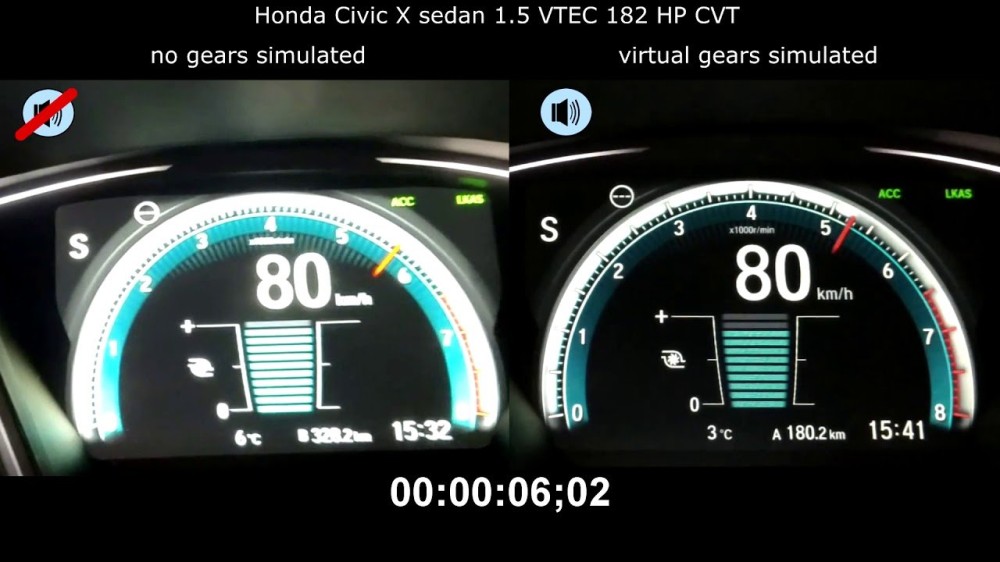
The driver hears an upshift. The body feels a small change in acceleration. Inside the transmission, no physical second or third gear has suddenly engaged.
Those paddle-shifter positions offered on many CVT-equipped cars work in much the same way. Each paddle selects a predetermined ratio or ratio range, allowing the transmission to behave as though it contained six, seven or eight conventional gears.
Familiarity sometimes wins
Simulated shifting may surrender a little of the smoothness or theoretical efficiency that made the CVT attractive. Constantly keeping the engine at its ideal operating speed can be more effective than repeatedly moving it away from that point to produce theatrical upshifts.
Yet a car is used by people, not laboratory equipment.
A more familiar response can make acceleration easier to judge. Artificial ratios also give the driver useful control on a winding road or a long descent, where selecting a lower programmed range can increase engine braking. Sport modes may use those steps aggressively, while an economy setting allows the transmission to behave more continuously.
Some vehicles combine CVT operation with genuine conventional hardware. Toyota’s Direct Shift-CVT, for example, uses a physical launch gear when moving away from a stop, then hands the work to the pulley system. The launch gear improves response and allows the pulleys to concentrate on a narrower operating range.
Hybrid “eCVTs” require another distinction. Despite the name, many do not use the familiar pair of variable pulleys and a belt. They blend power from an engine and electric motors through a planetary gear arrangement. Their smooth, sustained engine note can resemble a belt CVT, but the machinery producing it is different.
Fake shifts are not the same as a fault
A repeatable drop in engine speed under strong acceleration may simply be the programmed shift pattern doing its job. It should feel deliberate and consistent.
Shuddering while pulling away, delayed engagement after selecting Drive or Reverse, warning messages, a burning smell or a sudden rise in engine speed without appropriate acceleration deserves attention. An unusual whine or grinding noise should not be dismissed as normal CVT character either.

Because the fluid operates the transmission’s hydraulic controls while lubricating and cooling its internal parts, using the correct specification is particularly important. Service intervals and procedures vary, so the vehicle manufacturer’s schedule should take precedence over universal advice about “lifetime” fluid or fixed mileage changes.
The fake gears themselves are rarely evidence that engineers have misunderstood the CVT. They reveal how well engineers understand drivers.
A completely smooth transmission once felt too unfamiliar for many customers. Software gave it back the reassuring rise, pause and fall of gears that were never physically there.