
Your Eyes Are Not Broken: Here Is Why Moving Car Wheels Suddenly Spin Backward
by AutoExpert | 5 August, 2026
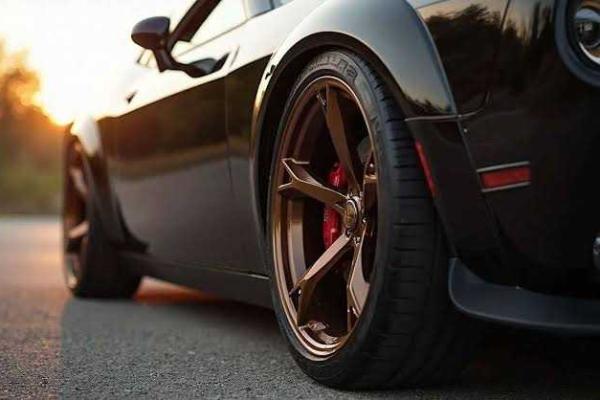
A car accelerates away on screen, clearly traveling forward, while its wheels begin doing something ridiculous. First, the spokes slow down. Then they appear to stop. A moment later, they are rotating backward while the car continues happily in the opposite direction.
The tires have not broken contact with reality. The camera has simply given the brain incomplete information, and the brain has filled in the missing movement with the most economical guess available.
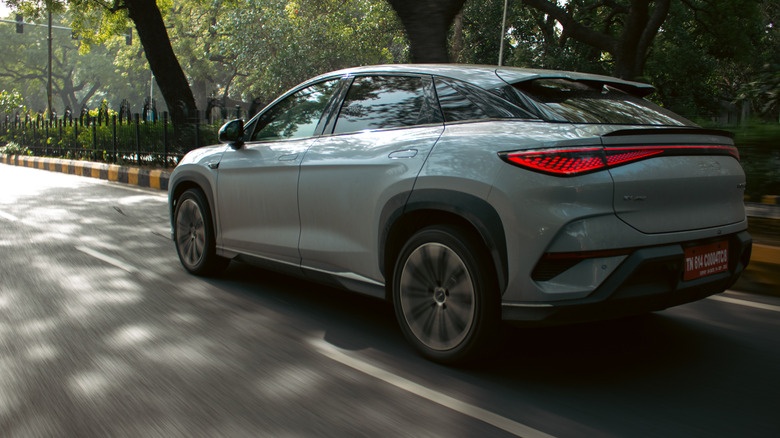
This is the wagon-wheel effect, named after the backward-spinning wheels seen in old Western films. Alloy wheels, helicopter rotors, aircraft propellers and almost anything else with a repeating rotating pattern can produce the same illusion.
A camera never sees continuous motion
Video feels smooth, but it is built from individual images recorded one after another. A typical camera may capture 24, 30 or 60 frames every second. Between those frames, the wheel continues rotating unseen.
Imagine a wheel with several identical spokes. In one frame, a spoke appears at the top. By the next frame, the wheel has moved far enough that the following spoke has nearly reached the same position.
The camera cannot label the spokes. They all look alike. When those separate images are played in sequence, the visual system connects the closest matching positions.
If the new spoke appears slightly behind the position occupied by the previous one, the wheel seems to have made a small backward movement. In reality, it completed a much larger forward rotation between frames.
At another speed, each spoke may land almost exactly where the previous one appeared. The wheel then seems stationary even as the car travels down the road. Change the speed again and the apparent direction returns to normal, although the wheel may still look as if it is rotating far more slowly than it truly is.
The University of Illinois uses the example of a 24-spoke wheel completing one revolution per second while being filmed at 24 frames per second. Every captured frame can show an almost identical arrangement of spokes, making the moving wheel appear frozen.
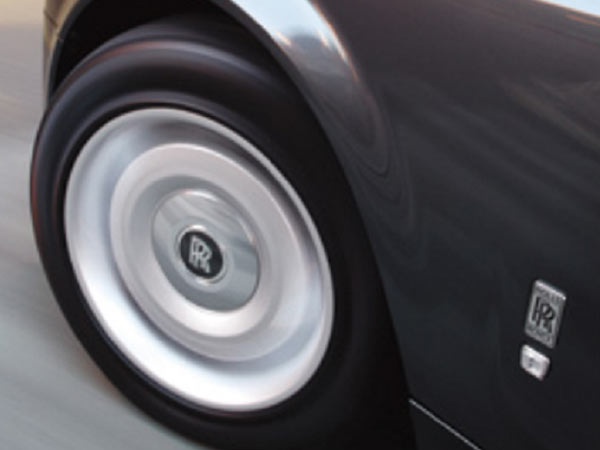
Wheel speed and frame rate keep renegotiating the illusion
The effect changes as the car accelerates because the relationship between wheel rotation and camera frame rate is constantly shifting.
At one speed, the spokes advance a little between frames. At another, they advance by almost one full spoke. A small additional increase can make the apparent motion reverse again. That is why filmed wheels sometimes pass through a peculiar sequence of moving forward, slowing, stopping and rotating backward.
Shutter speed affects the result too. A short exposure can freeze individual spokes sharply, making their positions easier to confuse from one frame to the next. A longer exposure introduces motion blur, which may weaken the illusion by smearing the spokes into arcs.
Wheel design matters as well. A simple, evenly spaced pattern is an ideal candidate because one spoke can easily be mistaken for another. An irregular design gives the eye more information about how far the wheel has actually moved.
Researchers have studied the phenomenon well beyond old movie cameras. A PNAS paper on the wagon-wheel illusion found that apparent reverse rotation can even occur under continuous light, suggesting that human motion perception adds another layer of complexity. The precise explanation for that version has prompted competing theories, but the familiar effect seen in recorded video is a classic example of temporal aliasing.
It can occasionally happen away from a screen
Flickering illumination can make a rotating object visible only at repeated intervals, much like the frames of a camera. Certain artificial lights can therefore make wheels, fans or machinery appear to move slowly, stop or reverse.
That is entertaining when it happens to a passing car. Around workshop machinery, it can be dangerous. A rotating component that appears stationary under flickering light is still rotating, regardless of what the eye reports.
For most drivers, the wagon-wheel effect remains a harmless bit of automotive theatre. It has survived the transition from stagecoaches in Westerns to smartphones filming supercars because cameras still sample motion in separate moments.
The car keeps moving forward. The wheels keep turning forward. Only the story assembled between the frames decides to take a brief trip in reverse.