
The Original Mini’s Windows Slid Sideways So Its Tiny Doors Could Do More

by AutoExpert | 2 October, 2026
Open the door of an early Mini and one of its best ideas is easy to miss. Beneath the window sits a surprisingly generous storage pocket, especially for a car that looks as though it barely has room for its own doors.
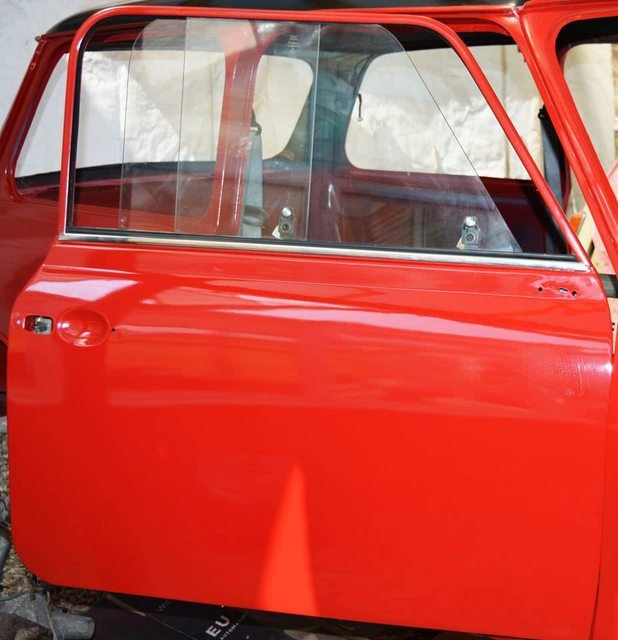
That pocket helps answer why the classic Mini had sliding windows. In a conventional car, lowering the side glass requires space inside the door for the pane to descend and for its winding mechanism. The original Mini’s glass moved sideways instead. The door could devote more of its scarce interior space to storage. MINI itself identifies the sliding windows as one of Alec Issigonis’s solutions to the car’s packaging problem.
Every inch had a job
The Mini grew out of a brief that left little room for extravagance: make a small, economical car that could still carry people properly. Issigonis put the wheels close to the corners and mounted the engine across the car, allowing more of its short length to serve the passenger compartment. The door pockets followed the same reasoning on a smaller scale. Space saved from a window mechanism became space someone could actually use.
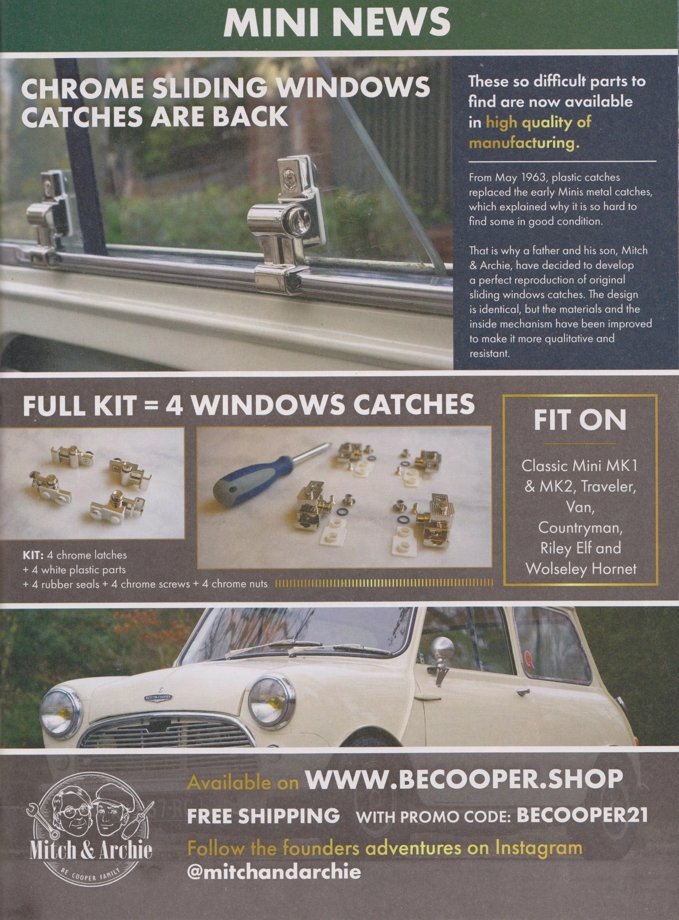
The result had an agreeable bit of everyday logic. Reach across the cabin and there was somewhere to put a map or the odds and ends that otherwise collect on a seat. To let in air, slide the glass rather than turn a handle. The arrangement carried compromises, of course: a pane that slides past another pane offers a different opening from a window that disappears fully into the door. In the original Mini, the extra storage was evidently worth it.
 q
q
Other visible details came from a related concern: building the car affordably. Its exposed body seams and outside door hinges became part of its unmistakable appearance, but BMW’s historical account says those construction choices helped control manufacturing costs. The hinges were later moved inside; they were not the reason the door pockets existed.
The design eventually changed
By 1969, the Mini range had adopted wind-down front windows and moved the door hinges inside. Those updates made the doors more familiar to drivers, although they also marked the end of the original sliding-window arrangement.
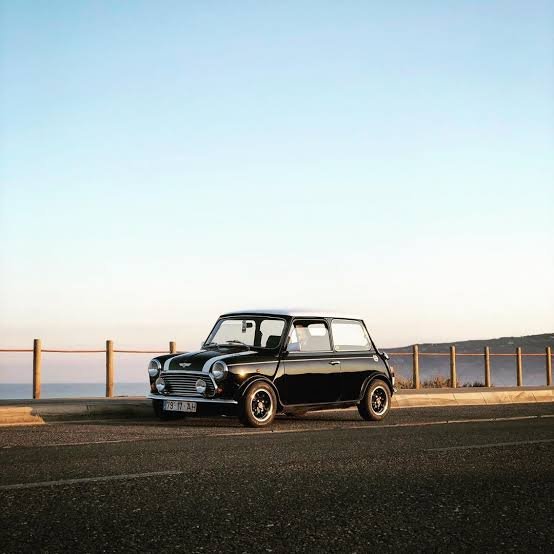
It is tempting to remember the old glass simply as a charming quirk. The deeper door pocket tells the better story. On a car this small, even the path a window takes when it opens affects what passengers can carry. Issigonis found room by making two panes pass each other instead of asking one to disappear into a door that had hardly any space to spare.