Old American Cars Could Seat Six Without a Third Row. The Shifter Made It Possible
by AutoExpert | 22 September, 2026
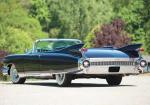
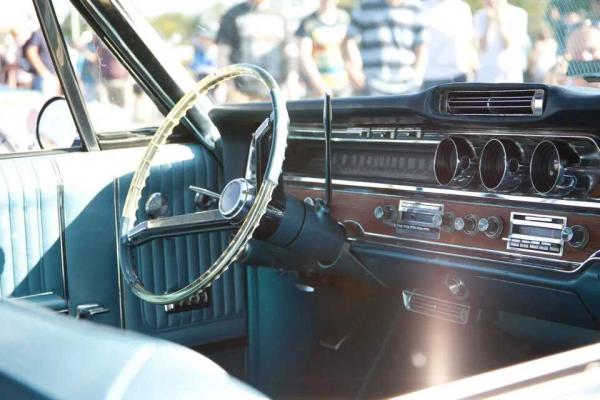
Open the door of a large American sedan from the 1950s and the front seat looks less like a modern cockpit than a particularly comfortable sofa.
There is no center console dividing driver and passenger. No storage bin occupies the transmission tunnel. The floor appears almost empty, leaving enough room for three adults to sit across the front.
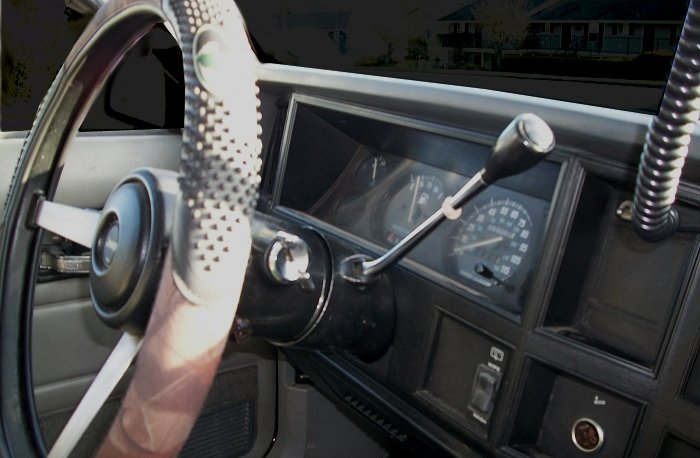
The gear lever is still there. It has simply climbed onto the steering column.
Column-mounted shifters gave manufacturers a practical way to preserve that valuable middle seat. In an era when a conventional family sedan was expected to carry six people, moving the lever away from the floor made excellent sense. The layout became so familiar that generations of drivers learned an expression that sounds increasingly mysterious today: three on the tree.
From the floor to the steering column
Early manual transmissions commonly used long levers that rose directly through the floor. The mechanical arrangement was straightforward because the driver’s hand was working close to the gearbox.
It also occupied the exact piece of floor where the middle passenger’s knees and feet needed to go.
During the late 1930s, column-mounted gear controls began spreading through American cars. Chrysler introduced column shifting alongside Fluid Drive in 1939, while other manufacturers adopted similar arrangements as bench seats and three-abreast front seating became increasingly important.
The lever did not connect directly to the transmission. Rods and linkages carried the driver’s movement down the steering column and through the engine compartment to the gearbox.
Most of these cars had three forward gears. The resulting combination of three-speed manual transmission and steering-column lever became known as “three on the tree,” a playful counterpart to the later “four on the floor.”
The shift pattern was usually arranged across two planes. Moving the lever toward or away from the driver selected one shift rail, while moving it up or down selected the individual gear. Someone familiar with a floor-mounted manual could learn the movement quickly, although the first attempt sometimes looked like a driver trying to operate an unfamiliar railway signal.
The system suited the engines and roads of the period. Large American engines often produced enough low-speed torque that drivers did not need to change gears constantly. First gear started the car moving, second handled much of the acceleration and third carried it along at cruising speed.
There was little pressure to add a fourth or fifth ratio when three did the job adequately.
A bench seat turned a sedan into a six-passenger car
The real advantage appeared inside the cabin.
A wide front bench allowed a four-door sedan to carry three people in front and three in the rear. Manufacturers could advertise six-passenger capacity without adding another row, lengthening the body or creating a larger vehicle category.
That ability mattered to families who might otherwise have needed a station wagon. It also suited taxis, police cars and work vehicles, where every usable seating position had value.
The front bench shaped the atmosphere of the car as well. Passengers were not separated by a tall console, and younger family members often occupied the middle position. Cars felt open and spacious, although the person sitting beside the driver had to accept the transmission tunnel, limited legroom and the fact that the dashboard was designed around somebody else’s view of the road.
A floor-mounted shifter would have made that center position awkward. Placing the lever on the column cleared the area and allowed the front bench to extend in one uninterrupted sweep from door to door.
As Autoweek’s history of the three-on-the-tree explains, the setup was common in affordable American cars through the 1940s, 1950s and much of the 1960s. Trucks kept it longer because bench seats, simplicity and low purchase prices remained important to commercial buyers.
Automatic transmissions also adopted the column lever. An automatic required fewer deliberate movements, and its PRNDL positions could be displayed clearly beside the steering wheel. Long after the manual three-on-the-tree began disappearing, column-shift automatics remained entirely normal in American sedans, vans and pickup trucks.
Why three on the tree could become three stuck in neutral
The column shifter solved a packaging problem, but the extra linkage introduced its own personality.
Rods, levers and bushings had to translate a small movement at the steering wheel into a precise selection inside the transmission. As these parts wore, the shift action could become vague. A neglected mechanism might bind while moving between gears, sometimes leaving the transmission caught between two shift rails.
Drivers familiar with the system learned not to rush it. A deliberate movement through neutral usually produced better results than dragging the lever diagonally from one gear to another.
Worn linkage remains one of the first things to inspect on a classic car with a column-shift manual. Difficulty selecting gears does not automatically mean the gearbox itself has failed. Loose bushings, poor adjustment or bent rods can create the same symptoms.
For anyone buying such a car today, the mechanism should be tested when cold and again after a drive. The lever should pass cleanly through neutral, every gear should engage without excessive force, and the transmission should remain in gear when the accelerator is released.
Parts availability can vary enormously. Common American models may have reproduction bushings and linkage components readily available, while an obscure imported car can turn a small plastic piece into a long search through specialist suppliers.
More gears and sportier interiors pushed the lever downward
Three-speed manuals became less appealing as highways expanded, engines changed and buyers expected better fuel economy and performance.
Four-speed transmissions offered closer ratios and a more engaging driving experience. Their shift patterns were easier to manage with a short lever mounted directly on the floor. Five-speed gearboxes made the column arrangement even more complicated.
At the same time, bucket seats were becoming fashionable. Sports cars had already established the idea of separate seats with a gear lever placed between them. By the 1960s and 1970s, that cockpit-style layout was spreading into ordinary coupes and sedans.
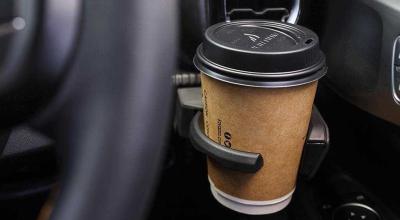
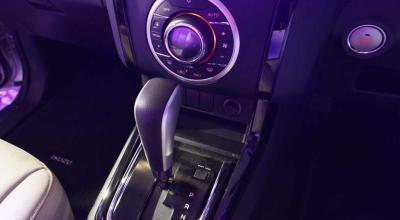
The new center console offered space for switches, storage, ventilation controls and eventually cupholders. Once the middle front seat disappeared, the column shifter lost its greatest advantage.
Manual column shifters survived longest in inexpensive trucks and basic fleet models. J.D. Power’s history of the layout notes that identifying the final American passenger car with three on the tree is surprisingly difficult because some configurations appeared in catalogues but were rarely ordered. By the 1980s, however, the arrangement had effectively vanished from new passenger cars.
Column-shift automatics lasted much longer. Large sedans such as the Ford Crown Victoria and traditional pickups continued using them because the lever preserved console or seating space without making the transmission harder to operate.
The column shifter is returning without the old machinery
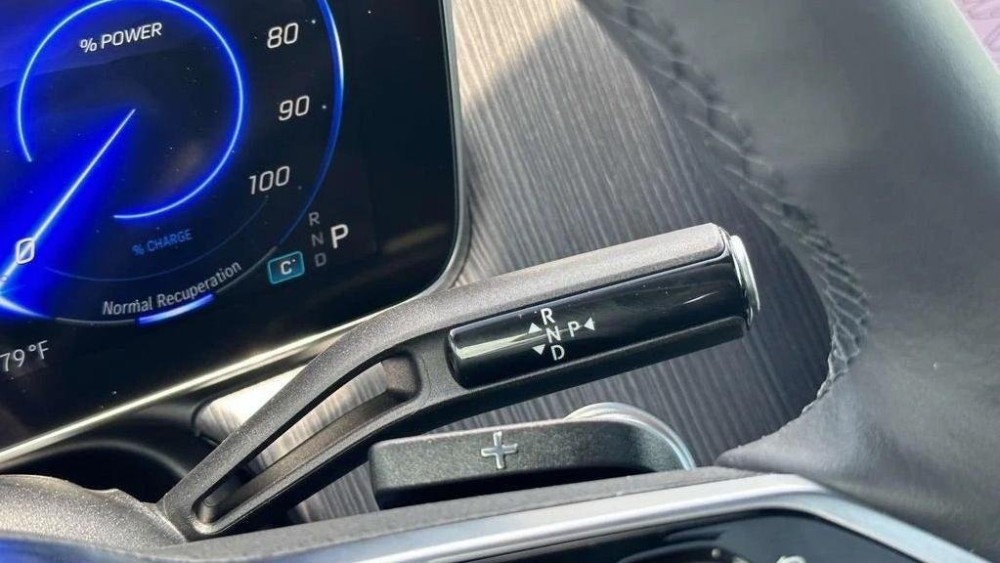
Modern electronic transmissions have quietly brought column selectors back.
In many new vehicles, the lever no longer moves rods or cables attached to the gearbox. It sends an electronic request to a control module. That means designers can place the selector almost anywhere, including on the steering column.
Electric cars have made the location especially attractive. Their transmissions do not require a large mechanical selector, while drivers increasingly want open storage areas, wireless charging pads and uncluttered center consoles. Moving a small electronic lever beside the steering wheel frees a surprising amount of space.
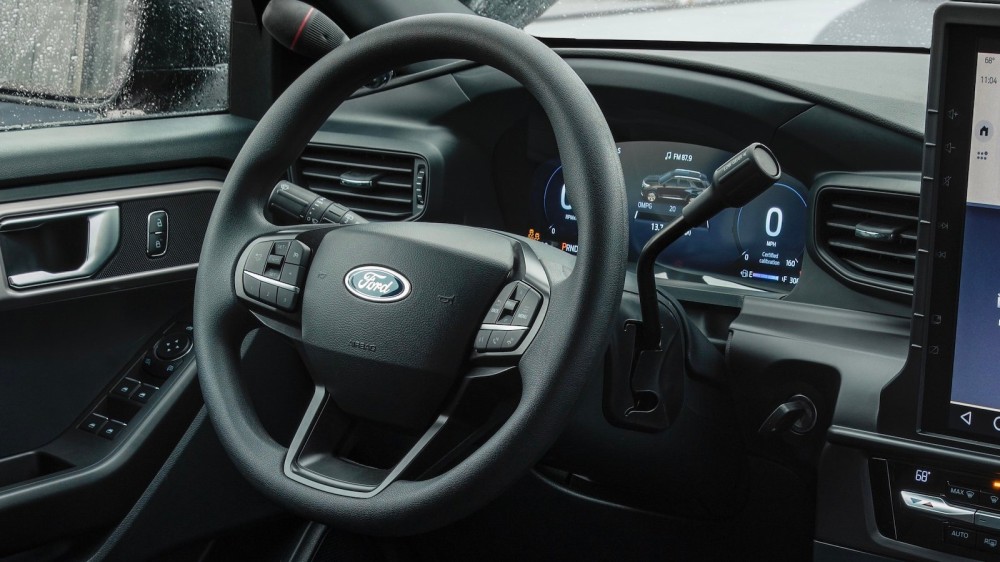
The modern version may resemble an old automatic column shifter, but the sensation is entirely different. There is no heavy linkage moving beneath the hood and no mechanical pause as the transmission passes through its ranges. Some selectors spring back to a central position after every command.
The reason for placing them there, however, has circled back to the original logic. Space inside a car is valuable. Moving the gear control away from the floor allows designers to use the center of the cabin for something else.
Old American sedans used that room for another passenger. Modern cars fill it with phones, handbags, charging equipment and increasingly ambitious beverage containers. The technology changed completely, but the packaging trick remains remarkably familiar.