Your Car’s 17-Character VIN Is Hiding More Information Than You Think
by AutoExpert | 21 September, 2026
A vehicle identification number has the charm of a password printed by a malfunctioning office computer. It is long, awkward to recite and generally ignored until an insurer, parts supplier or registration form demands every character.
Yet those 17 positions are carefully organized. They can identify the manufacturer, describe the vehicle, reveal its model year and plant, and distinguish it from other examples built on the same production line.
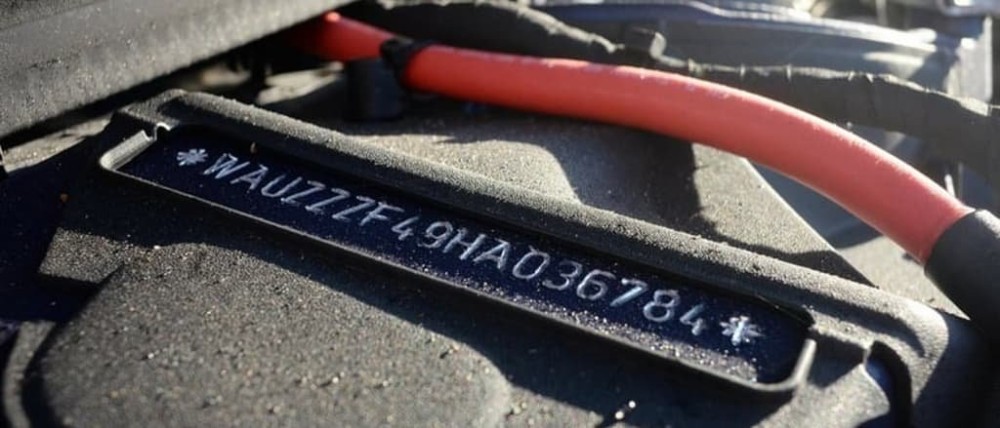
One of the characters can even expose a typing error.
Strictly speaking, “VIN number” repeats the word number, but the phrase is so firmly embedded in everyday language that grammar has already lost the argument.
Before 17 characters, manufacturers made their own rules
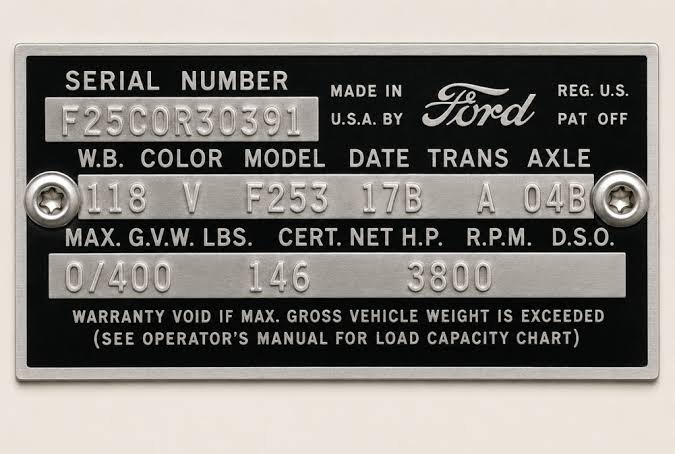
Early vehicles carried serial numbers, engine numbers and manufacturer-specific identification codes. There was no single length or universal arrangement.
A short number might be entirely legitimate on one classic car and useless for identifying another. Manufacturers could assign similar sequences, change formats between model years or encode information in their own way. That created obvious trouble as vehicles moved between dealers, repair shops, insurers and government registration systems.
For vehicles built for the American market, the standardized 17-character format applies to the 1981 model year and later. That is why the NHTSA VIN decoder is intended primarily for vehicles from 1981 onward.
The fixed format made identification consistent enough for computer databases while providing room for both descriptive information and a unique production sequence. Similar standards helped the 17-character VIN become familiar internationally, although the exact regulatory requirements and information available can still differ between markets.
Classic cars remain an important exception. A pre-1981 vehicle with a shorter serial number has not necessarily lost several characters to rust, fraud or careless paperwork. Its identification may simply predate the modern system.
What the 17 positions contain
The first three characters form the World Manufacturer Identifier. Together, they indicate the manufacturer and broadly identify the vehicle’s origin or manufacturing entity.
Positions four through eight form the vehicle descriptor section. Depending on the manufacturer and vehicle type, these characters may encode details such as body style, engine, model, restraint equipment or series. There is no universal promise that the fifth character always means the same thing across every brand.
The ninth position is reserved for the check digit on vehicles covered by United States requirements. This may be a number or the letter X.
Position 10 identifies the model year. Position 11 indicates the assembly plant. The remaining characters contain the production sequence or another manufacturer-assigned identifying portion, subject to the applicable rules.
The full requirements are contained in 49 CFR Part 565, which specifies the 17-character length and the characters manufacturers may use.
This structure is why an online VIN decoder can reveal far more than the number printed on the registration document appears to contain. The decoder is interpreting sections according to information supplied by the manufacturer.
Results are not always equally detailed. NHTSA notes that its system is focused on vehicles manufactured for sale or importation in the United States. Unusual imports, incomplete manufacturer records and older vehicles may return limited information.
I, O and Q were deliberately excluded
A modern VIN can contain many letters, but not I, O or Q.
The reason becomes obvious when the code is printed in a small typeface, seen through a dirty windshield or copied by hand. An I can resemble the number 1. An O can be mistaken for zero. Q introduces another opportunity for confusion, particularly in worn or poorly stamped characters.
Removing those letters reduces mistakes without significantly limiting the number of available combinations.
The permitted alphabet therefore runs through letters such as H, J, K and N while quietly stepping around the troublesome three. A VIN containing I, O or Q in its standardized 17-character form deserves closer inspection. The character may have been read incorrectly, or the number may not be a valid modern VIN.
The ninth character checks the others
The check digit is one of the cleverest parts of the system because it does not describe the car directly.
Letters in the VIN are assigned numerical values. Each position receives a weighting, and the resulting figures are added together. The total is divided by 11, with the remainder determining the check digit. If the calculation produces a remainder of 10, the check digit becomes X.
This allows a computer to catch many simple transcription errors. Enter one character incorrectly and the calculation may no longer agree with position nine.
The check digit cannot prove that a vehicle is genuine, and it cannot uncover every sophisticated fraud. It can, however, recognize that a VIN has probably been copied incorrectly before the mistake spreads through an insurance policy, parts order or title record.
The model-year character eventually repeats
Seventeen positions provide a huge number of combinations, but the model-year code in position 10 operates in a cycle.
Letters and numbers are reused after 30 years. An A in the tenth position, for example, can correspond to 1980 or 2010. Other information in the VIN, along with the vehicle’s design, documentation and regulatory rules, resolves the correct decade.
This matters when checking an older car. Reading one character and declaring the model year is not always enough. A complete decoder considers the rest of the VIN and, where available, the manufacturer’s records.
The distinction between model year and calendar year also causes confusion. A car assembled late in one year may officially belong to the following model year. The tenth character records the designated model year, not necessarily the date when the vehicle physically left the factory.
Where to find it and what to compare
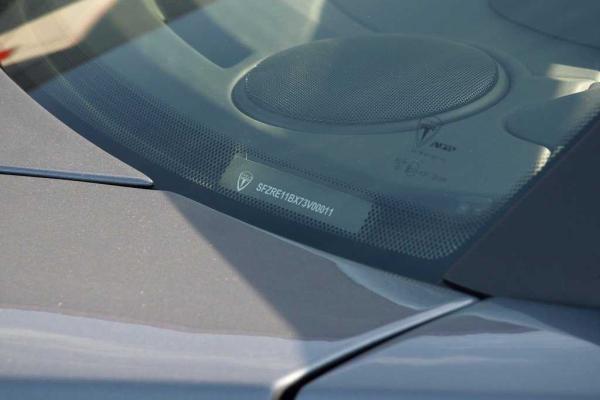
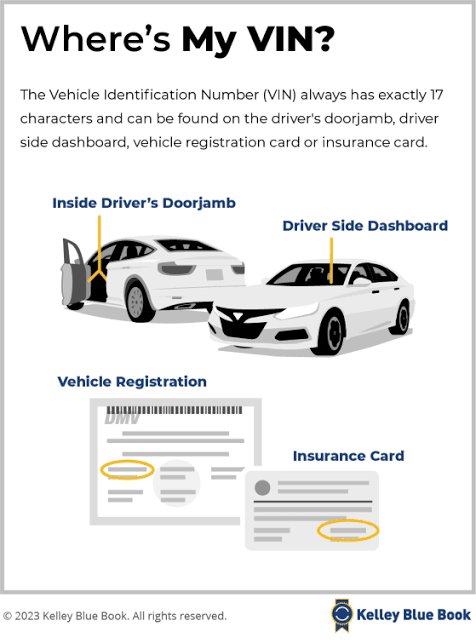
On most modern passenger vehicles, the easiest VIN to see sits at the base of the windshield on the driver’s side. It is intended to be readable from outside. Another copy commonly appears on a label or plate around the driver’s door opening.
The same number should appear on the registration, title and insurance documents. Manufacturers may also place confidential or secondary identifiers elsewhere on the body to assist with theft investigations and repairs.
Anyone inspecting a used car should compare the visible VIN with the documentation. Different characters, disturbed rivets, an oddly positioned plate, damaged labels or evidence that the dashboard area has been altered require an explanation before money changes hands.
A valid VIN can then be checked for recalls through NHTSA and decoded to confirm that the stated engine, body and model year agree with the vehicle being sold. A decoder is not a complete history report, but it can expose a surprising amount of nonsense in an advertisement.
The 17-character VIN was created to make vehicle identity less ambiguous. Its success is easy to overlook precisely because the same format now follows a car through production, registration, insurance, servicing, recalls and eventual resale.
It may look like alphabet soup beneath the windshield. Every character, including the three that never appear, is there for a reason.