
Cars Had Ashtrays Everywhere Before They Found a Sensible Place for Coffee
by AutoExpert | 22 September, 2026
A classic car could provide a cigarette lighter within easy reach of the driver, another for the front passenger and sometimes individual ashtrays for the people in the back. Yet bring a cup of coffee aboard and the interior suddenly became hostile territory.
There might be a shallow circular depression on the open glovebox door. It looked promising while the car was parked. Once the vehicle moved, however, the arrangement depended on gentle acceleration, smooth pavement and extraordinary faith in gravity.
For much of the automobile’s history, manufacturers devoted more thought to smoking than drinking. Cupholders only became expected equipment relatively recently, after changes in restaurants, commuting and family life turned the cabin into something closer to a moving room.
The journey from flimsy dashboard trays to spring-loaded holders large enough for modern insulated tumblers took most of the 20th century.
Drivers began eating in cars before cars were ready
Early automobiles were treated primarily as transportation. If the occupants wanted refreshments, the sensible approach was to stop. That did not prevent accessory makers from imagining increasingly elaborate ways to carry meals, bottles and entire picnic arrangements.
The growth of drive-in restaurants during the mid-20th century made the problem harder to ignore. Curb-service attendants brought food directly to parked cars on trays that attached to an open window or door. These worked because the vehicle was stationary and the tray could remain outside, away from upholstery that was considerably less forgiving than a restaurant table.
A 1950 newspaper item described a dashboard-mounted snack tray with metal drink supports suspended from chains. It resembled a miniature serving station more than anything found in a modern center console.
Inventors were also trying to bring the drinks inside. Texas inventor Burnard W. Byford filed a patent in 1949 for an “automobile seat article holder,” which was granted in 1953. His folding device fitted around the seat and could support a soft-drink bottle, a glass of water, a nursing bottle or a packet of cigarettes.
The inclusion of cigarettes is a neat summary of the period. Even an invention intended to hold drinks made room for smoking.
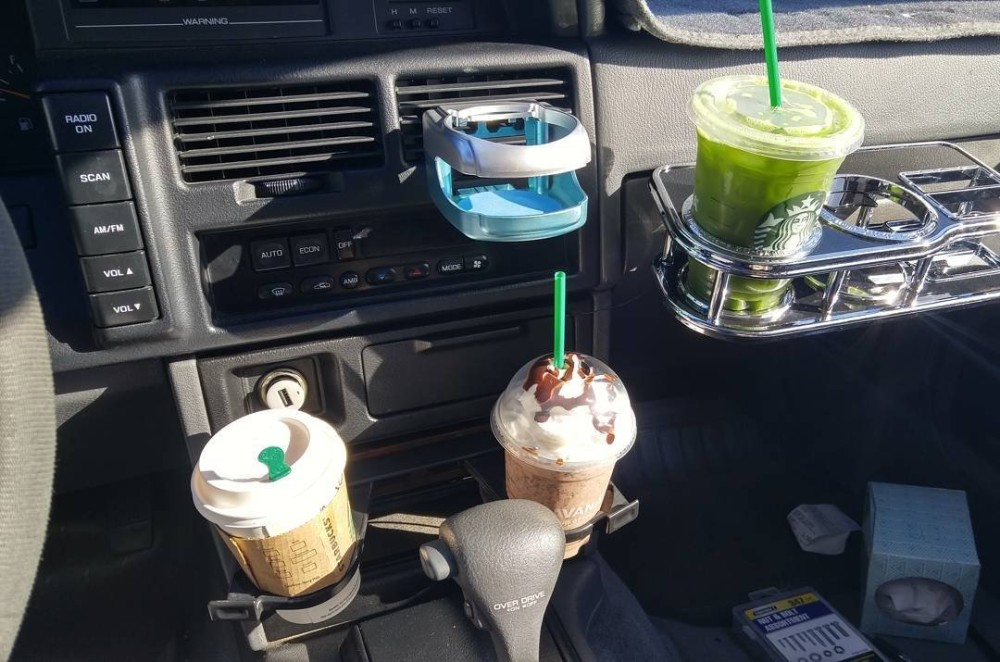
Other designs slid from the instrument panel or hung from the dashboard. Aftermarket holders eventually appeared with hooks that slipped between the window glass and the door. They were inexpensive, portable and usually shallow enough to make every corner an experiment.
Automakers offered something slightly tidier. From the 1950s onward, some glovebox doors folded down to create small trays with circular recesses. The Smithsonian’s collection includes a later General Motors example with two shallow wells molded into the inner surface.
These recesses are often remembered as early cupholders, but their limitations become obvious as soon as the car moves. The open glovebox door had no gripping mechanism, and the depressions were barely deep enough to resist a determined sneeze. They were handy during a roadside stop and hazardous during an enthusiastic turn.
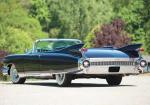
The 1957 Cadillac Eldorado Brougham approached the problem with characteristic extravagance. Its glove compartment included metal tumblers that could be held against a magnetic surface. This was elegant, expensive and unlikely to become the democratic answer to carrying drive-through coffee.
The minivan gave drinks a permanent address
The decisive change arrived with a vehicle designed around families rather than formal motoring traditions.
Chrysler introduced the Dodge Caravan and Plymouth Voyager for the 1984 model year, after unveiling them in 1983. Their significance went well beyond sliding doors and flexible seating. Molded into the plastic dashboard were dedicated depressions for drinks.
They were rudimentary by current standards. They did not have adjustable fingers, rubber liners or clever clamps for bottles of different sizes. A tall cup could still become restless on a rough road. What mattered was that the holders belonged to the vehicle rather than an accessory catalogue.
The timing was ideal. American drivers were spending longer periods commuting. Fast-food restaurants had embraced the drive-through window. Parents were carrying children, snacks, bottles and enough miscellaneous cabin clutter to stock a small convenience store. The minivan acknowledged how people were already using their cars.
As AAA’s history of the car cupholder notes, the arrival of the minivan helped establish the form familiar today. The holder was integrated into the interior, located within reach and designed as part of the vehicle from the beginning.
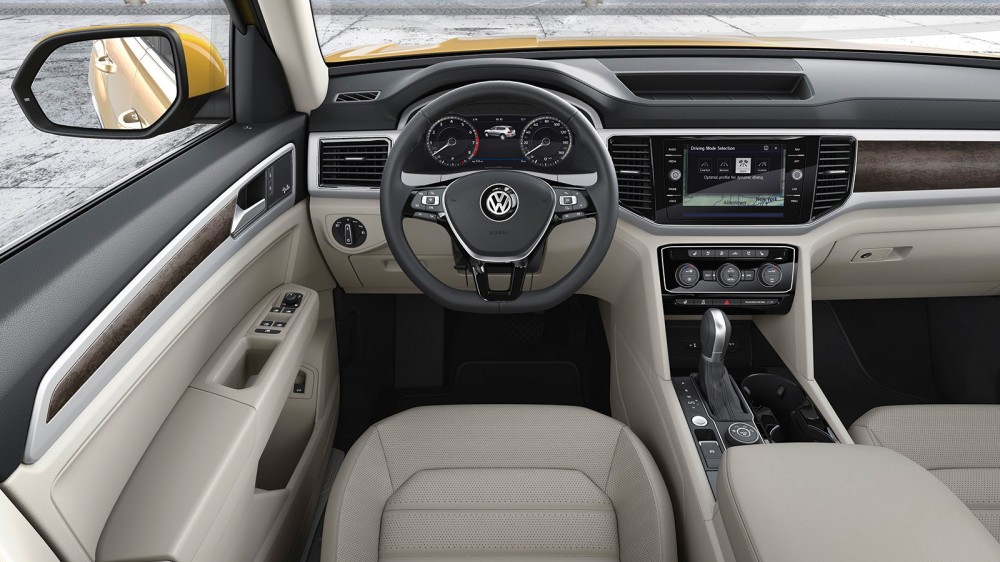
Cupholders still took time to spread. In 1989, they could be described as unnecessary future frills. By the 1990s, that view was becoming difficult to defend. Family vehicles accumulated holders in their consoles, folding armrests, doors and third-row trim panels. Sedans followed, although some European models continued to treat the entire concept with suspicion.
This difference was partly cultural. Larger takeaway drinks, drive-through dining and long suburban commutes made secure beverage storage especially important to American buyers. In markets where drivers were more likely to stop for coffee, sacrificing dashboard space to a cup could appear less urgent.
The ashtray was moving in the opposite direction. Smoking rates declined, social attitudes changed and manufacturers began offering removable ashtrays or smoker’s packages rather than installing several by default. The most valuable territory in the center console gradually passed from cigarettes to coffee, bottles, phones and charging cables.
A circular hole is now a serious engineering project
Modern cupholders look simple because considerable work goes into making them behave simply.
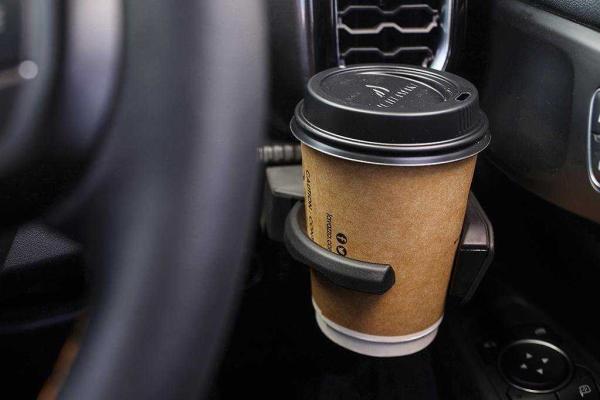
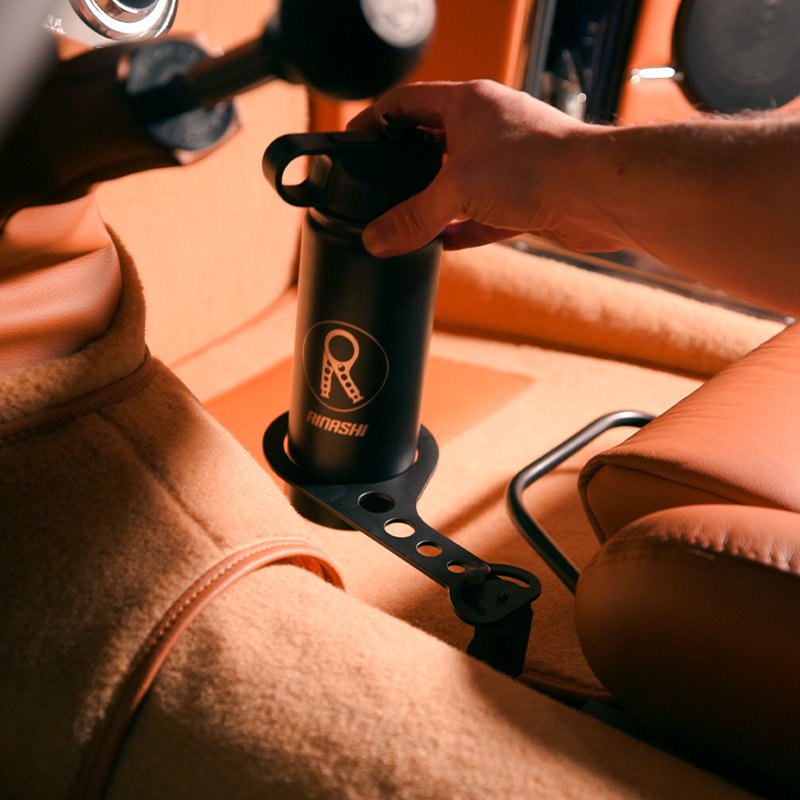
A narrow can, paper coffee cup, handled mug and oversized insulated tumbler have little in common beyond containing liquid. One holder is expected to secure all of them without crushing disposable cups, rattling against metal bottles or trapping a drink so firmly that lifting it removes part of the console.
Spring-loaded fingers allow the opening to adjust to different diameters. Rubber mats reduce noise and can be removed when somebody inevitably spills something sweet. The channel joining two adjacent holders, sometimes shaped like a dog bone, may provide clearance for a mug handle rather than being a decorative flourish.
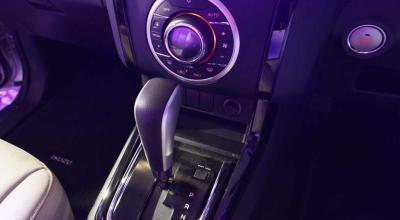
Position matters as much as shape. A cup should be easy to reach without forcing the driver’s eyes away from the road, but it cannot obstruct the gear selector, switches, armrest or wireless phone charger. Placing it too close to the dashboard may block controls when a tall bottle is inserted. Placing it too far back makes an ordinary sip surprisingly awkward.
Automakers test holders with cans, takeaway cups, reusable bottles, travel mugs and the increasingly enormous containers customers carry. Nissan engineer Chris Fischer told WIRED that cupholder performance can influence customer satisfaction and even future purchasing decisions. Nissan’s teams begin evaluating the space while the interior is still being designed, rather than drilling two circles into the console near the end.
Some vehicles offer heated and cooled holders. Others provide retractable mechanisms, adjustable depths or inserts that can be removed to accommodate larger bottles. The Subaru Ascent has become famous for offering 19 cup and bottle holders, a number that would have sounded like satire to a motorist balancing coffee on a 1960s glovebox door.
Cupholders also reveal how quickly expectations change. A design that comfortably accepted an ordinary soda can 15 years ago may frustrate someone carrying a modern insulated bottle. As drinkware grows, holders follow, competing for console space with larger phones and the electronics required to charge them.
The old ashtray had a comparatively peaceful existence. Cigarettes changed little in size, and loose coins did not complain about ergonomics. Coffee proved far more demanding.
Cupholders became common because the car itself changed roles. It remained transportation, but it also became a dining room, waiting room, office, school-run shuttle and temporary refuge between appointments. A secure place for a drink began to say something important about whether an interior understood the person using it.
That is why a poorly designed holder can still irritate a driver more consistently than an obscure item missing from the specification sheet. The cup may cost only a few dollars. The problem sits beside the driver every morning.