A Ford Engineer Got Soaked and Invented the Tiny Arrow Beside Your Fuel Gauge

by AutoExpert | 21 September, 2026
Pulling into a gas station should not require advance planning. Yet anyone driving an unfamiliar car knows the little moment of uncertainty that arrives before choosing a pump.
Which side is the fuel door on?

Guess correctly, and the stop is completely forgettable. Guess incorrectly and there follows an awkward bit of repositioning, an optimistic attempt to stretch the hose around the back of the car, or a slow lap of the forecourt while pretending this was always the plan.
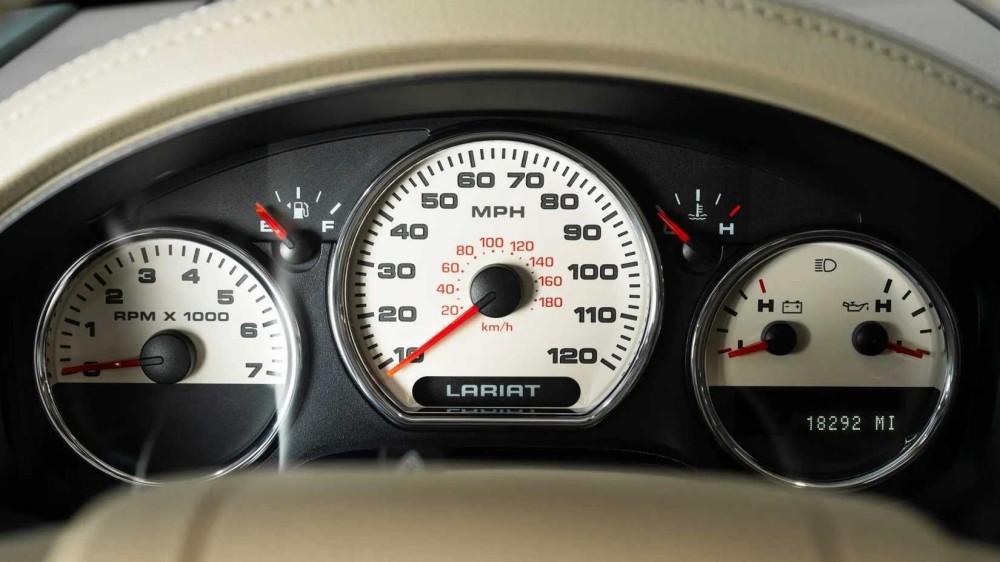
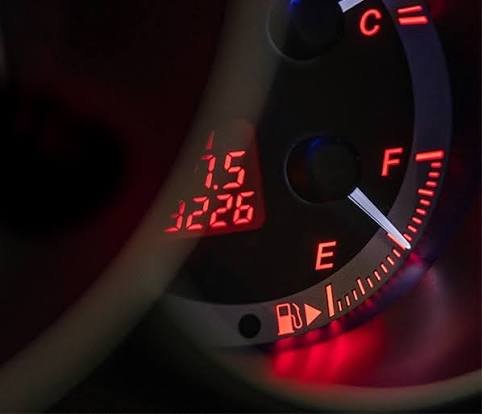
Modern cars usually provide the answer before the driver even stops. Beside the fuel-pump symbol on the instrument panel is a tiny triangular arrow. If it points left, the fuel door is on the driver’s left. If it points right, the filler is on the right.
It is one of the smallest features inside a car, born from an inconvenience large enough to leave a Ford engineer standing in the rain.
A wet coat and a very sensible memo
In April 1986, Ford interior trim designer Jim Moylan was driving a company pool car in Dearborn, Michigan, when he noticed that it needed fuel. Because it was not his regular vehicle, he could not remember which side held the filler.
Moylan chose the wrong side of the pump.
On a pleasant afternoon, this would have meant little more than getting back into the car and moving it. The weather, however, was thoroughly uncooperative. Moylan had to stand in the rain while correcting the mistake and returned to his office soaked.
Some annoyances disappear as soon as dry clothes become available. This one followed him upstairs.
According to accounts published by Road & Track and Autoweek, Moylan kept his wet coat on, sat down and drafted a proposal for a small indicator beside the fuel gauge. His memo was dated April 17, 1986.
The idea addressed more than forgetful owners. Households often had two cars, employees borrowed company vehicles and rental customers regularly encountered models they had never driven. The filler location was obvious from outside, but the driver had no dependable way to identify it while seated.
Moylan’s solution required no additional switch, motor, sensor or instruction. A simple mark printed on the gauge could prevent the problem.
Ford approved the proposal, although not immediately. The arrow reportedly entered production on the 1989 Ford Escort and Mercury Tracer. From there, it spread through the industry until it became so familiar that many drivers stopped noticing it.
Why fuel doors keep changing sides
There is no universal side for a fuel filler.
Some manufacturers favor one side across much of their range, but even those patterns have exceptions. The final position may be influenced by the fuel tank, exhaust system, body structure, suspension components and the architecture shared by several vehicles. A model designed for multiple markets can complicate matters further.
Popular explanations sometimes claim that the filler must be on the side nearest the curb or away from traffic. That sounds tidy until cars from different countries, and sometimes different models from the same manufacturer, are parked next to one another.
Packaging usually provides the less romantic answer. Engineers use the side that works for that particular vehicle.
The location can also change when a familiar model moves to a new platform. Memorizing the brand is therefore less reliable than glancing at the instrument panel.
Do not rely on the pump handle in the symbol
A persistent motoring myth says the side of the hose on the fuel-pump icon reveals the location of the filler.
It might coincide with the correct side, but it is not a dependable indicator. The hose is part of the standard graphic and may appear on the same side in cars with completely different filler arrangements. As Condé Nast Traveler’s investigation found, trying to decode the pump illustration produces plenty of exceptions.
The arrow is the useful part.
Some vehicles use a small triangle rather than a conventional arrow. Others position it close enough to the pump icon that it looks decorative. Its direction still identifies the side of the car containing the fuel door.
Older vehicles may have no indicator at all. In that case, the owner’s manual, a quick inspection before entering the station or simple familiarity remains the answer. Guessing from the gauge artwork is no better than flipping a coin.
The arrow also cannot tell the driver how the door opens. Depending on the car, it may release through a floor-mounted lever, a dashboard button, central locking or a push on the outer flap. Rental cars preserve a few mysteries.

A nearly perfect piece of dashboard design
Automotive interiors have accumulated screens, menus and animated graphics, but Moylan’s arrow has never needed a software update. It occupies almost no space and communicates its message without words, translation or explanation.
More importantly, it appears exactly where the answer is needed. When the fuel level drops, the driver looks at the gauge and finds the filler location beside it.
The idea did not emerge from a grand research program. It came from a wet engineer, an unfamiliar Ford and a fuel pump on the wrong side of the car.
Millions of drivers have quietly avoided the same soaking ever since.