

Those Colored Dots on New Tires Reveal the Imperfections Engineers Already Measured

by AutoExpert | 12 August, 2026
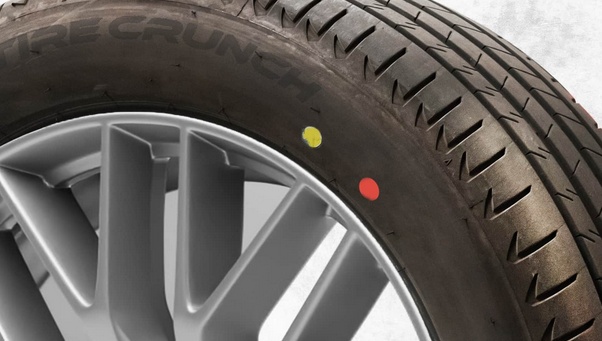
New tires arrive covered in information. Numbers identify their size, load capacity, speed rating and date of manufacture. Then, among all that serious molded lettering, someone appears to have attacked the sidewall with a red or yellow paint marker.
The dots look temporary because they are. Their job begins before the tire ever touches the road.
No tire or wheel emerges from manufacturing with mathematically perfect weight distribution and roundness. The variations are tiny, but combine the heavier sections of a tire and wheel in the wrong places and the finished assembly may require more balancing weight or produce an unwanted vibration.
The colored marks help the installer give the two imperfect circles a better chance of working together.
Yellow usually speaks about weight
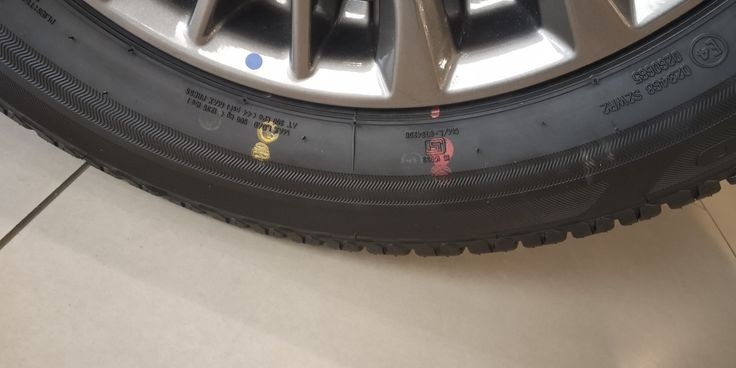
On tires using this marking convention, the yellow dot identifies the tire’s lightest point. During weight match mounting, the installer may position it beside the wheel’s valve stem, traditionally one of the heavier areas of the wheel.
Pairing the tire’s light point with the wheel’s heavier point brings the assembly closer to balance before weights are added.
That explanation has travelled widely enough to become an internet commandment: yellow dot beside valve stem, always.
Modern wheels make the rule less universal. Alloy-wheel designs vary, valve stems may carry tire-pressure sensors and the wheel’s actual heavy point may sit somewhere else. A used wheel may also have developed runout after years of potholes and repairs.
Yokohama describes the yellow-dot method as a valid form of weight match mounting. Tire Rack adds an important qualification: on used or aftermarket wheels, measurement with suitable balancing equipment provides better information than blindly following a temporary paint mark.
Red looks at uniformity
The red dot commonly marks the tire’s point of maximum radial force variation. In plain language, it identifies where the tire’s behavior under load reaches its high point.
A wheel may carry its own mark showing the point of minimum radial runout. Aligning those two references can reduce the combined variation of the mounted assembly and improve ride quality.
When both red and yellow dots appear, the red uniformity mark may take priority if the wheel has the corresponding low-point mark. Unfortunately, marking practices can differ between manufacturers, and many wheels lack a visible reference altogether.
This explains why judging an installation from one dot beside one valve stem can lead to the wrong verdict.
A skilled technician may use a road-force balancer to press a roller against the tire while it rotates, measuring how the assembly behaves under load. The machine can recommend rotating the tire on the wheel to a completely different position. After that process, the colored dot may end up nowhere near the valve stem while the assembly performs better than it would have under the simple dot rule.
The dots do not balance the tire
Match mounting gives the process a better starting point. The tire-and-wheel assembly still needs to be balanced after installation.
Small weights attached to the inner and outer portions of the wheel correct remaining imbalance. If a freshly installed tire produces steering-wheel shake or a seat vibration at highway speed, the dots cannot diagnose the cause from the driveway.
The assembly may need rebalancing. The tire could be improperly seated, the wheel may be bent or radial-force variation may exceed what ordinary balancing can correct. A missing wheel weight can create the same symptom after a tire initially drove smoothly.
Alignment belongs to a separate category. Wheel alignment adjusts the angles at which the wheels meet the road. Colored tire dots have no direct role in setting toe, camber or caster.
The paint will eventually scrub or wash away, and nothing needs to replace it. Once the tire has been mounted and balanced, the mark has completed its assignment.
Those red and yellow spots reveal something refreshingly honest about automotive engineering. Tires and wheels contain small manufacturing variations, so technicians measure them, pair them intelligently and correct whatever remains.
Perfection was never assumed. A smooth ride comes from knowing exactly where the imperfections are.