That Maddening Highway Whistle May Be Coming From One Tiny Gap in Your Roof Rack
by AutoExpert | 5 August, 2026
The roof rack looked harmless in the driveway. At 30 mph, it was still harmless. Somewhere around 50, however, the car developed a whistle sharp enough to make every passenger start inspecting the windows.
Roof racks live in fast-moving air, and fast-moving air has a talent for finding tiny gaps. A missing strip of rubber, an open channel or a poorly seated end cap may be practically invisible while the car is parked. At highway speed, it can become an instrument.
Fortunately, discovering how to stop roof rack wind noise often requires more patience than money.
Start with the small gaps
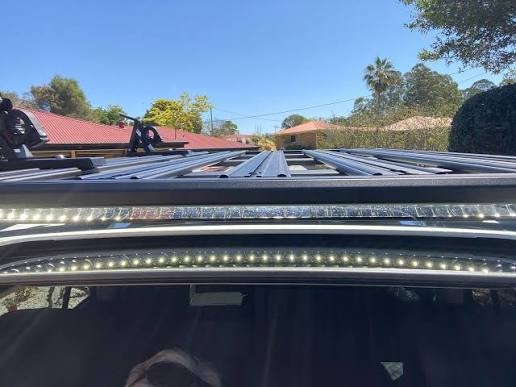
Modern aerodynamic crossbars are carefully shaped to manage the air passing over the roof. Many have channels along the top or underside for mounting accessories. Those channels are normally covered by rubber strips when they are not in use.
If a strip is missing, cut too short or not fully pressed into place, air can rush across the exposed groove and produce a whistle. The same can happen around a loose end cap or a gap in the rubber seal surrounding a mounting foot.
Thule identifies gaps around rack feet, rubber seals and end caps as common sources of whistling. That is good news because these parts are far less expensive than an entirely new rack.
Run a hand along every rubber insert and check whether it sits flush from end to end. Inspect the underside as well as the visible upper channel. Confirm that each end cap is properly latched and that no trim was displaced during installation.
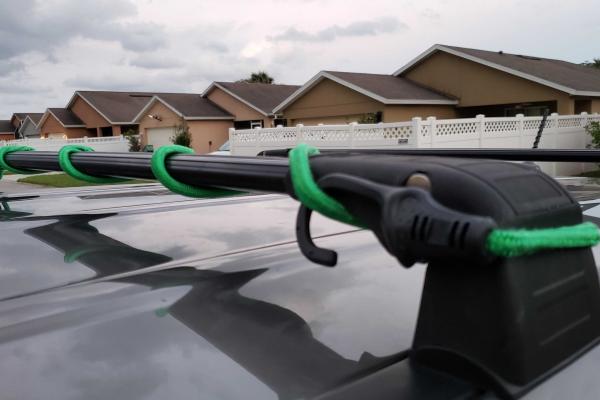
A loose strap can create its own soundtrack. The free end may flap against the roof, while a flat section exposed to the wind can hum like a reed. Secure loose material exactly as the carrier manufacturer instructs and avoid improvising around moving or load-bearing parts.
Position can change everything
Even a correctly assembled rack can become noisy if it is sitting in turbulent air.
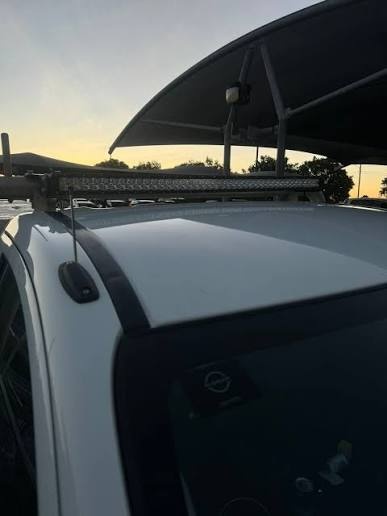
Crossbars fitted to adjustable rails may allow some forward-and-back movement within an approved range. Moving them slightly rearward can sometimes reduce noise and aerodynamic drag, something Thule specifically recommends for certain installations.
The owner’s manual and rack instructions still take priority. Crossbar spacing affects how safely the load is supported, so quieter should never come at the expense of the specified mounting position.
Aerodynamic bars may also have a leading edge and a trailing edge. They can look almost symmetrical until examined from the side. If the manufacturer marks front and rear orientation, follow it precisely. A wing-shaped bar facing the wrong direction is being asked to negotiate the air backward, and it may voice an opinion on the arrangement.
Roof boxes introduce another set of possibilities. A box mounted too far forward can catch more air underneath, increasing noise, vibration and resistance. Thule’s roof-box guidance recommends positioning the box as far back as practical without interfering with the open tailgate.
Make sure the box is straight as well. A slight angle may be difficult to notice from the ground but can alter airflow across the entire roof.
Isolate the culprit before buying a fix
Roof-rack noise tends to arrive after several pieces have been fitted at once: bars, feet, a bicycle carrier and perhaps a cargo basket. Removing one component at a time can reveal which part is responsible.
Start with anything that is easy and safe to detach. If the whistle disappears after a bike carrier is removed, the crossbars may be innocent. If it remains with bare crossbars, focus on their seals, orientation and position.
A wind fairing can reduce noise on some racks, but it works best after assembly problems have been ruled out. Buying one before checking a loose end cap is rather like purchasing noise-cancelling headphones to avoid repairing a dripping tap.
Whistling and humming are usually aerodynamic. Knocking, clunking or visible movement deserves a more urgent response. Stop and inspect the rack, fasteners and load before continuing. No amount of wind theory makes a loose roof box acceptable.
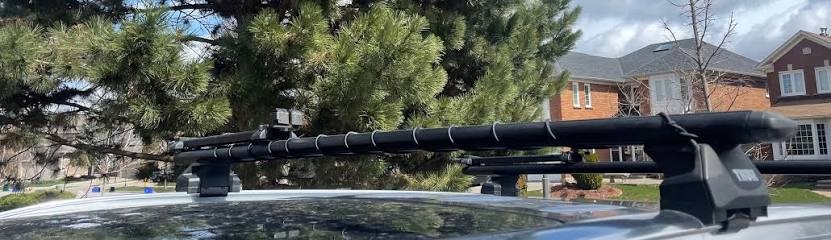
Roof-mounted equipment will rarely be as quiet as a completely bare car. It increases the vehicle’s frontal area and places several new shapes directly in the airflow. A mild rush of air may be unavoidable.
A piercing whistle, though, usually has a source. Very often, it is hiding in a gap barely wide enough to notice while standing still.