
That Emergency Window Hammer May Be Useless Against the Glass Beside You
by AutoExpert | 14 August, 2026
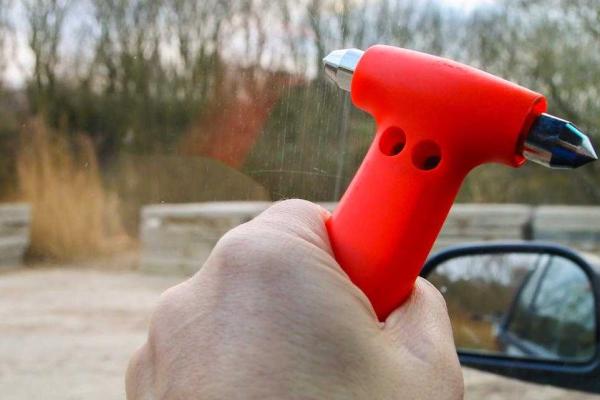
There is something reassuring about keeping an emergency window hammer in the car. It sits in the center console or door pocket, looking wonderfully uncomplicated. If the car ever ends up in water, catches fire or becomes impossible to open after a crash, one firm strike should clear an escape route.
Except that might not happen.
The tool could hit the side window, leave a crack and bounce back. Another strike might produce a larger spiderweb but no actual opening. The glass remains stubbornly in place while the few seconds that mattered disappear.
The tool may be perfectly functional. The window may simply be laminated.
Most drivers know that windshields are designed to crack without showering the cabin in sharp fragments. Far fewer realize that some modern cars use similar laminated construction in their side windows. It improves security, reduces noise and helps keep occupants inside the vehicle during a serious collision. It also makes the glass extremely difficult to penetrate with an ordinary escape tool.
Tempered and laminated glass break very differently
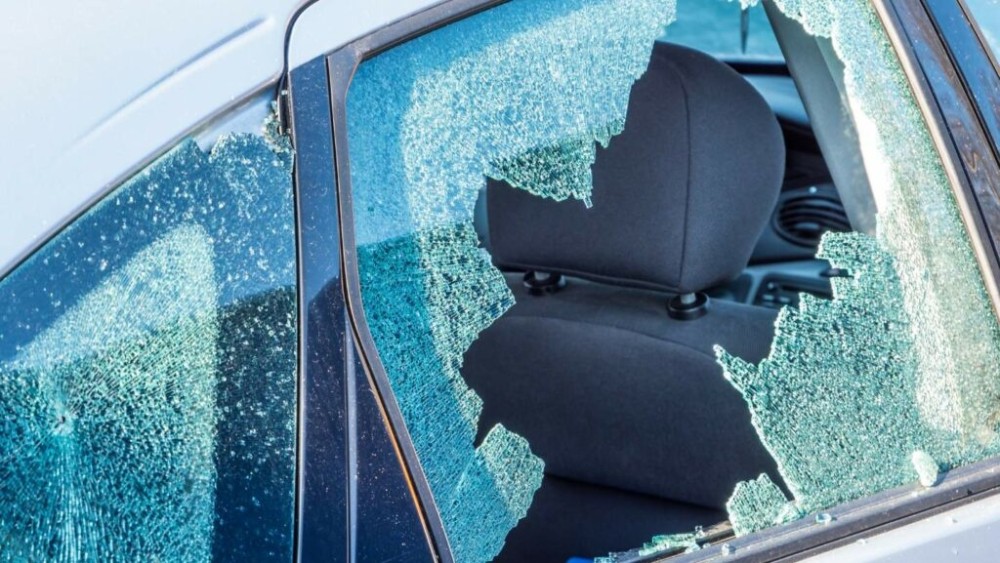
Traditional side windows are usually made from tempered glass. It is strengthened during manufacturing, but when a sharp impact finally overcomes that strength, the entire pane breaks into small pieces.
That dramatic collapse is exactly what an emergency window breaker is designed to cause.
Laminated glass is built differently. A plastic interlayer sits between two layers of glass. The outer layers can crack, but the plastic helps hold the pane together. Instead of disappearing into a pile of small cubes, the damaged window may remain suspended in the frame.
AAA tested several hammer-style and spring-loaded vehicle escape tools against both types of side glass. Most were able to break tempered windows. None of the tested tools created an opening through the laminated glass.
That does not make laminated windows a bad idea. In an ordinary collision, keeping a person inside the vehicle can be far safer than allowing a side window to disintegrate. Laminated glass can also make the cabin quieter and discourage quick smash-and-grab theft.
The problem appears when an owner buys a window hammer without checking which windows it can actually break.
One car may contain both kinds
The answer is often written directly on the glass.
Look in a lower corner of the side window for a small permanent marking. It may include the manufacturer’s name, certification symbols and words such as “tempered” or “laminated.” The lettering can be tiny, so a flashlight helps.
Do not assume every side window matches. A car may have laminated glass in the front doors and tempered glass in the rear. Another may use laminated windows throughout the cabin. Trim level and model year can also make a difference.
If the marking is unclear, the vehicle manufacturer or dealership should be able to confirm the glass specification using the VIN.
Knowing the answer makes it possible to identify the most realistic emergency exit before an emergency exists. In a car with laminated front windows and tempered rear windows, for example, the small label in the back door suddenly becomes much more important than it looks.
The tool needs to be reachable
An escape tool hidden beneath luggage is little more than cargo. The same applies to one rolling loose under a seat, where it may disappear during the impact that creates the emergency.
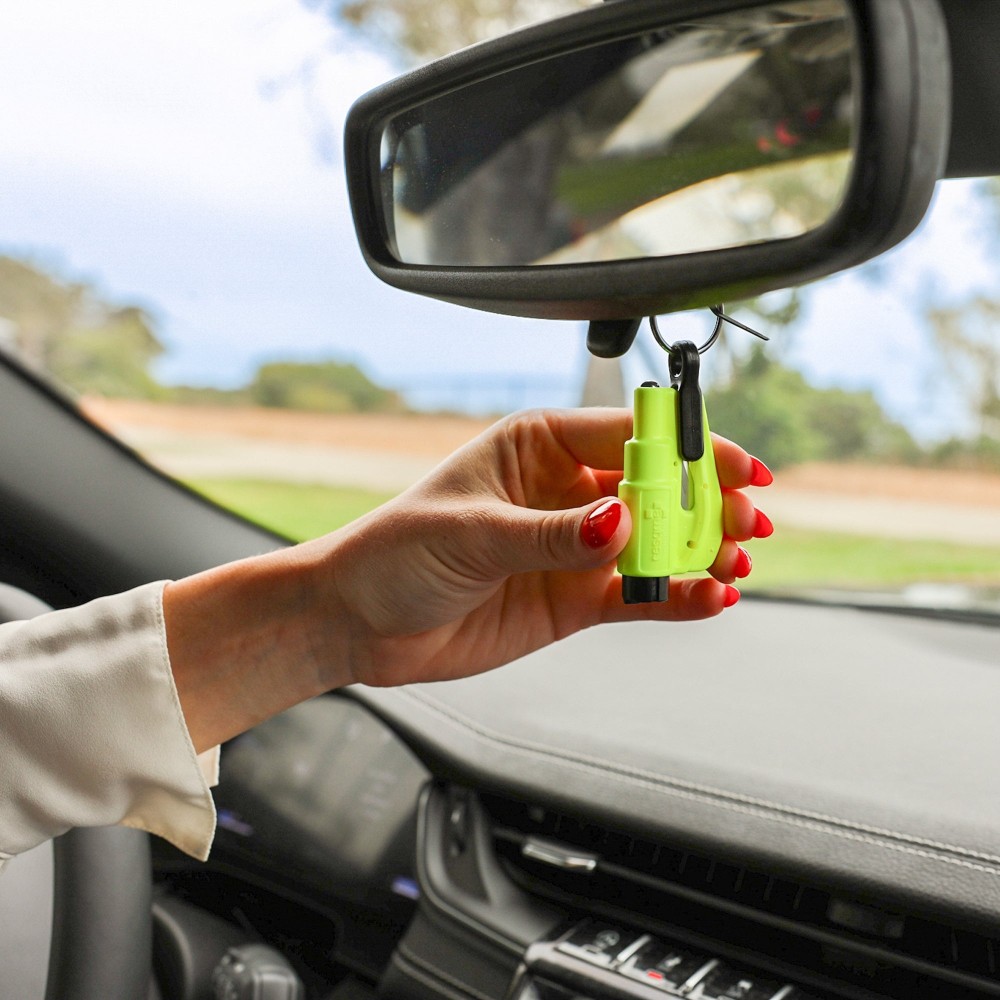
It should be secured somewhere the driver or passenger can reach while wearing a seat belt. Some tools include a mounting bracket. Others attach to a key ring or remain clipped inside an accessible compartment. Whatever the arrangement, it should not rely on a person opening the trunk or searching through a dark cabin.
Many escape tools also include a protected blade for cutting a jammed seat belt. That feature deserves the same practical test: can it be reached from the seat, and does everyone who regularly uses the car know where it is?
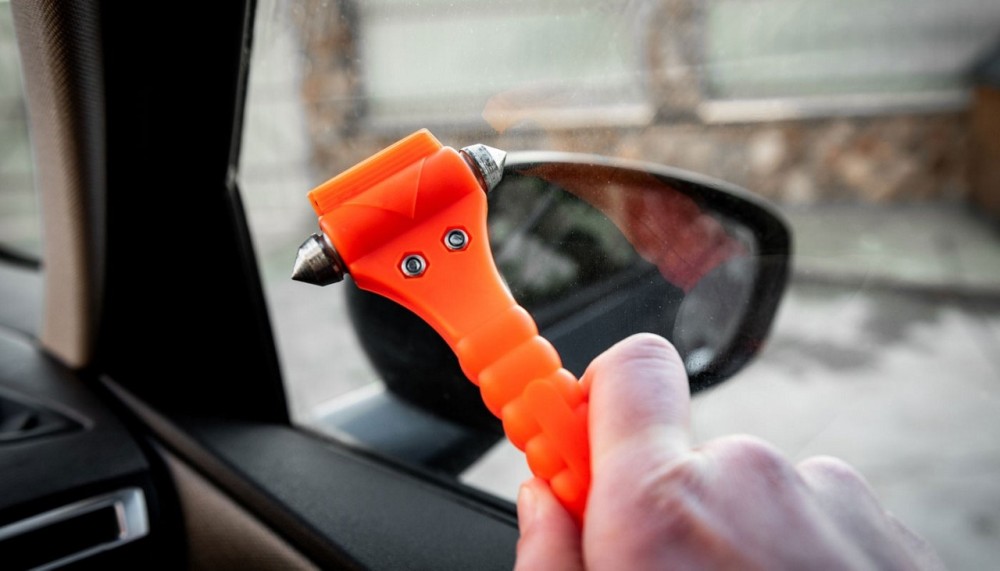
A spring-loaded tool may be easier to operate in a tight space because it does not require room for a full swing. AAA’s testing found the spring-loaded designs more effective than hammer-style tools against tempered glass, although no ordinary tool should be assumed capable of defeating laminated glass.
There is no need to test the answer by sacrificing a window in the driveway. Read the glass marking, check the owner’s manual and confirm anything uncertain with the manufacturer.
Buying an emergency hammer feels like preparation. Understanding the windows is what makes that preparation useful.