
Your Car’s Outside-Temperature Display May Be Wrong for a Surprisingly Clever Reason
by AutoExpert | 5 August, 2026
A car left in the afternoon sun does not need long to turn into a small greenhouse. The steering wheel becomes unpleasant to touch, the seats feel freshly ironed and the dashboard claims it is 104 degrees outside, even though a weather app insists it is closer to 85.
That does not necessarily mean the sensor has failed. It may simply be sitting in the automotive equivalent of a frying pan.
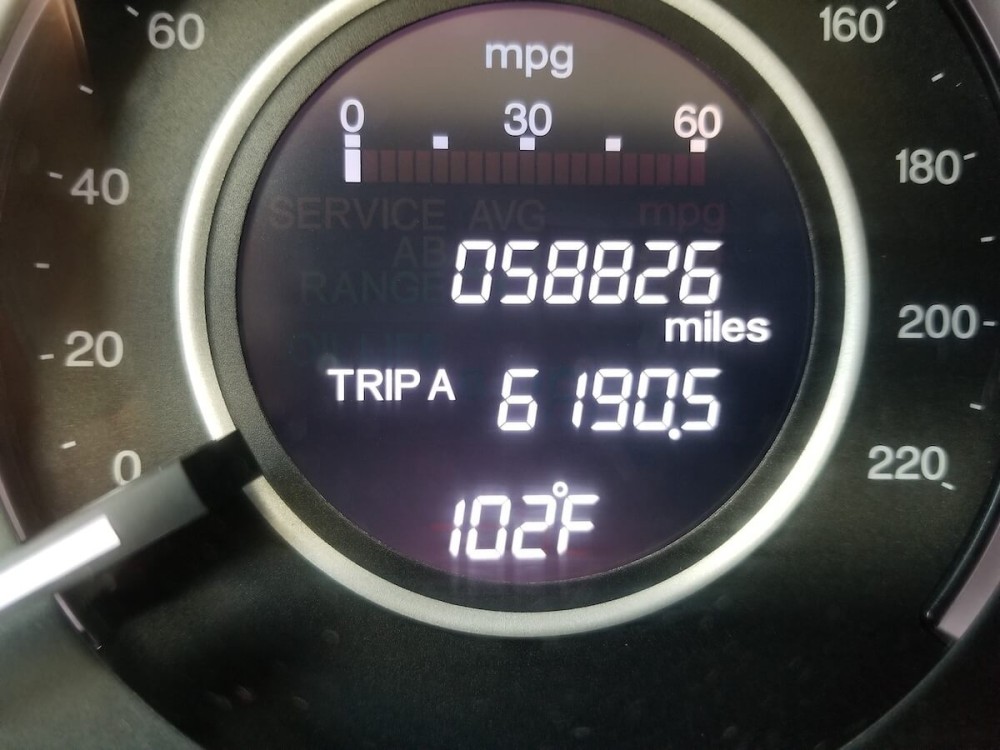
The outside-temperature display looks like a straightforward thermometer, but the number on the dashboard has usually passed through several layers of filtering before the driver sees it. Manufacturers know that a sensor mounted on a car will encounter hot pavement, engine heat, radiator airflow and direct sunlight. Without some electronic restraint, the reading would jump around every time the car stopped at a traffic light.
The sensor is outside, but not far outside
The ambient-temperature sensor is commonly located somewhere near the front bumper, grille or lower air intake. Some vehicles place it in an exterior mirror. These locations give it access to outside air while providing some protection from weather, debris and careless parking.
They also create a problem.
After the car has been parked, the air around the sensor may be much warmer than the wider atmosphere. Sun-baked asphalt radiates heat upward. The engine bay remains hot long after the ignition has been switched off. Even the bodywork surrounding the sensor can hold enough warmth to distort its reading.
This is known as heat soak. The sensor may be measuring its immediate surroundings accurately, but those surroundings no longer represent the temperature a few feet away.
Manufacturers compensate by making the display suspicious of sudden increases. Ford’s technical guidance, for example, explains that rising temperature readings may be displayed slowly at rates influenced by vehicle speed. Once the car is moving and fresh air begins flowing across the sensor, the number can gradually catch up with reality.
A falling temperature may be accepted more quickly because engine heat is unlikely to make the sensor artificially cold. The precise strategy differs between vehicles, so one model may update within a couple of minutes while another takes a longer drive.
That delay can produce some strange moments. A car driven out of a warm underground garage on a freezing morning may continue reporting the garage temperature. Another that has spent hours under the summer sun may cling to an exaggerated number after joining the road.
The system is waiting for evidence, not suffering from indecision.
Why the reading matters beyond casual curiosity
The dashboard display is only the visible part of the story. Ambient-temperature information may also be used by the climate-control system and other vehicle electronics.
If the car believes the outside air is unusually cold, it may limit air-conditioning compressor operation. An incorrect reading can also affect how an automatic climate system responds when the cabin temperature is adjusted.
This makes a genuinely failed sensor more than a cosmetic annoyance. A temperature display stuck at one implausible value, such as an extremely low reading on a hot day, can indicate an open circuit, damaged wiring or a disconnected sensor. Some systems use conspicuous default values when reliable information is unavailable.
A recent bumper repair is another useful clue. Since the sensor and its wiring often live near the front of the vehicle, they can be disturbed during collision work, grille removal or other repairs.
Give it a drive before condemning it
When the displayed temperature seems wrong immediately after starting, the sensible first step is simply to drive. Several minutes at normal road speed gives the sensor fresh airflow and allows the vehicle’s software to update the filtered reading.
There is no need to chase an exact match with a phone. Weather services may measure temperature several miles away, while the car is sitting over a particular stretch of hot pavement or cold concrete. A small difference is perfectly believable.
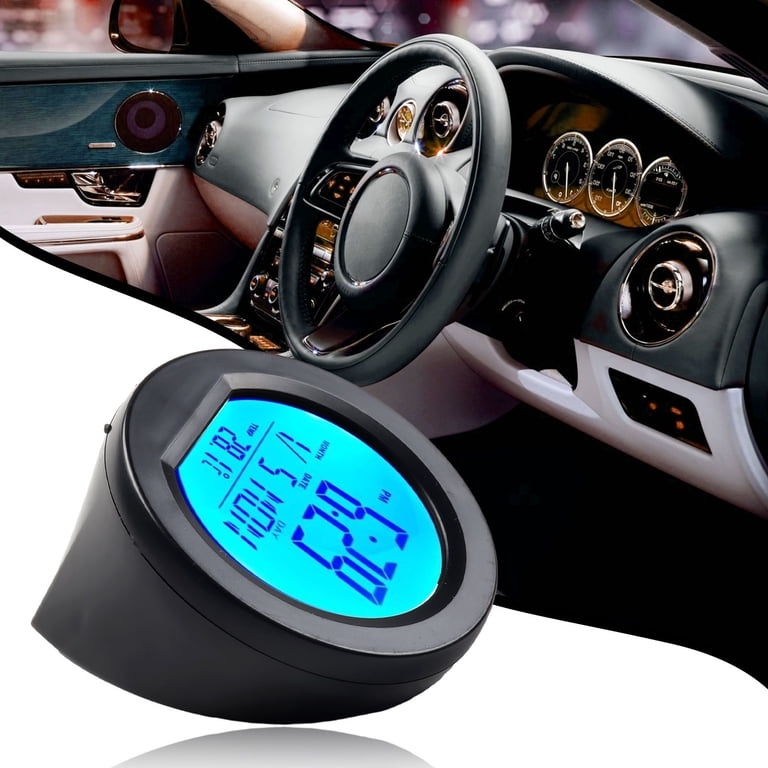
The reading deserves closer attention when it remains wildly inaccurate after an extended drive, never changes at all, produces warning messages or coincides with unusual climate-control behavior. Diagnostic trouble codes such as P0071, P0072 or P0073 may also appear when a vehicle detects an ambient-sensor circuit problem.
A dashboard thermometer is not a pocket weather station. It lives inches above the road, surrounded by hot machinery, and spends much of its time trying to separate the actual weather from the microclimate created by the car itself.
Considering those working conditions, the surprising part is not that it occasionally gets the temperature wrong. It is how often it gets remarkably close.